
Choose between aluminum investment casting and die casting by reviewing the material, geometry and finished-part requirements together. Investment casting uses a disposable pattern and ceramic mold; high-pressure die casting uses a reusable metal die. The different tooling and filling routes influence what can be formed, what must be machined and how production costs develop.[1][2]
Neither process is the better choice for every aluminum component. A useful comparison starts with the same drawing revision, approved alloy requirements, order pattern and acceptance scope. This guide helps engineering and purchasing teams identify the decisions that need supplier review before tooling is ordered, without relying on a universal volume threshold or a generic tolerance table.
- Check whether the proposed alloy and final condition are suitable for the specific route. An aluminum material name does not establish automatic interchangeability between casting processes.
- Review pattern or die release, internal features and finishing access. Complex geometry still needs a practical method of forming and removing patterns, cores and mold material.
- Compare the finished component rather than the raw blank. Tooling, machining, inspection and expected order releases belong in the same commercial comparison.
How the two aluminum casting routes differ
In investment casting, a pattern is used to establish the cavity in a disposable ceramic mold. The shell is removed after casting. In high-pressure die casting, molten alloy fills a metal die, and the solidified part must be released from that die. These are process distinctions, not blanket guarantees of accuracy or cost.
Investment casting still involves upstream tooling or pattern preparation. Wax-pattern manufacture, core support, shell building and removal can constrain geometry. The fact that the ceramic shell is destroyed does not mean that a finished component is free from every tooling or draft consideration.
Die casting requires a viable parting and ejection plan. Side actions and other tooling features may address some difficult geometry, but their feasibility and cost require review. Describe the feature that matters instead of assuming that one route can make any undercut or that the other cannot make internal detail.
Start with the alloy and required condition
List the permitted material specifications and any non-negotiable properties. Ask each supplier to identify the exact grade and condition proposed for its route. If the comparison requires a material change, obtain engineering approval before treating the two offers as equivalent.
Do not infer the casting process solely from a familiar alloy name. The current A356 material page distinguishes gravity and low-pressure routes. Those routes should not be silently included under high-pressure die casting when discussing an A356 component.
Heat-treatment, joining and surface requirements should also be reviewed for the selected route. A suitable material family is only the starting point. Where the drawing requires specified properties or service performance, agree the evidence and test-material basis needed to verify them.
Review geometry, cores and downstream access
Mark deep pockets, enclosed passages, thin sections, bosses, undercuts and the surfaces that must remain functional. Ask how each supplier proposes to form the feature, remove tooling or core material and inspect the finished result. An internal passage that can be formed but cannot be adequately cleaned may still make the route unsuitable.
For the investment casting route, discuss pattern production and any core arrangement. For the die casting route, discuss parting, draft, slides and ejection. Obtain marked proposals so that any necessary geometry changes can be reviewed against assembly and function.
Keep the original functional requirement visible during DFM. A proposal that reduces tool complexity may also move a parting line onto a sealing surface or change the stock available for machining. Evaluate the whole route before accepting a local design improvement.
Separate casting capability from the finished drawing
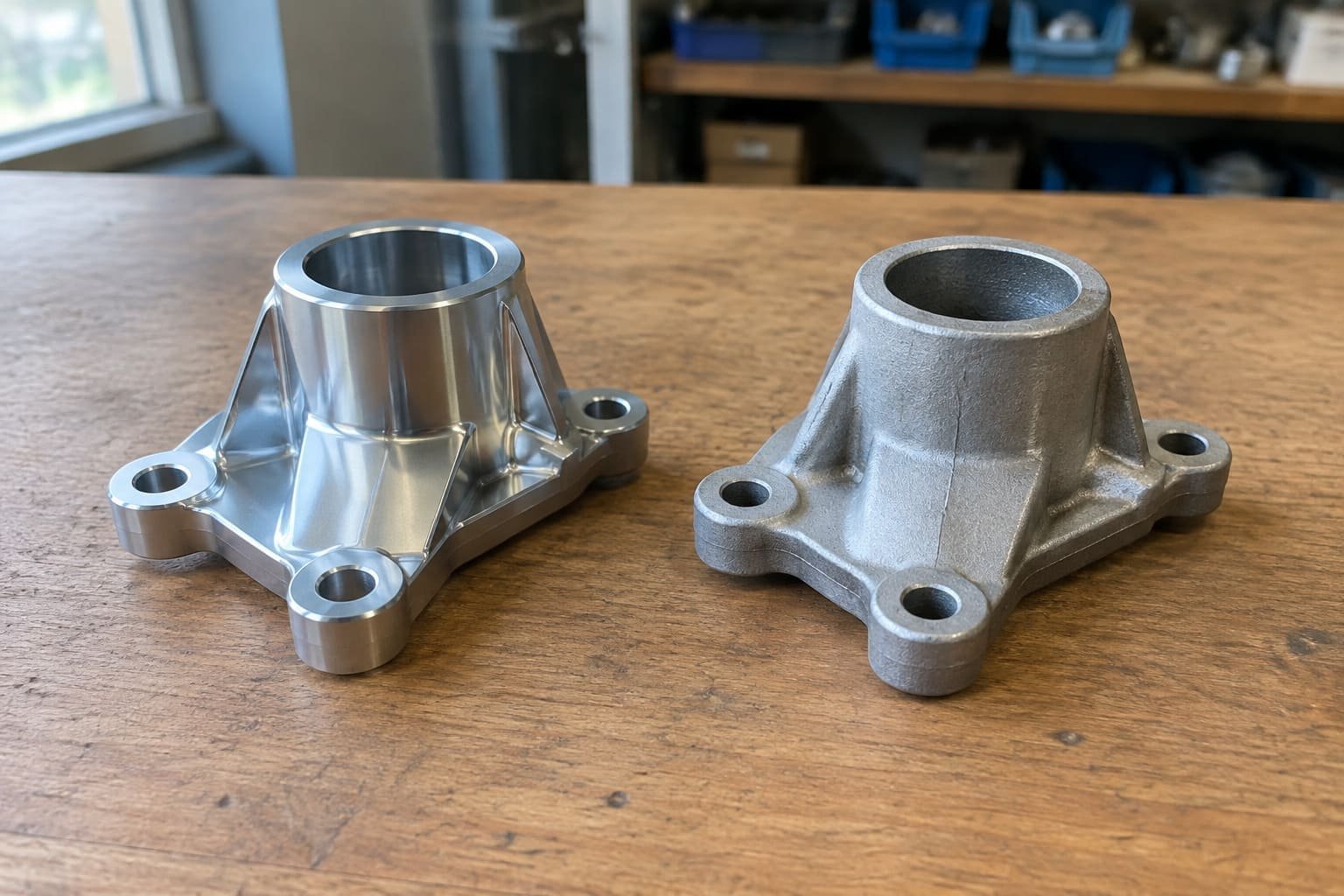
Identify which features may remain as-cast and which require machining or another operation. A general process comparison cannot establish a universal tolerance, flatness or roughness value for every aluminum component. Request a feature-specific review of the drawing.
For a housing, the important relationship may be between a bore, a mounting face and a register. Achieving the individual dimensions does not necessarily establish their alignment. The location method, machining allowance and measurement stage need to support the final relationship.
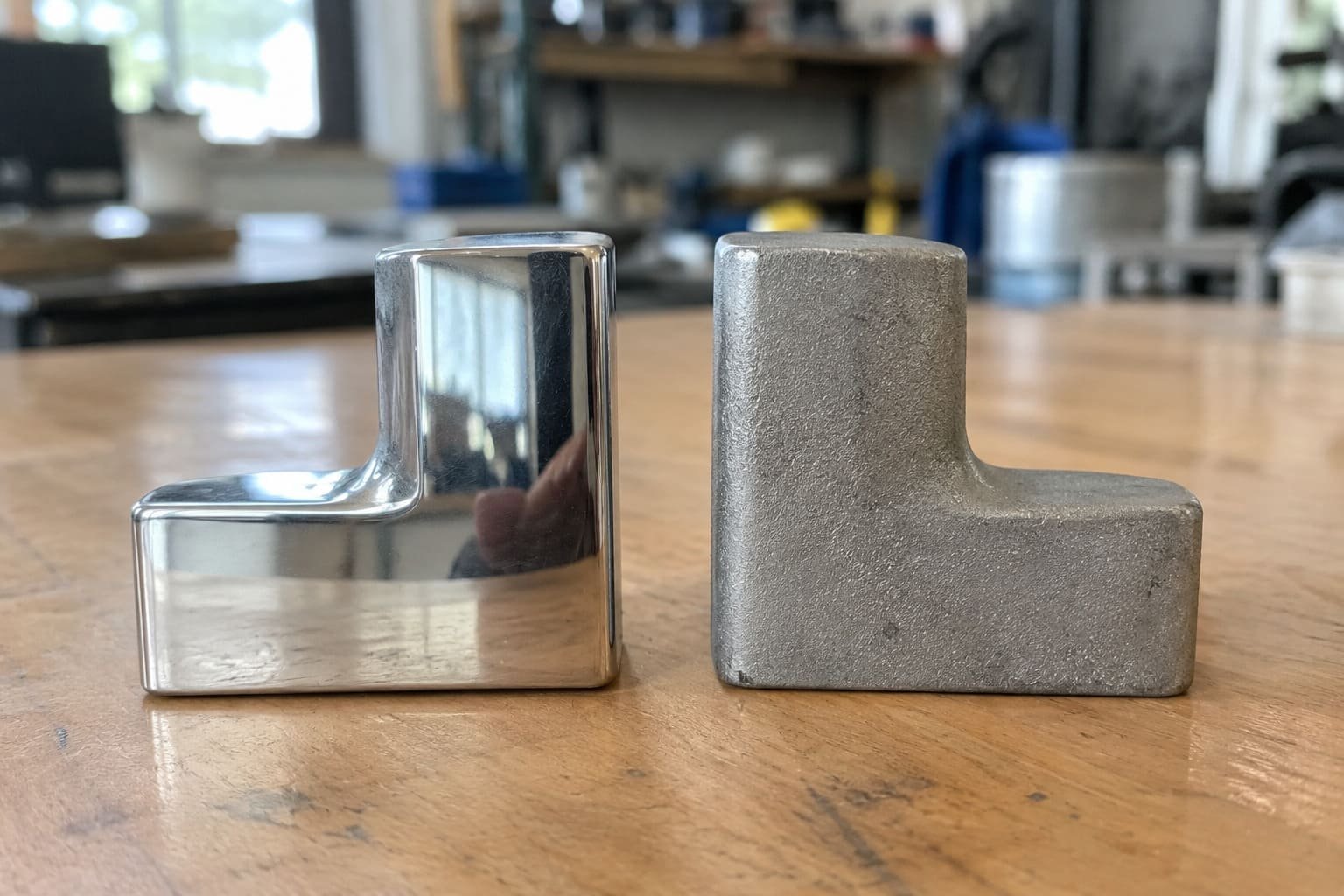
Visible appearance and functional surface requirements should be distinguished. A surface that looks smooth may still need machining for sealing, while a non-functional area may be acceptable with an agreed as-cast appearance. Specify the requirement by area rather than applying a tight finish to the entire part without a functional reason.
Compare costs using the same supply scope
Ask for the tooling basis, sample scope, recurring operations and quantity assumptions. Die casting may justify dedicated tooling where a suitable design and production programme support it, but the economic result depends on the actual offers. There is no universal annual quantity at which it becomes less expensive.
A useful sensitivity review considers changes in order volume and design stability. If the design changes after tooling begins, additional cost or renewed sampling may alter the comparison. Record how tooling modifications, maintenance and replacement are handled instead of assuming they are included.
| Comparison item | Keep consistent | Ask the supplier to identify |
|---|---|---|
| Material | Approved service and property requirements | Exact grade, condition and departures |
| Geometry | Released functional definition | DFM changes and tooling concept |
| Tooling | Programme assumptions | Charges, maintenance and change scope |
| Finished part | Interfaces and acceptance requirements | Machining and surface operations |
| Production | Order releases and forecast | Quantity basis and exclusions |
| Verification | Required evidence | Sampling, tests and approval steps |
Use the pricing and quotation-scope guide to organise the offers. Compare total programme assumptions separately from the recurring delivered-part price; do not hide a material or inspection difference inside a lower unit cost.
Use published cases within their limits
The A380 mounting-component case describes a particular die-cast part and its project review. It can help explain how component geometry and finishing requirements interact. It is not a controlled comparison against an investment-cast version of the same component.
For a new part, retain both routes only while they remain technically plausible. Close material, geometry and acceptance questions before accepting a commercial recommendation. If neither route fits the requirements, the correct next step may be to investigate another manufacturing route rather than force the design into this two-process comparison.
Frequently asked questions
Does investment casting eliminate draft?
Do not assume that it eliminates every release constraint. Although the ceramic shell is removed destructively, the pattern-making method may still need draft, split tooling or cores. Review the actual pattern route and the surfaces where taper affects function. Die casting also needs its own parting and release review for the proposed tool.
Can the same aluminum grade be used for both routes?
That must be confirmed for the specified grade, condition and requirements. A process change may involve a different alloy or verification basis. Ask the supplier to state the proposed material explicitly and obtain approval for any departure. Do not use an alloy equivalence chart as permission to change the drawing or purchasing specification.
Is die casting the cheaper option at high volume?
It can be economically attractive for a suitable production programme, but volume alone does not establish the result. Tooling, design stability, finishing, inspection and the delivered component all affect the comparison. Use project quotations with the same scope and examine different order assumptions rather than adopting a generic break-even quantity.
Sources & references
Reference note
Evidence role: scope; source type: primary. Investment Casting Institute; undated public white paper. Process and conditional design context only; historical numerical examples are not adopted. Accessed 2026-11-02.
Reference note
Evidence role: scope; source type: primary. NADCA Design; process definitions only. Broad cost, volume and accuracy comparisons are not adopted as guarantees. Accessed 2026-11-02.