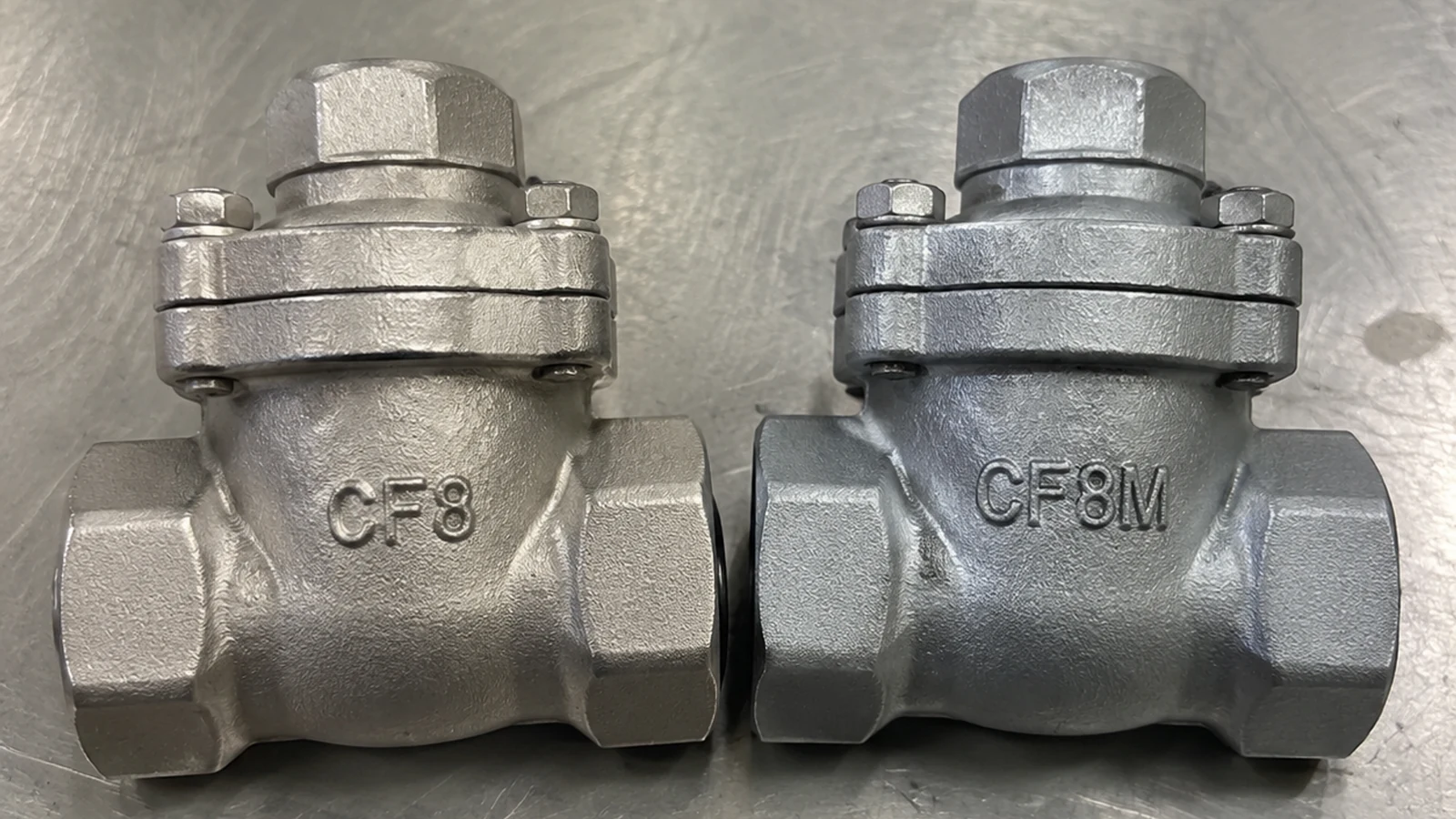
CF8 and CF8M are austenitic stainless steel casting grades commonly compared with wrought 304 and 316, respectively. CF8M contains 2–3% molybdenum, which improves its resistance to pitting in many chloride-containing environments. That difference matters, but it does not make CF8M an automatic replacement for CF8 or a universal choice for seawater service. [1, 2, 3, 4]
For buyers, the useful specification combines the cast grade, governing standard, required condition, service environment and acceptance requirements. A familiar alloy name alone leaves too much of the order open to interpretation.
CF8 vs CF8M at a glance
The following selected reference values help explain the grade difference. Use the complete requirements of the specified standard and edition for acceptance; this is not a full chemical specification. [1, 2]
| Item | CF8 | CF8M |
|---|---|---|
| UNS designation | J92600 | J92900 |
| Commonly compared wrought grade | 304 | 316 |
| Chromium | 18–21% | 18–21% |
| Nickel | 8–11% | 9–12% |
| Carbon, maximum | 0.08% | 0.08% |
| Molybdenum distinction | No required 2–3% Mo addition | 2–3% Mo |
All composition figures are mass percentages. The CF8 entry does not mean the alloy must contain zero molybdenum.
CF8 cast stainless steel and CF8M cast stainless steel should be identified by their casting designations on purchasing documents. The 304/316 comparison is useful background, but cast and wrought composition ranges differ. A drawing that says only “316 stainless steel” needs clarification before a casting order is released. [3]
Select for the actual fluid and exposure
The main reason to evaluate CF8M against CF8 is its molybdenum-bearing chemistry and the resulting improvement in resistance to certain forms of localized corrosion. It is not a promise of better performance in every chemical environment. [3]
Before choosing a grade, record the fluid composition and impurities, operating temperature, chloride exposure, pH, cleaning chemicals and shutdown conditions. Consider where liquid can stagnate and whether deposits or gasketed joints create crevices. Temperature and component geometry can change the corrosion risk even when the nominal fluid remains the same. [4, 5]
A practical purchasing approach is:
- Retain CF8 when the approved design and service assessment support it. The presence of a CF8M option is not, by itself, a reason to change an established specification.
- Evaluate CF8M when the service assessment identifies a need for improved resistance to chloride-related localized corrosion. Check that it provides sufficient resistance for the actual duty.
- Reassess the material selection when exposure is severe or poorly defined. Another alloy or a design change may be needed.
“Marine” is not a complete service description. A freely draining component and a continuously immersed component can face different conditions. CF8M should not be approved for seawater merely because it is associated with the 316 family; 316-type stainless steels remain susceptible to pitting and crevice corrosion in seawater. [4]
Specify the casting standard as well as the grade
The same grade designation can appear under different casting specifications. Select the governing specification according to the component, applicable design requirements and purchase contract.
| Specification | Scope relevant to buyers |
|---|---|
| ASTM A351/A351M | Austenitic steel castings for valves, flanges, fittings and other pressure-containing parts |
| ASTM A743/A743M | Corrosion-resistant alloy castings for general application |
| ASTM A744/A744M | Stainless steel castings for particularly severe corrosive applications |
These specifications are not interchangeable purchasing labels. For example, A744/A744M expressly addresses post-weld heat treatment of repairs affecting surfaces wetted by the corrosive medium. A351/A351M also makes clear that optional supplementary requirements apply when individually specified in the purchase documents. [6, 7, 8]
Identify the agreed edition and unit system. Do not assume that writing “ASTM stainless steel” settles the material, processing and acceptance requirements.
What should an RFQ include?
A useful CF8 or CF8M enquiry should define the delivered component and the evidence needed to accept it.
1. Material and service requirements
State the casting standard, grade and agreed edition. Include the relevant operating and cleaning conditions, particularly when asking the supplier to propose a material.
If grade selection is still open, request clearly separated alternatives with their assumptions. Avoid an unexplained “CF8/CF8M” note that leaves the permitted material unclear.
2. Heat treatment and weld-repair controls
Specify the heat-treated condition required by the governing standard. Agree on repair-welding restrictions, any required approval, records, subsequent heat treatment and re-examination.
These details belong in the purchase specification or inspection plan. An alloy designation alone does not describe the complete manufacturing history of a delivered casting. [6, 8]
3. Drawing requirements and delivery condition
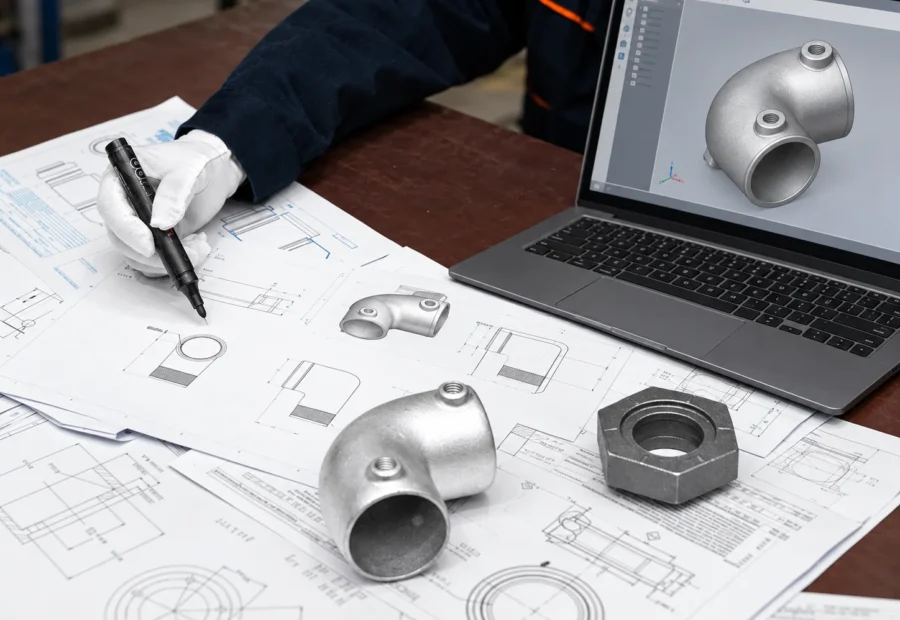
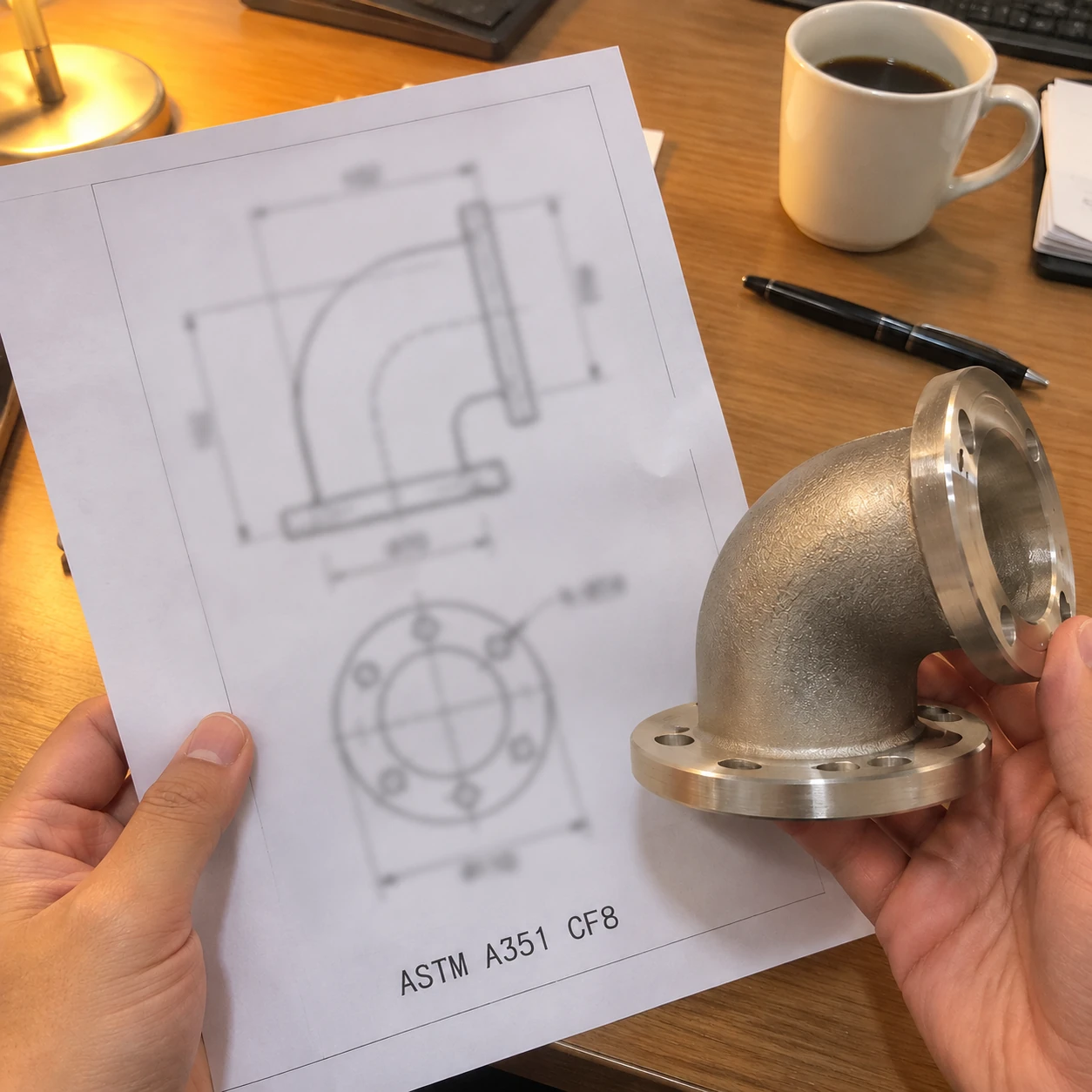
Provide the controlled drawing and model revision. Identify critical interfaces, datums, sealing features and surface requirements, and distinguish cast surfaces from features requiring machining.
For investment casting, agree whether the quotation covers a casting blank or a component with secondary CNC machining and specified finishing operations. The material grade does not define dimensional tolerances or the scope of machining.
4. Inspection methods and acceptance criteria
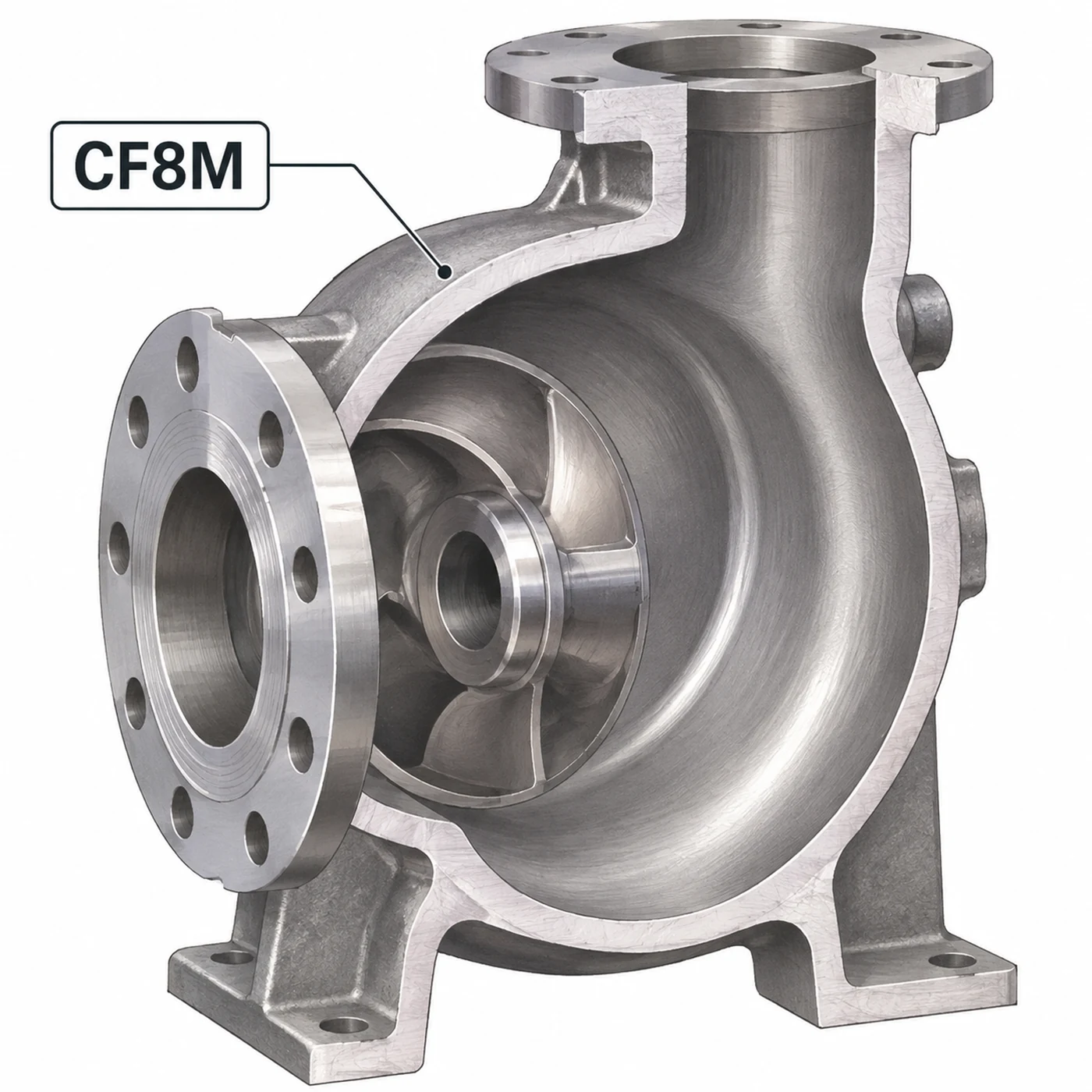
Agree on the inspection method, examination extent, acceptance criteria, timing and required reports. Specify pressure or leak testing when required by the component specification or agreed plan.
For each test, state what constitutes an acceptable result. A short instruction such as “NDT required” leaves the examination scope unresolved. These decisions should form part of the project-specific inspection plan. [9]
5. Material records and traceability
Request heat traceability and the chemical, mechanical and heat-treatment documentation required by the specification and contract.
PMI can help detect material mix-ups. Handheld XRF can check measurable alloying elements such as molybdenum, but it cannot directly measure carbon or establish heat-treatment condition and mechanical properties. It therefore supplements the required records and testing rather than completing material acceptance on its own. [10]
6. Quantity and quotation scope
Separate sample quantity, order quantity and annual forecast. Ask suppliers to identify tooling, machining, finishing, inspection, documentation and packaging within the quotation.
Compare both grades on the same delivered-part scope. Avoid applying a fixed percentage premium to CF8M; obtain project quotations with consistent requirements.
An example of a clearer material requirement
For a component whose engineering design already calls for A351 CF8M, the material note can be structured as follows:
Material: ASTM A351/A351M, Grade CF8M, to the edition and unit system identified in the purchase order. Supply in the heat-treated condition required by the governing specification.
Maintain heat traceability and provide the material test results required by the specification and agreed inspection plan.
Weld-repair controls, examination extent, acceptance criteria and any pressure or leak tests shall follow the drawing and approved inspection plan.
Material substitutions require the purchaser’s written approval before manufacture.
The referenced drawing and inspection plan must contain the actual requirements. This wording cannot resolve an unspecified test method, acceptance level or operating condition.
Can CF8M replace CF8 on an existing drawing?
Treat the change as a material deviation requiring approval.
A supplier may propose CF8M because of its corrosion-resistance characteristics or production considerations. The buyer still needs to check the design basis, applicable specification, qualification requirements and documentation before accepting the change.
A more highly alloyed material does not automatically satisfy a purchase order that specifies a different grade. Record the approved change in the controlled documents, and make sure the material certificate and delivered-part identification remain consistent.
A pump-casting example
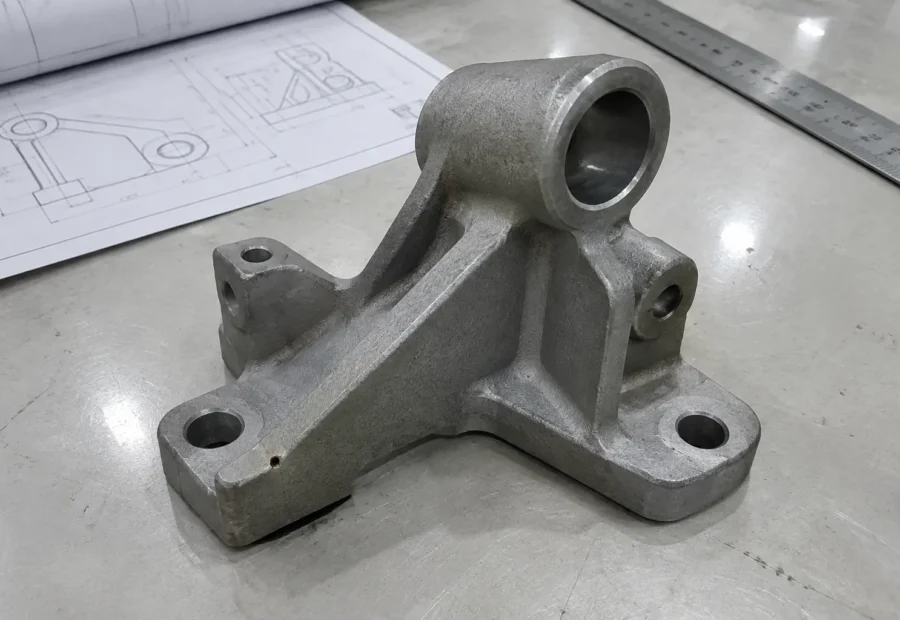
Our CF8 centrifugal-pump volute case illustrates how grade selection sits alongside the rest of the component requirements. The published project identifies CF8 under ASTM A351 and describes an internal flow passage, controlled flange interfaces and machining allowances on sealing and mounting features. [11]
For a similar enquiry, identify the fluid conditions, pressure requirement, critical machined features and agreed verification plan together with the material. Changing the grade does not resolve an undefined sealing interface or inspection requirement.
Two additional questions buyers often ask
Is CF8M the same as 316L?
No. CF8M is commonly compared with wrought 316. CF3M is the low-carbon casting grade commonly compared with 316L; published reference data list a maximum carbon content of 0.03% for CF3M, compared with 0.08% for CF8M. A low-carbon requirement must be specified explicitly. [2, 12]
Does CF8M automatically provide higher strength or pressure capacity?
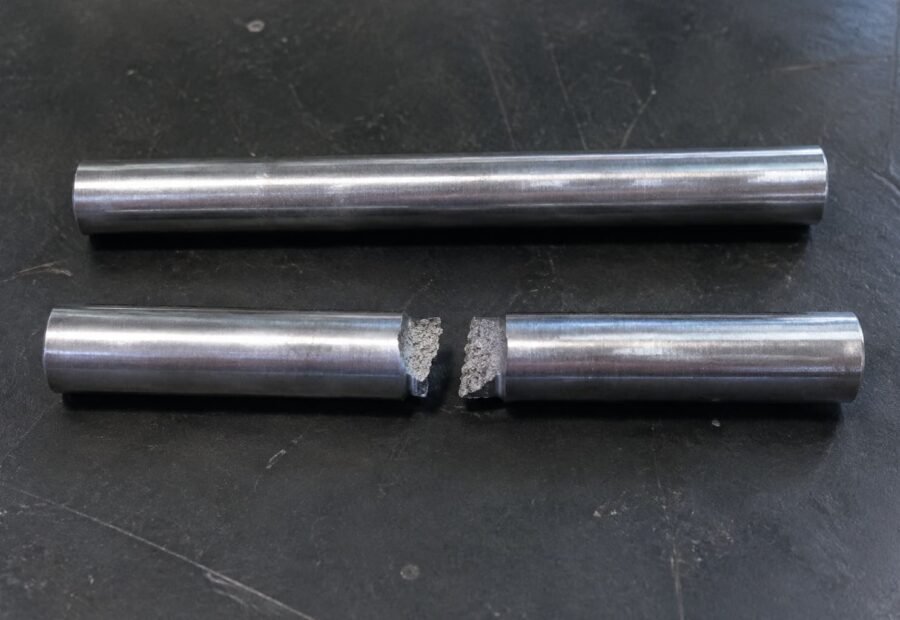
No such conclusion should be drawn from the “M” designation. Assess the mechanical requirements in the governing specification and the design values applicable to the component and temperature. The material name alone does not establish a finished component’s pressure rating. [6, 9]
Discuss your casting requirements with Tianlu
For a custom CF8 or CF8M casting enquiry, share your drawing, required standard and grade, service conditions, quantity and delivery scope. Include the inspection and documentation requirements already defined for the project.
Request a manufacturing review to discuss the casting route, secondary machining and quotation requirements.
Sources & references
- Stainless Foundry & Engineering — CF8 cast alloy data
- Stainless Foundry & Engineering — CF8M cast alloy data
- Steel Founders’ Society of America — Steel Castings Handbook Supplement 8
- British Stainless Steel Association — Selection of 316, 304 and 303 types of stainless steels for seawater applications
- Atlas Steels — Atlas Tech Note No. 2 Pitting & Crevice Corrosion of Stainless Steels
- ASTM International — A351/A351M-24e1
- ASTM International — A743/A743M-21
- ASTM International — A744/A744M-21a
- Steel Founders’ Society of America — Steel Castings Handbook Supplement 2 2017
- Evident — How Recent Handheld XRF Developments Impact Plant Based Alloy Positive Material Identification Testing
- Tianlu Casting — CF8 Investment-Cast Centrifugal Pump Volute
- Stainless Foundry & Engineering — CF3M cast alloy data