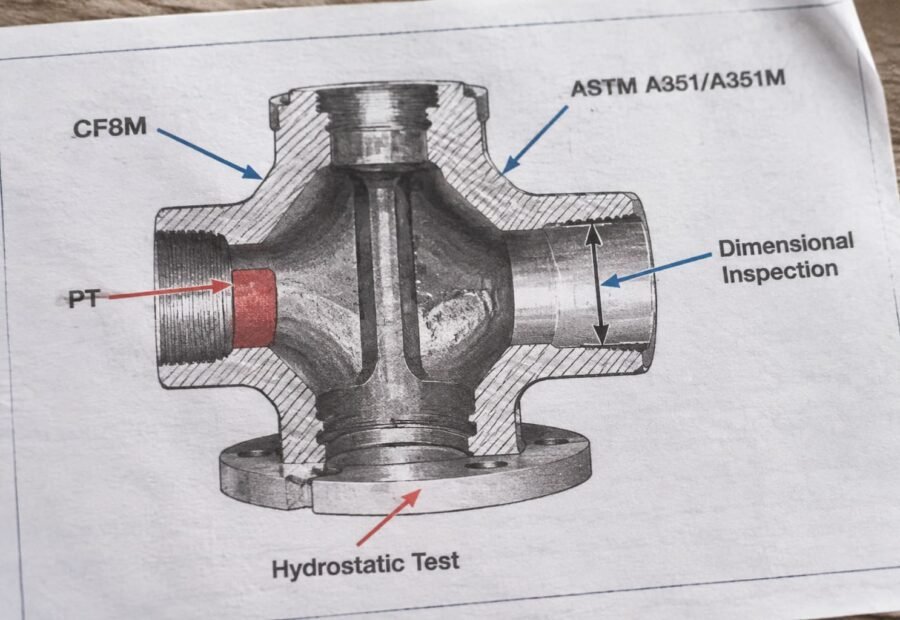
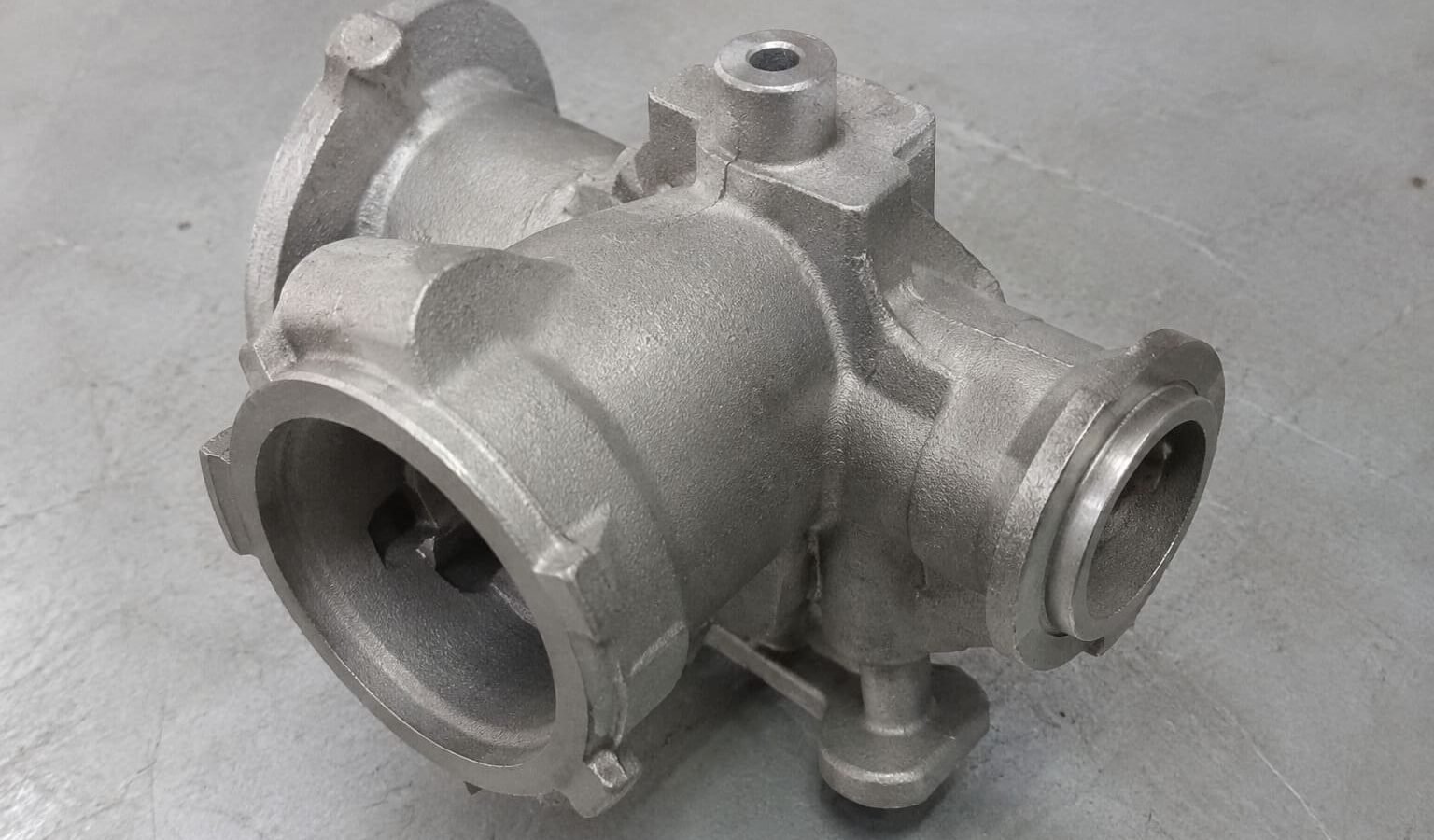
A 17-4 PH stainless steel investment casting needs a complete material and verification definition. The familiar alloy name is not enough to establish the casting grade, heat-treatment condition, mechanical requirements or acceptance method. Identify the applicable casting specification and agreed condition before treating quotations or sample results as comparable.
Keep casting and wrought-product specifications distinct. ASTM A747/A747M covers precipitation-hardening stainless steel castings; its ordering requirements should be checked against the grade and edition selected for the component.[1] A property table for wrought 17-4 PH should not be copied onto a cast-part drawing without review. This guide explains the decisions that connect the material callout to the finished part.
- Identify the casting grade and governing specification. Familiar commercial alloy names and wrought designations should not replace a complete purchase requirement for a casting.
- Agree the final material condition and the evidence required. A heat-treatment label is not a substitute for the ordered mechanical properties and verification basis.
- Plan casting, heat treatment, machining and inspection together. The route should account for functional surfaces, dimensional movement and the stage at which acceptance applies.
Define the casting specification before choosing a condition
Begin with the product form. A purchase requirement for a casting should refer to a specification that covers cast material. If a legacy drawing gives only 17-4 PH, ask the responsible engineer to resolve the exact grade and standard instead of letting each supplier choose a different interpretation.
CB7Cu-1 is a casting designation associated with this material family under ASTM A747/A747M. Confirm the applicable grade and edition against the order; this guide does not establish an automatic substitution for a wrought grade.[2] Requirements for chemistry, heat treatment, mechanical testing and any supplementary examinations must be read as a complete package.
For a component exposed to corrosion and mechanical loading, describe both conditions. A material selected for strength may still require a separate service-environment review. Avoid reducing the decision to the alloy name or to the highest value in a supplier’s property table.
Agree the final condition and property verification
State the required delivery condition in the enquiry and order. If a drawing uses a condition label such as H900 or H1150, verify that the designation, treatment and acceptance requirements are appropriate to the selected casting specification. Do not derive an unqualified temperature schedule from the label alone.
Ask how the ordered properties will be demonstrated. Chemistry, hardness, tensile results and service suitability are different forms of evidence. A hardness reading alone does not establish every mechanical or corrosion requirement, and an isolated material result does not establish component performance.
Record the test-material basis and its relationship to the production batch. If the component’s section, loading or environment makes an additional test necessary, the responsible engineer should define it. Do not add testing simply because it appeared in another project’s sample report.
Review geometry and the manufacturing route together
The investment casting process establishes the starting geometry, but final feasibility still depends on the complete component. Flag thin passages, isolated heavy sections, intersecting ribs, difficult internal features and surfaces that will become machining datums.
Ask the supplier to identify the proposed pattern, core and finishing approach where these features matter. General investment casting design freedom does not mean every internal passage can be made without tooling constraints or cleaning access. A geometry change should be tied to a drawing revision and reviewed for its effect on function.
Where the design is not yet fixed, distinguish mandatory functional geometry from features open to adjustment. That gives the foundry room to propose a route without changing a sealing face, mounting location or load-bearing section that the equipment design requires.
Separate as-cast dimensions from finished interfaces
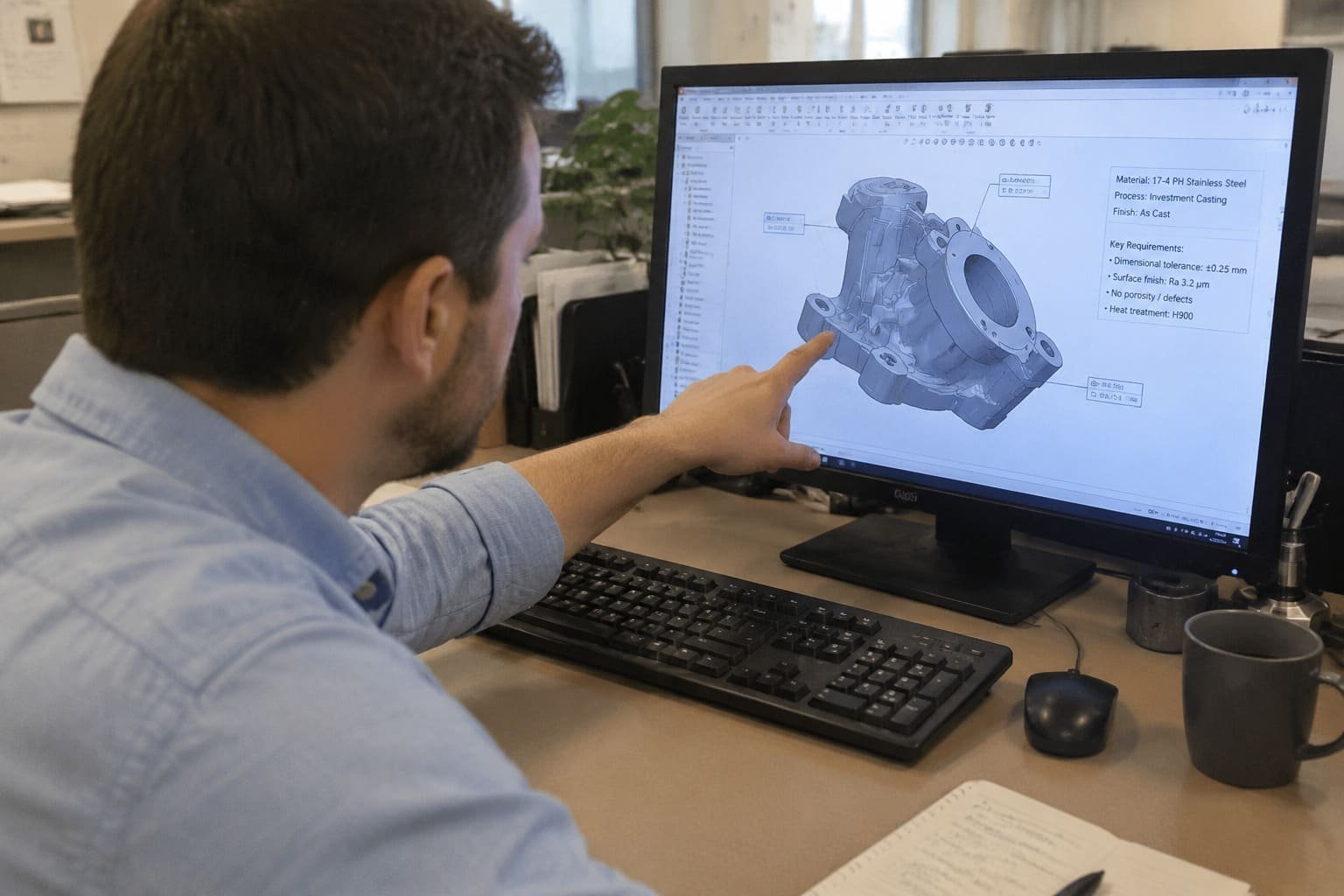
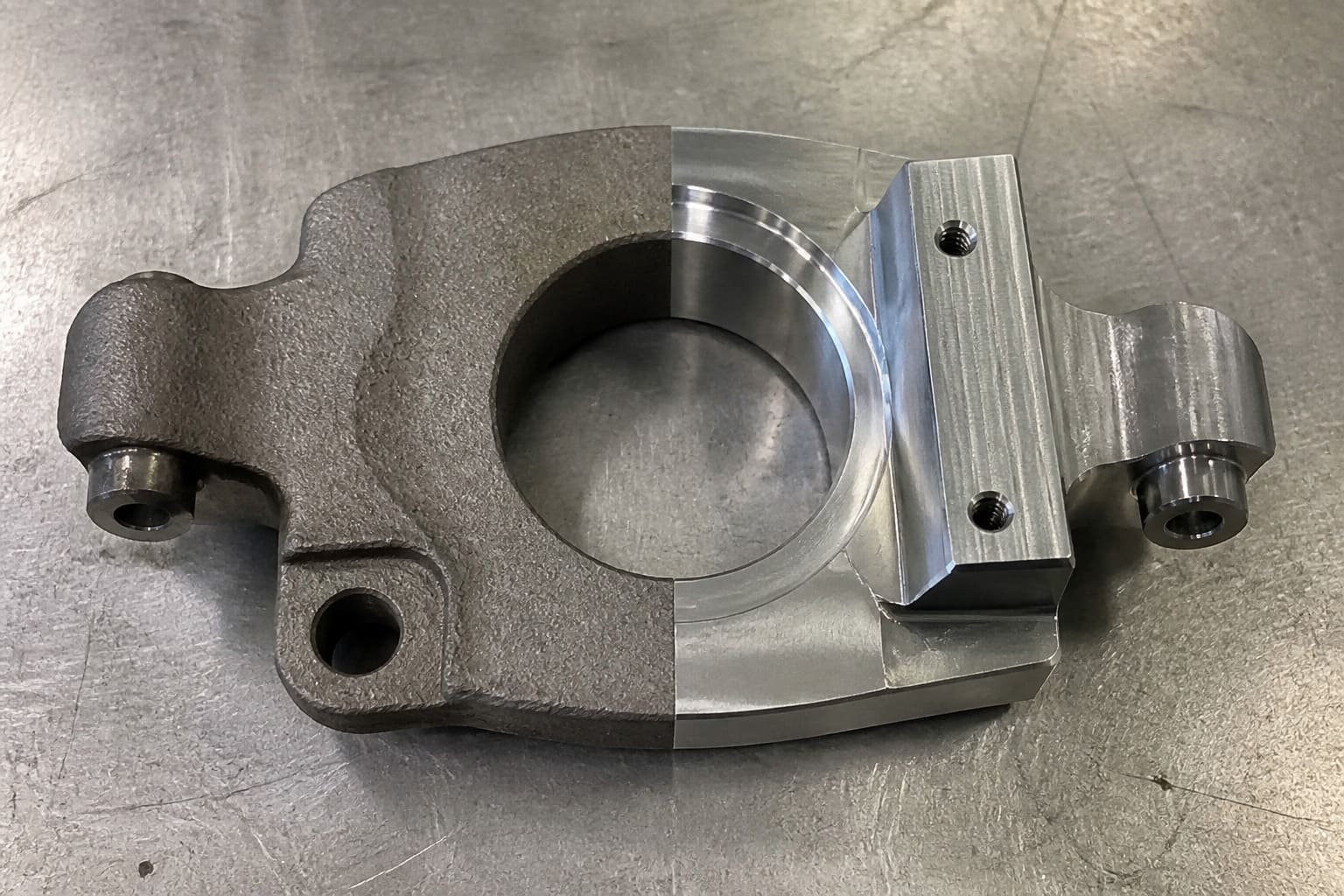
A casting drawing and a finished-part drawing answer different questions. The first must leave a usable blank; the second defines the component that must fit and function in the assembly. Indicate which bores, faces, threads and locating features require secondary machining.
Machining allowance is not a single universal value. It must accommodate the proposed blank, the locating method and the final feature requirement. The casting tolerance guide explains why a general casting grade does not define every functional interface.
Agree when critical dimensions will be measured. Rough machining, heat treatment, straightening or final finishing can change the condition in which a part is inspected. The process plan should identify any remeasurement or finishing operation needed after the agreed treatment. It should not assume that one sequence suits every geometry.
Build an RFQ that makes different offers comparable
Use the following review sheet to keep the unresolved material and process decisions visible. It is an enquiry aid, not a list of default Tianlu tests or a substitute for the product standard.
| Decision | State in the enquiry | Resolve before release |
|---|---|---|
| Material identity | Casting grade, specification and edition | Any legacy wrought-only designation |
| Final condition | Required treatment condition and properties | Conflicting condition or hardness notes |
| Geometry | Released drawing, model and critical features | Proposed DFM changes and approval |
| Finished interfaces | Machined faces, bores, datums and surfaces | Allowance and measurement stage |
| Verification | Tests, acceptance criteria and records | Sample basis, frequency and responsibility |
| Supply scope | Samples, batches and delivered condition | Exclusions and remaining assumptions |
Keep company-specific availability separate from general material guidance. The supporting heat-treatment capability is reviewed against the project; a general article does not promise that every condition or test is available for every component.
Review samples against the agreed requirement
A useful sample submission connects the measured part to its drawing revision, material record, agreed condition and inspection scope. Check whether dimensions refer to the final supplied state and whether the submitted reports answer the requirements written into the order.
If a result is outside the requirement, record the disposition and approval. A decision to accept a limited deviation should not silently change the specification for subsequent batches. Changes to geometry, material or treatment may need a new review of the verification plan.
The quality planning framework provides the broader material, dimensional, surface and functional structure. For the enquiry itself, use the RFQ checklist and attach the unresolved questions. The practical objective is an agreed production definition rather than a quotation built around a material nickname.
Frequently asked questions
Is cast 17-4 PH automatically identical to wrought 17-4 PH?
No automatic interchangeability should be assumed. Product form, grade, specification, processing condition and test basis must be identified. A wrought-material datasheet can help explain the material family, but it does not replace the requirements governing the ordered casting. Refer a conflicting drawing callout to the responsible engineer before accepting a substitution.
Which heat-treatment condition should I specify?
Choose the condition through the component’s engineering requirements, including loading, service environment, necessary toughness and the selected casting specification. There is no single condition that is preferable for every application. Ask for a review of unresolved requirements instead of selecting solely for the highest strength or hardness shown in a generic table.
Can the part be fully machined before heat treatment?
The answer depends on the alloy condition, geometry, required dimensions and agreed process. Some operations may be planned before treatment and others afterwards. Establish which features are final acceptance features and how movement will be checked. The manufacturing plan should explain the sequence and leave suitable stock where finishing after treatment is required.
Sources & references
Reference note
Evidence role: scope; source type: primary. ASTM International; 2023 edition. Public scope only; no heat-treatment schedule or property table reproduced. Accessed 2026-11-02.
Reference note
Evidence role: scope; source type: primary. International Journal of Cast Metals Research, volume 25, issue 2, 2012. Public abstract identifies the casting grade; not a supplier qualification. Accessed 2026-11-02.