Energy & Emerging

Energy & Renewable Equipment Castings

Custom cast and machined components for energy and renewable equipment—not casting machinery. Typical parts include solar mounting hardware, electrical housings, control-box covers and finned thermal covers.

Speak to an Engineer ›
Energy & Renewable Equipment Castings application reference

From equipment duty to component detail

Energy equipment casting requirements

Connect mounting, enclosure and environmental requirements to the features that need casting, machining, surface treatment and inspection.

Mounting loads and mating parts

Describe the installed assembly, load direction, vibration and repeated movement. Define the rail, frame or equipment connection, fastener locations and locating datums. Identify the surfaces and hole positions that control assembly and service access.

Enclosure and thermal interfaces

Show the cover rim, gasket path, cable or shaft openings, mounting bosses and internal clearances. For finned parts, include the heat-source contact, available airflow and operating conditions. State enclosure and thermal acceptance requirements alongside the component drawing.

Outdoor exposure and surface finish

Specify indoor or outdoor duty, moisture, salt exposure, cleaning and operating temperatures. Define the coating system, appearance and edge condition, including masking around threads, fitted surfaces and any electrical bonding contacts.

Material, process and release records

Provide the alloy, supply condition, geometry, quantities and drawing revision together. Published examples include A380 solar mounting hardware and ADC12 electrical covers. Agree material records, critical-dimension inspection, finish checks and the sample approval criteria for the order.

Start with the part function

Part familyWhat to resolve before quotingWhat to specify
Solar mounting hardwareLoad path, fastener interfaces, outdoor exposureAlloy, coating, mating dimensions, flatness
Electrical housings and end coversEnclosure fit, sealing, thermal pathMaterial, wall section, machining interfaces, finish
Finned coversFin geometry, thermal contact, toolingAlloy, fin section, draft, inspection points

Final process route depends on drawing, volume, material and inspection requirements. Compare die casting and investment casting in the capability pages.

For a deeper process discussion, read Investment Casting Components for Energy Equipment.

Define the supplied scope

Specify a casting blank, machined component or finished part, and identify any inserts, fasteners, seals or mating pieces included in the order. Provide the drawing revision, material, batch quantities and inspection records needed for first-sample approval and repeat supply.

Send six items with your RFQ

  1. Drawing revision and 3D model
  2. Alloy or material standard
  3. Casting process or tooling ownership, if already decided
  4. Machining, mating and assembly interfaces
  5. Finish, coating or outdoor exposure requirements
  6. Inspection records, acceptance criteria and annual volume

If a requirement is not fixed yet, say so; it can be listed as an open item for quoting.

Explore the assembly

Components in Focus

Explore how the components fit together. Illustrative assembly.

Energy & Renewables — illustrative assembly

Hollow barrel with annular ribs and drilled end flanges.

Component information
  1. Planetary gearbox housingHollow barrel with annular ribs and drilled end flanges.
  2. Input mounting flangeCentral shaft bore, raised hub and radial face ribs.
  3. Output adapter housingTapered hollow body with an extended bearing neck.
  4. Drive mounting cradleTwo open saddles above drilled mounting rails.
  5. Planet carrier and gearsOpen carrier with four planet gears, pins and an output shaft.
  6. Sun gear input shaftCentral sun gear on a stepped shaft with a splined input end.
  7. Internal ring gearAnnular gear with inward-facing teeth and outer locating tabs.
  8. Input and output bearings and sealsBearing rings and sealing rings at the input and output ends.

Explore by component

Product Applications for Energy & Renewables

Component examples

Solar mounting hardware and electrical covers

These projects connect the application to specific manufacturing details: finished edges and assembly dimensions for solar hardware, and machined mating features for an electrical cover.

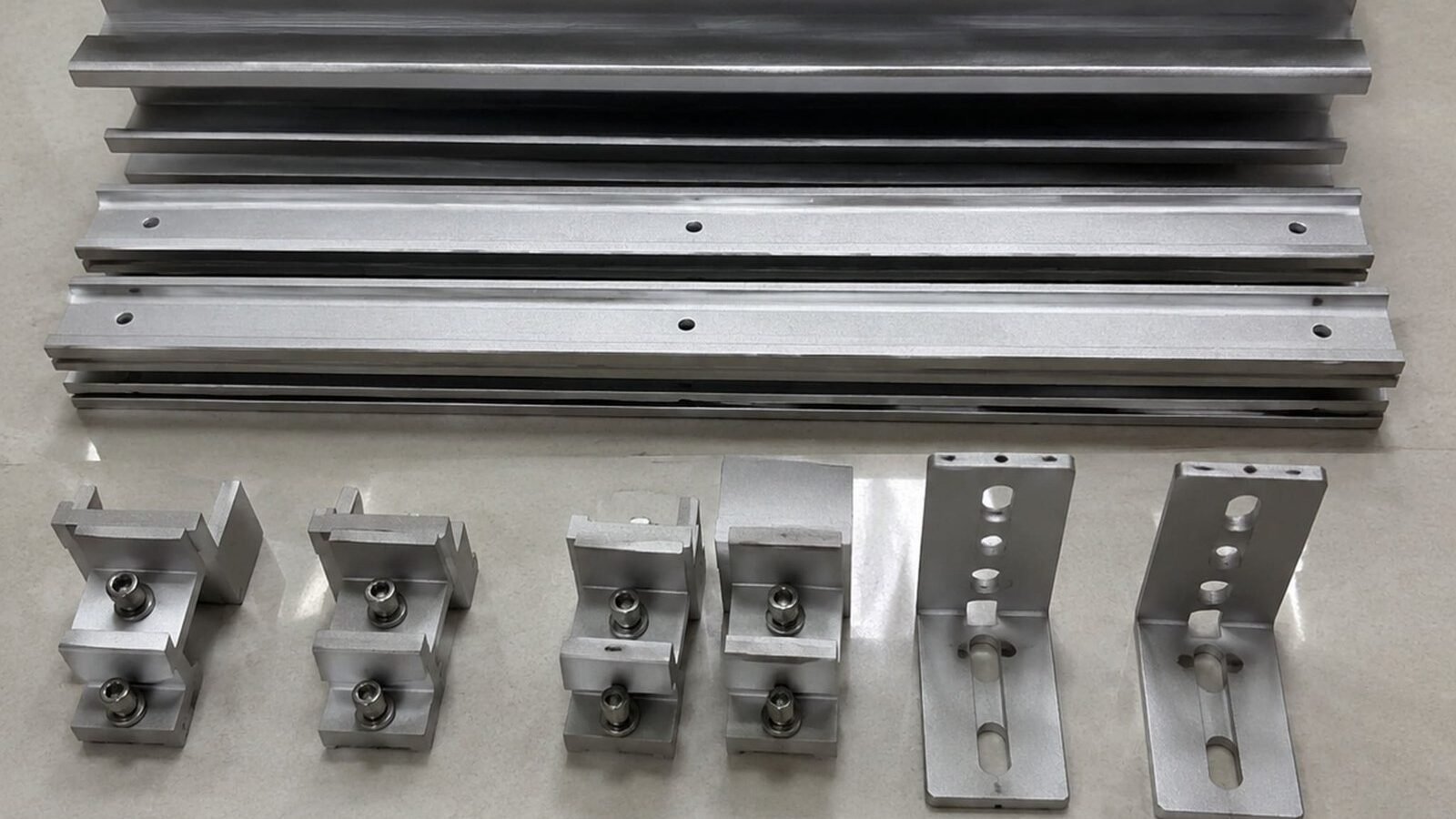
Solar mounting hardware set with rails, clamps and brackets

A380 · High-pressure die casting

Solar mounting hardware

Handling and assembly
Tooling review, controlled trimming and edge finishing addressed uneven parting-line and edge areas that could interfere with automated gripping and assembly.
Specified inspection
The project used a ±0.15 mm requirement for identified assembly characteristics, with 100% inspection of specified finished dimensions alongside first-piece, patrol, final and visual checks.
Sample and production plan
The published record describes ten sample sets followed by repeat production, with approximately 40,000 pieces planned per year in quarterly batches.
Read the component case

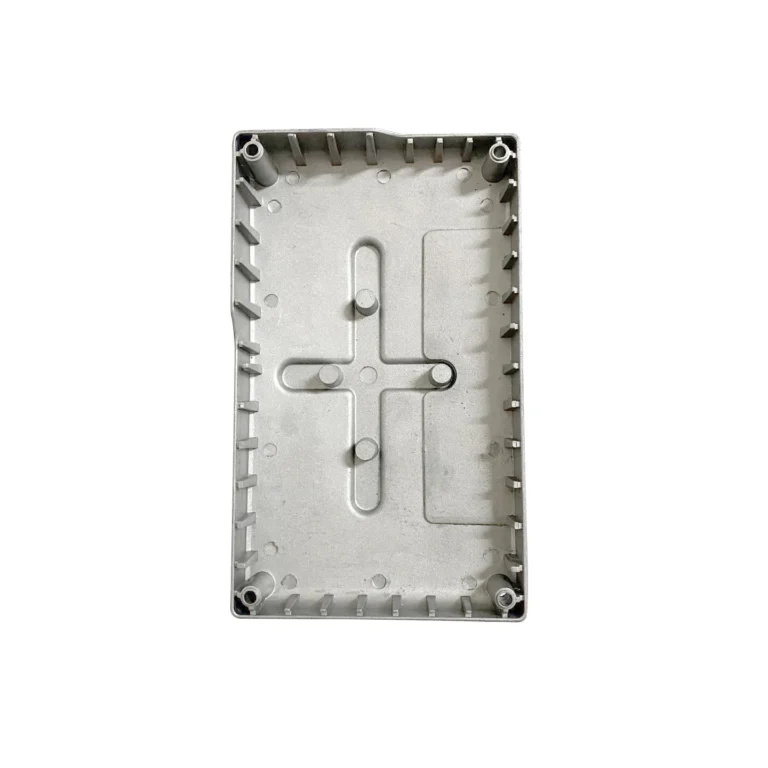
Rectangular control box cover with corner bosses, internal ribs and a peripheral mating rim

ADC12 · Die casting

Ribbed control box cover

Component geometry
A rectangular cover combines peripheral fastening bosses with internal reinforcement, including a central cross-shaped rib arrangement.
Machined interfaces
Secondary machining finishes the corner-boss faces and holes together with the cover mating rim to the enclosure drawing.
Assembly review
Define the mating enclosure, gasket arrangement, fasteners and inspection points together with the material and supply condition for the ordered cover.
Read the component case

More housing interfaces: ADC12 finned equipment cover and A380 finned motor cover. Explore electrical housings and end covers for component-level design and inspection questions.

Connect the drawing review to tooling, sample approval and production release.

Engineering support

Review your energy equipment component

Share the drawing, mating-part details, alloy and quantities. Include mounting loads, operating environment, surface finish, enclosure or thermal requirements and the records needed for sample approval.

Discuss Your Part

Project inquiry

Discuss your application

Share your requirements for an engineering review.