
Corrosion and cleanliness
Define the medium, temperature, cleaning cycle and surface requirement. Stainless steel is a family, not a universal corrosion guarantee.
Stainless casting selection starts with corrosion exposure, required mechanical behavior and the finished surface. CF8 and CF8M provide two published grade entry points; other stainless families require a specific grade review.
Speak to an Engineer ›
Overview
Stainless casting selection starts with corrosion exposure, required mechanical behavior and the finished surface. CF8 and CF8M provide two published grade entry points; other stainless families require a specific grade review.
Stainless steel selection begins with the component environment, required condition, geometry and verification plan. Tianlu reviews these requirements together before confirming a production route.
Availability
Standards, material condition, equivalent designations and final availability are confirmed for each project. No equivalence should be assumed without engineering review.
The grades below are representative, not a complete availability list. Final grade, condition and applicable standard are confirmed during engineering review; cross-standard equivalence is not implied.
Material behavior
Define the medium, temperature, cleaning cycle and surface requirement. Stainless steel is a family, not a universal corrosion guarantee.
Separate austenitic, martensitic, duplex and precipitation-hardening requirements. Do not apply one grade’s treatment or properties to the family.
Internal passages, blades, flanges and threads need a combined casting and machining plan.
Properties in context
Purchase by exact cast grade, standard edition and final condition. Require a property basis for the relevant section; wrought comparison names and polished surfaces do not replace casting acceptance.
Material × process
Published components support their own material and process combinations. Other routes below are options for drawing review, subject to grade-specific feasibility.
Scroll horizontally to compare all columns.
| Route | Component review | Explore |
|---|---|---|
| Investment casting | Review detailed shapes and finishing access. Published CF8 and CF8M components provide part-specific examples. | Investment casting |
| Sand casting | Consider cores and larger housing geometry; a published CF8M volute demonstrates one application. | CF8M sand-cast volute |
| Machining or fabrication | Compare material removal, joints and inspection access using the proper wrought-product specification. | Engineering review |
Material × application
Select against fluid exposure and finished pressure-boundary interfaces.
Explore component requirementsReview crevices, drainage, mating metals and visible finish.
Explore component requirementsDefine thread or clamp profiles, internal finish and testing.
Explore component requirementsSelection before substitution
Austenitic chromium–nickel cast grade; confirm the casting specification.
Molybdenum-bearing cast grade; assess the actual service environment.
High-temperature loading needs a separate temperature, time and atmosphere review.
Compare the same finished part, quantity and inspection scope. Similar names or reference properties do not establish equivalent grades.
Maximize part performance
Explore our published grades and their application requirements.
Application directionPump, valve, fitting and general process-equipment components
Application directionFluid-handling, process-equipment and corrosion-sensitive components
Project evidence
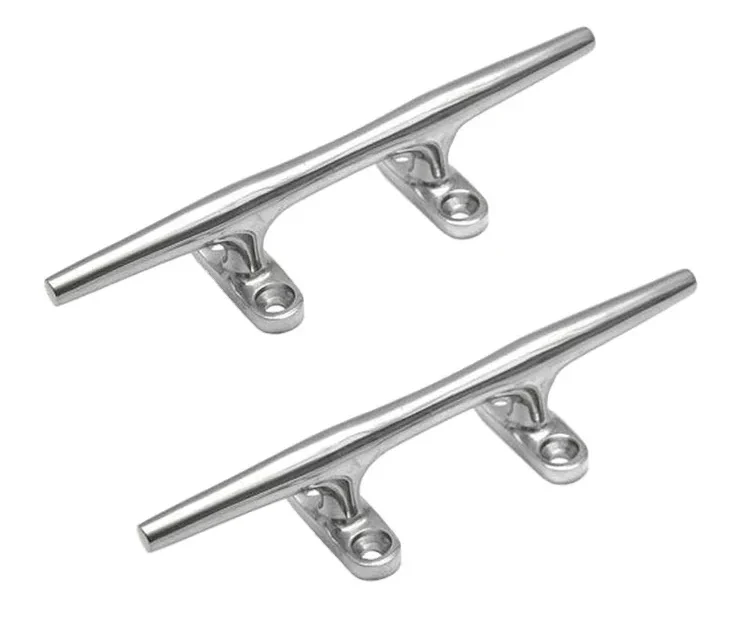
These deck cleats provide a point for wrapping and securing a mooring line. The extended crossbar leaves space for rope…
Read more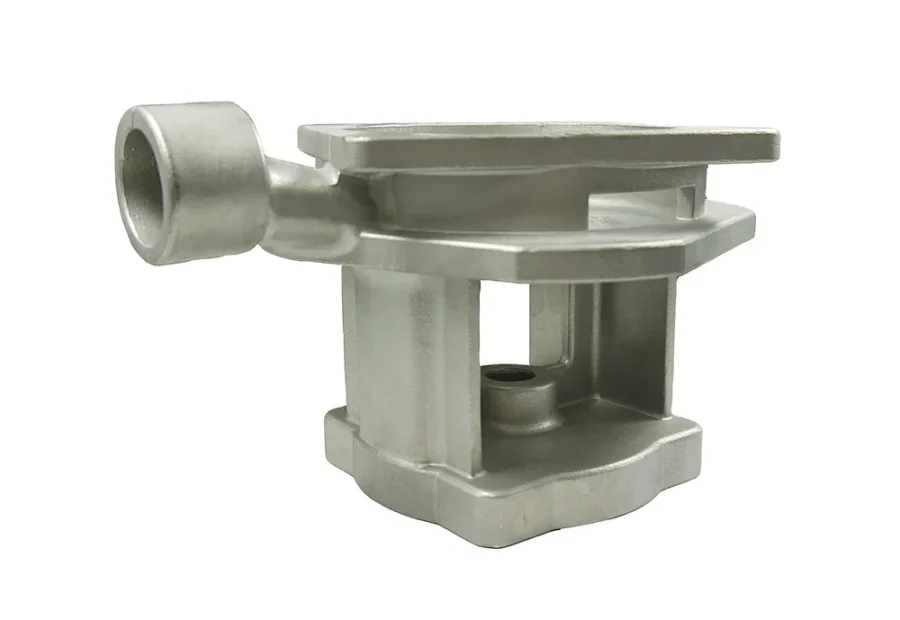
This compact body provides the chamber and connection interfaces for a pump assembly. The side port connects the fluid line,…
Read more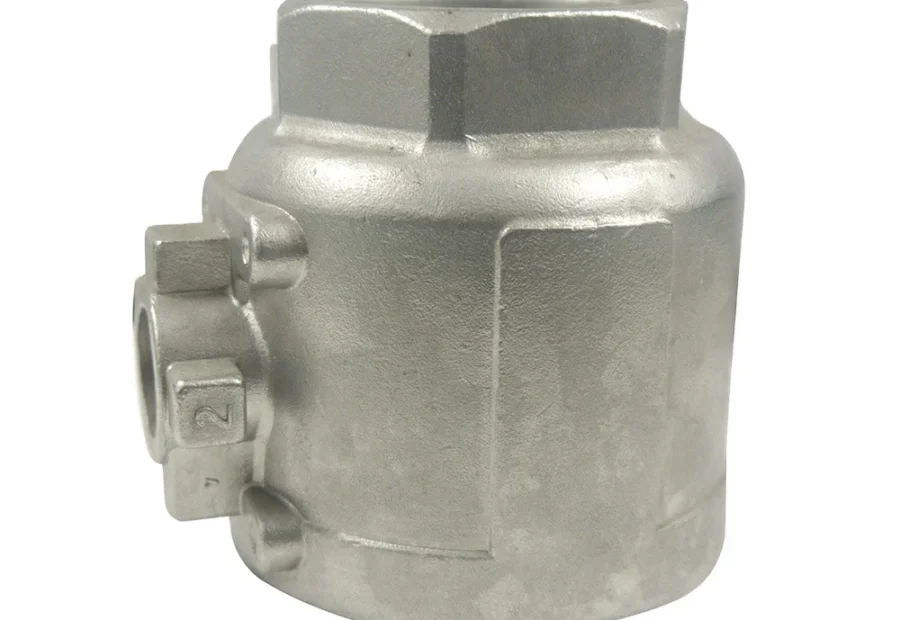
The cylindrical housing provides a bore for mating valve components and an end connection with a hexagonal feature. The small…
Read moreTechnical reading
Selected reading for this material family.
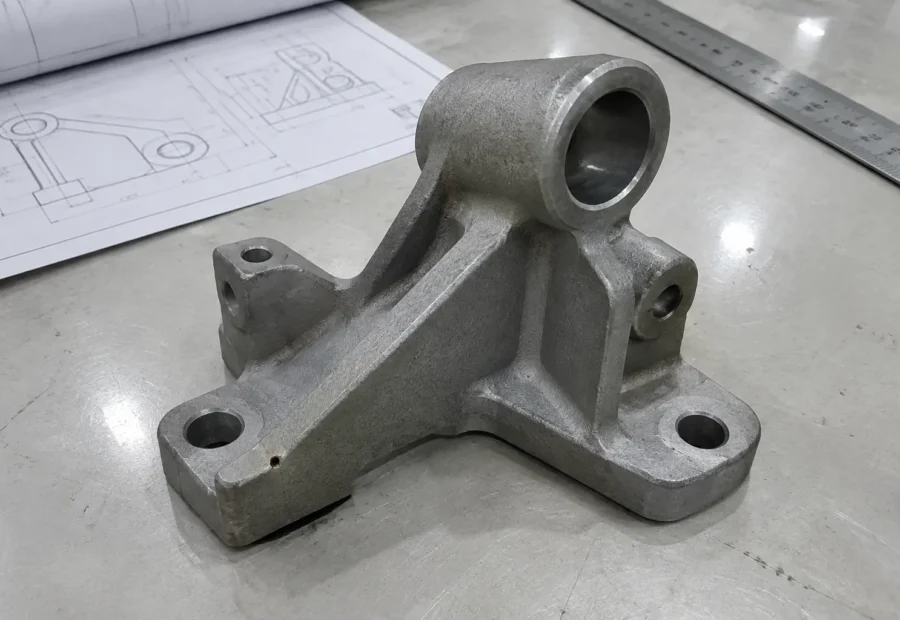
This buyer-focused guide explains how to evaluate possible investment casting defects without relying on photographs alone. It shows how defect…
Read more
Build a useful enquiry around controlled files, material requirements, demand and the delivered component. Use a scope sheet to record…
Read moreSend the drawing, service environment and production requirements for an engineering review.