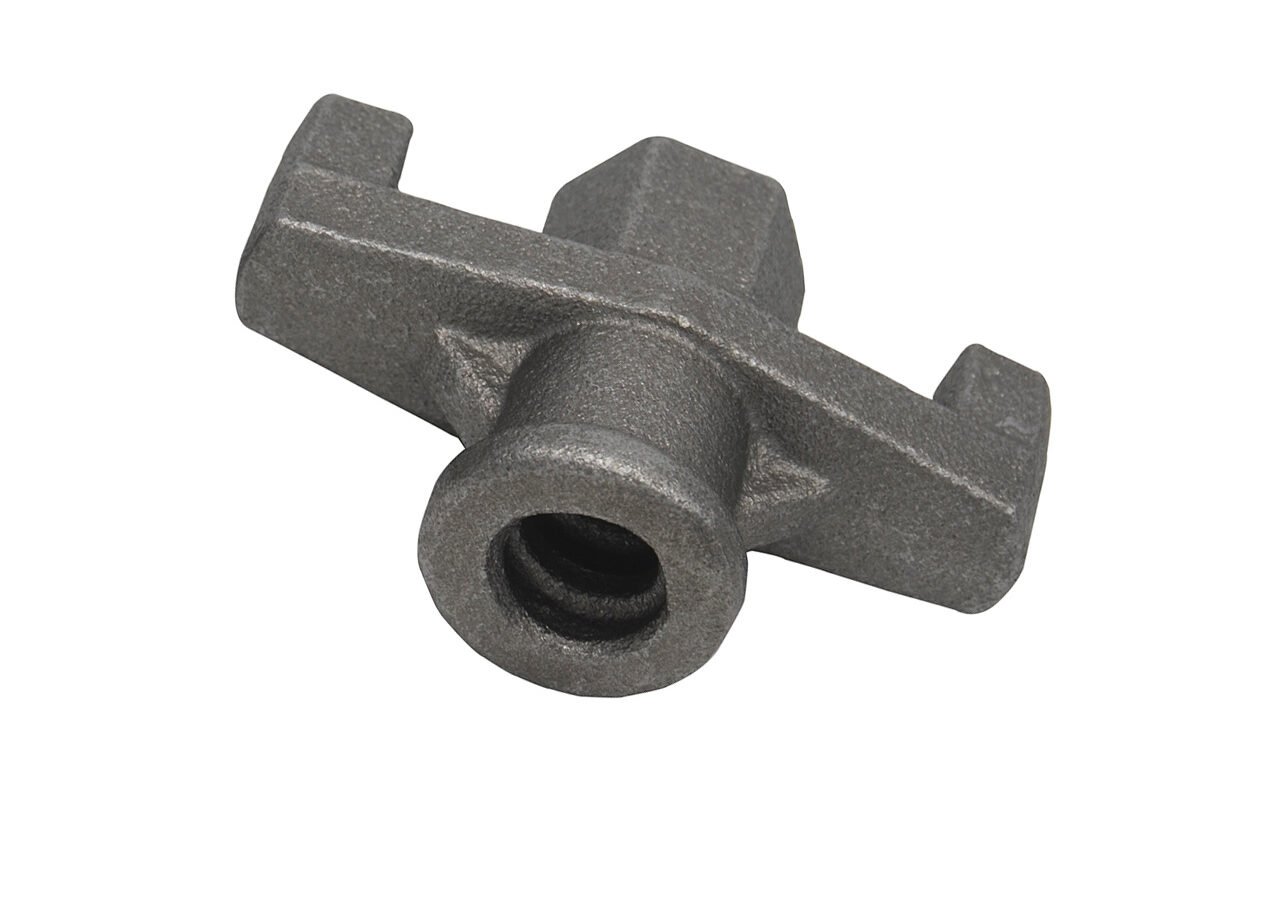
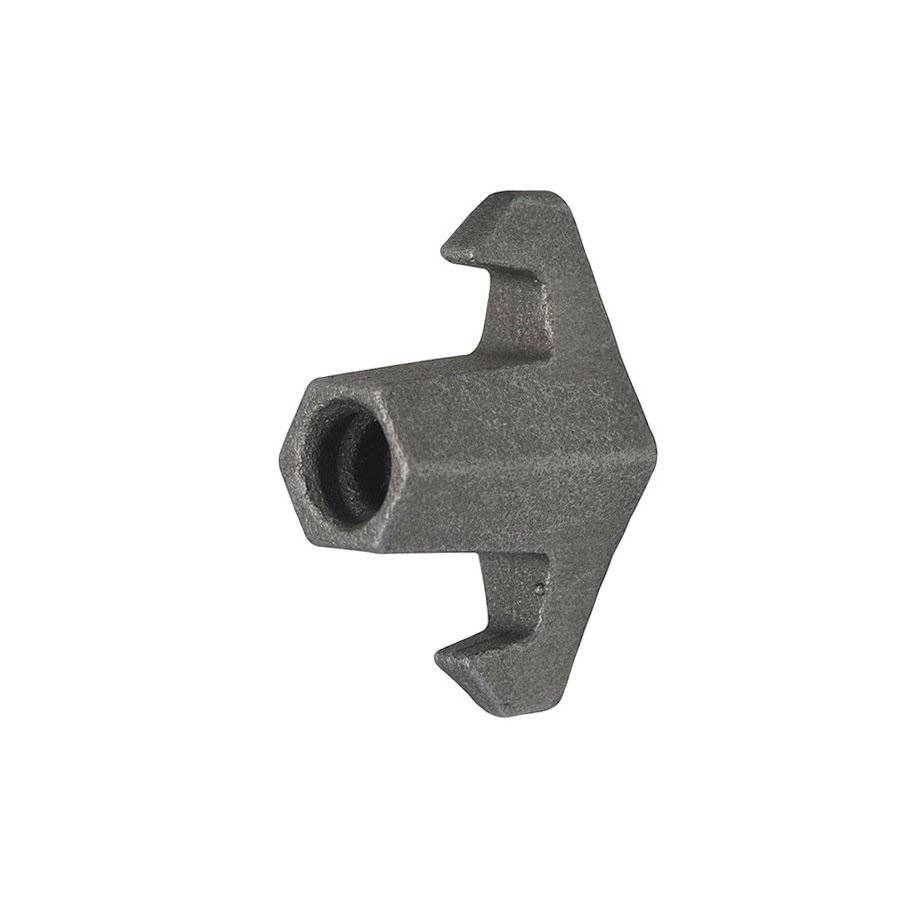
Product: Formwork wing nut for a concrete wall-form tie rod
Material: QT450-10 ductile iron specified for this project
Route: Resin-sand casting, shot blasting and machined internal thread
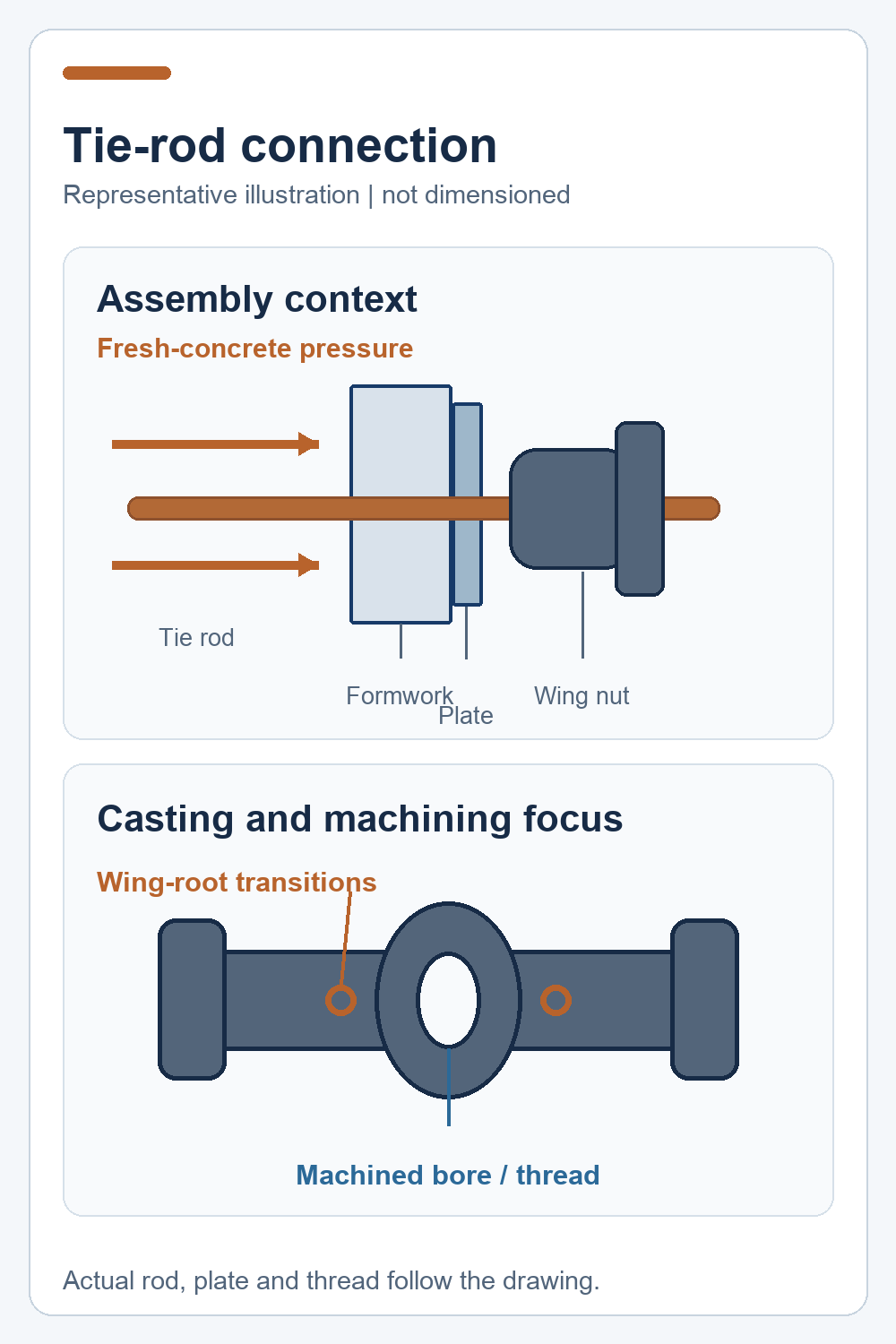
Application: Locking a formwork assembly against fresh-concrete lateral pressure
Product and application
Locking the tie-rod and bearing-plate arrangement of a concrete formwork assembly.
Project problem and requirements
This anonymized project concerned a cast wing nut used with a tie rod and bearing plate in a concrete formwork system. The customer specified ductile iron and required the wings, hub and machined thread to carry the defined tie load without brittle fracture or thread failure. The wing roots and material surrounding the bore were the critical areas: casting defects there could reduce section strength or interrupt the finished thread.
Solution and manufacturing approach
The production route used resin-sand moulding followed by ductile-iron melting, nodularizing and inoculation, casting cleanup and shot blasting. The internal thread was machined after casting; its profile was not treated as an as-cast feature. Process control focused on the wing-root transitions and bore stock, while dimensional checks covered the wing profile and the rod interface. The thread size and fit remain drawing-specific rather than a universal specification for this part family.
Verification and outcome
For this project, the reported lot checks included heat-level chemical analysis, tensile samples, visual inspection and thread go/no-go gauges. The supplied project results record tensile strength of at least 460 MPa and 11.5% elongation. Sample destructive load testing exceeded 160 kN, with the reported fracture location away from the wing roots.
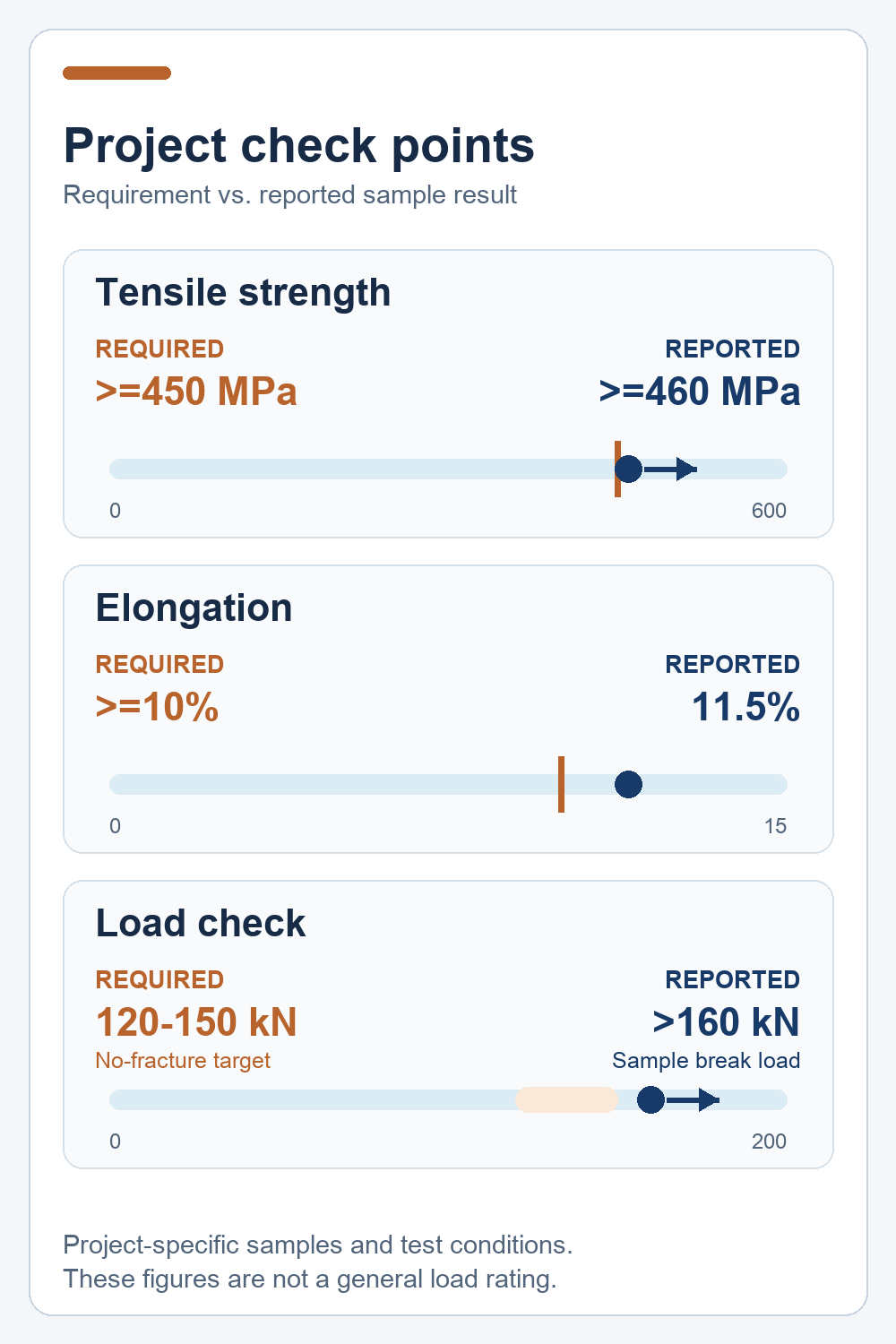
These are project-specific sample results, not a load rating for every wing nut or assembled formwork system. Accepted parts moved into batch supply under the project’s inspection plan. See how quality checks are defined for each drawing.