What Should You Know Before Sourcing Carbon Steel Investment Casting?
Struggling to get a clear, actionable quote for your custom carbon steel parts? You send out a drawing and an RFQ, but the replies are vague, the prices are all over the map, or suppliers ask questions you aren't prepared to answer. This ambiguity costs you valuable time and puts your project at risk of delays, failed samples, and components that don't perform as expected. To get a reliable result, your project needs a solid foundation built on clear technical specifications, and this guide will show you how to build one for your carbon steel investment casting project.
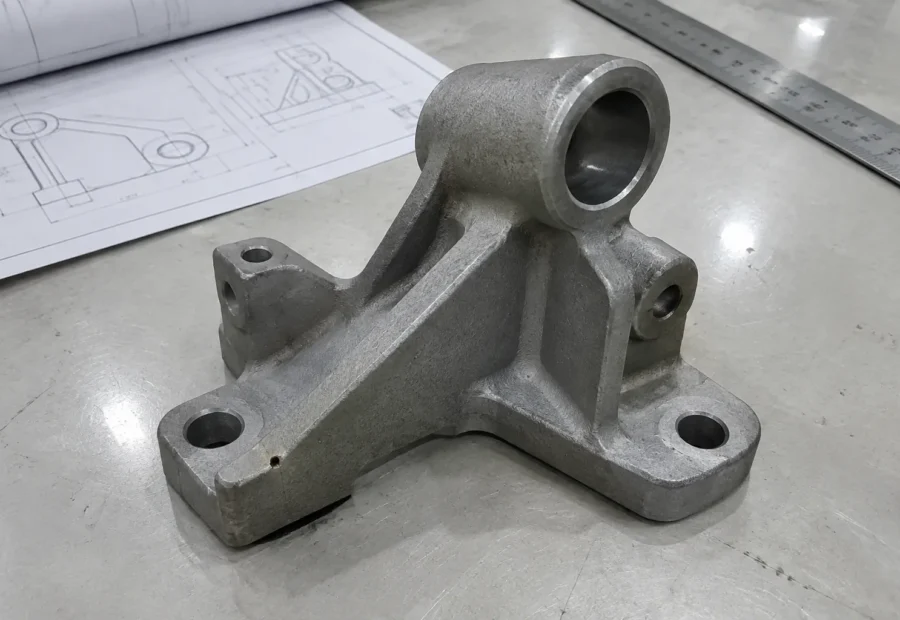
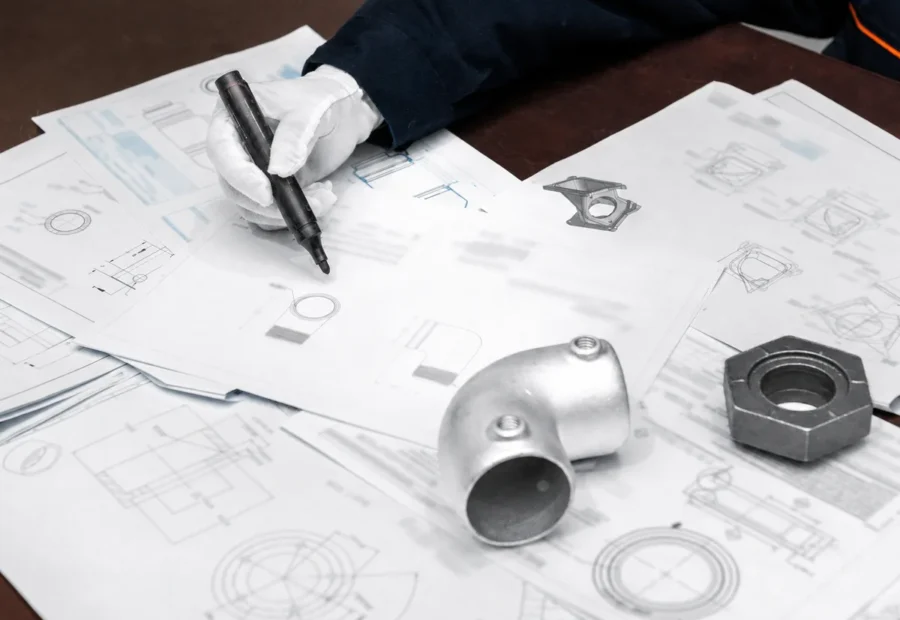
Sourcing carbon steel investment casting successfully requires more than just a material name. You must define the specific grade according to a recognized standard (like ASTM, EN, or JIS), specify the required heat treatment condition, and provide a complete engineering drawing with tolerances, datums, and functional surfaces. This detailed information allows a manufacturer to assess manufacturability, manage quality control, and deliver parts that meet your performance and service life expectations.
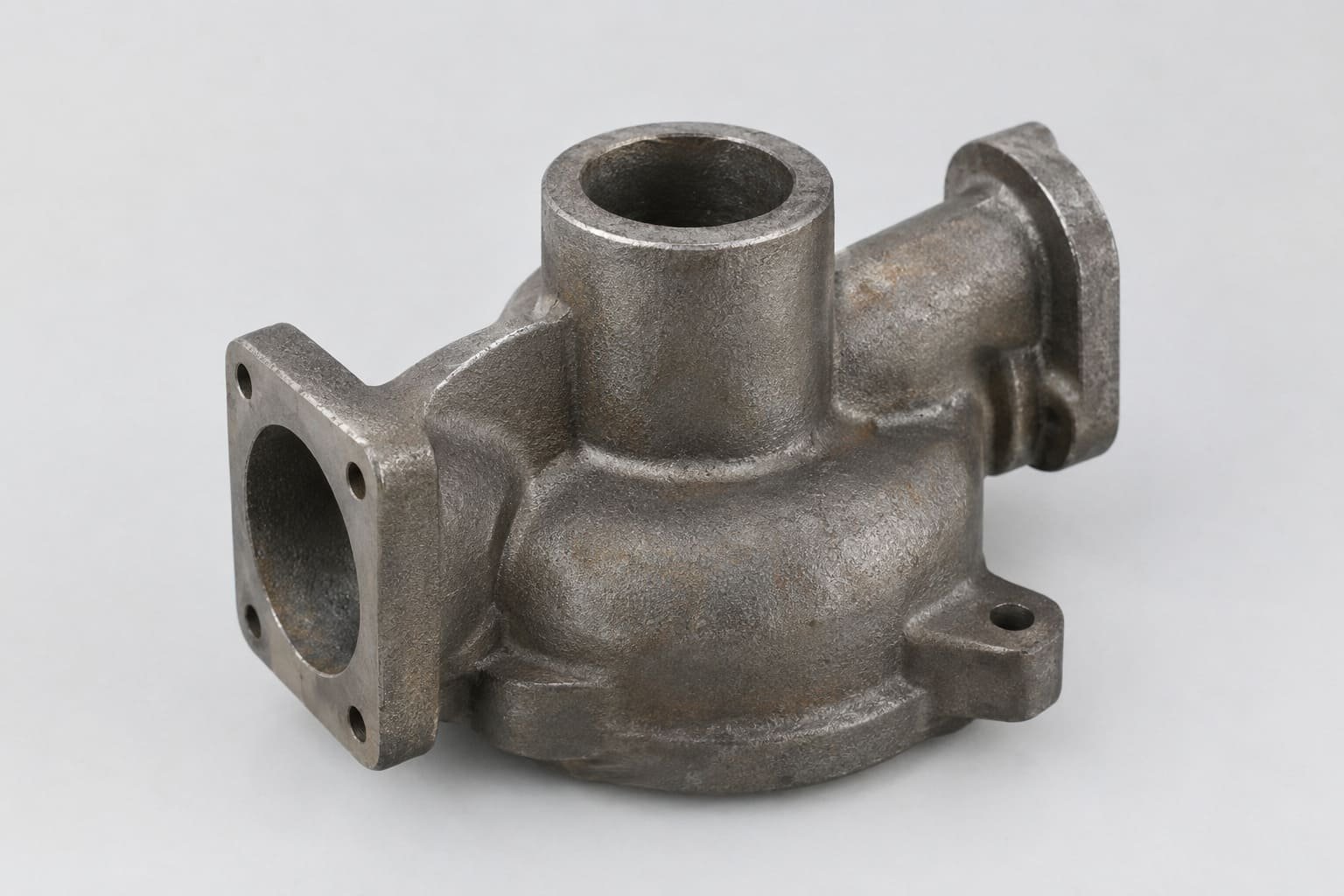
Getting the initial specification right is the first and most critical step. But it's just the start. Let's explore why simply requesting "carbon steel" is insufficient and what key details transform an ambiguous inquiry into a production-ready project.
Why Is "Carbon Steel" Not a Specific Enough Material Callout?
You've sent an RFQ for a "carbon steel" part and received widely different prices, or worse, radio silence. The ambiguity in your request is likely the culprit, forcing suppliers to guess or decline, costing you time and momentum. So what's missing from your inquiry?
The term "carbon steel" is a broad category, not a specific instruction.[1] A manufacturer needs the exact grade (e.g., ASTM A216 WCB, S20C, 1020) and the governing standard to understand the required chemical composition, mechanical properties, and inspection criteria necessary for production.
The Critical Role of Standards (ASTM, EN, JIS, GB)
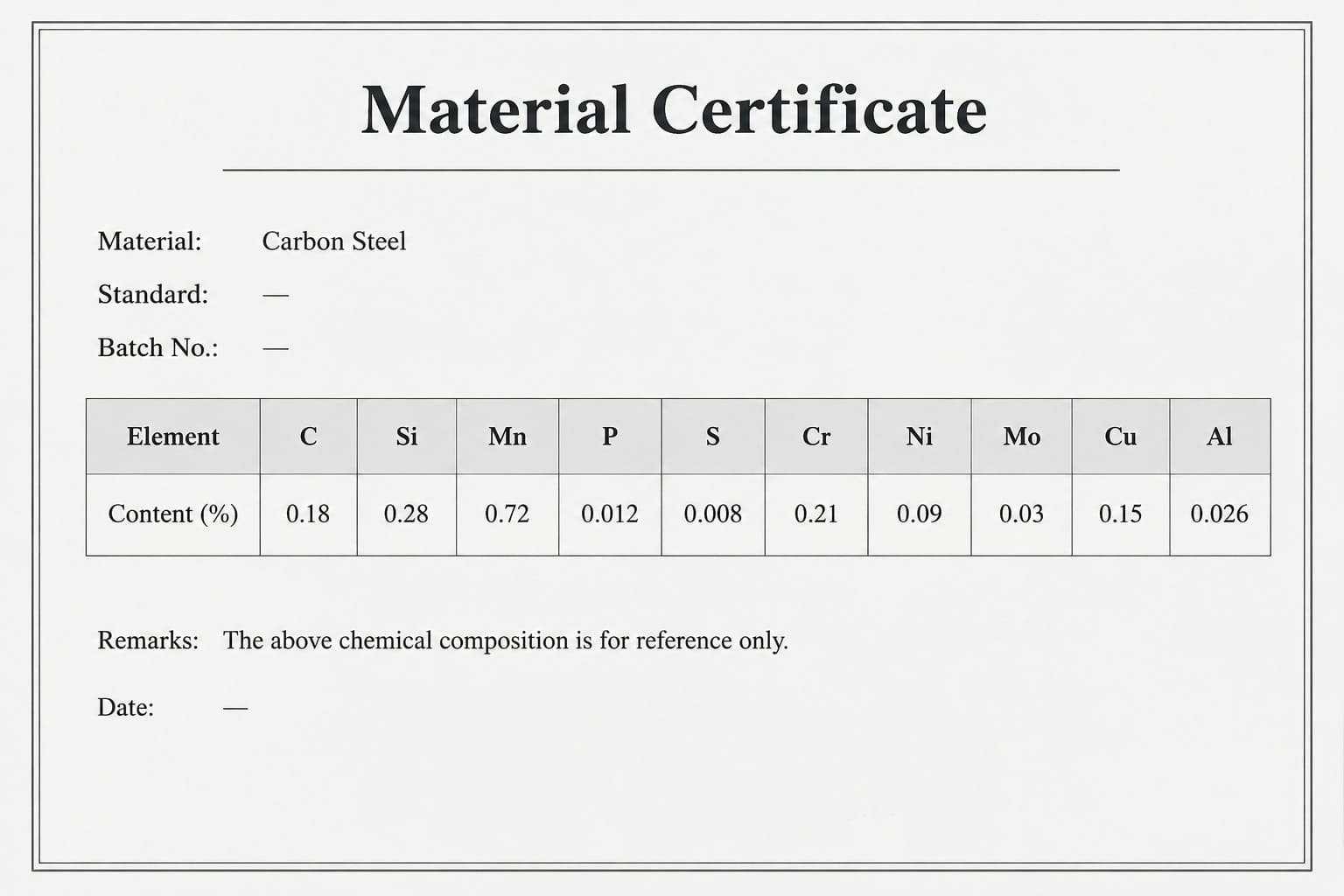
Think of a material standard as the rulebook for your component. It defines the acceptable chemical ranges, the required mechanical properties, the methods for testing, and the criteria for acceptance.[2] A part made to ASTM A216 Grade WCB, a common choice for valves and fittings, has different requirements than a part made to JIS G5101 Grade SC450, even if their carbon content seems similar.
I often receive inquiries for a "1045 steel casting." My first question is always, "According to which standard?" The designer might be thinking of AISI 1045 wrought bar stock, but for a casting, a comparable grade might be ASTM A27 Grade 70-40. The standard dictates the rules of the game for us as a manufacturer. It tells us:
- What elements to test for: Beyond iron and carbon, it specifies limits on manganese, silicon, and importantly, impurities like sulfur and phosphorus.
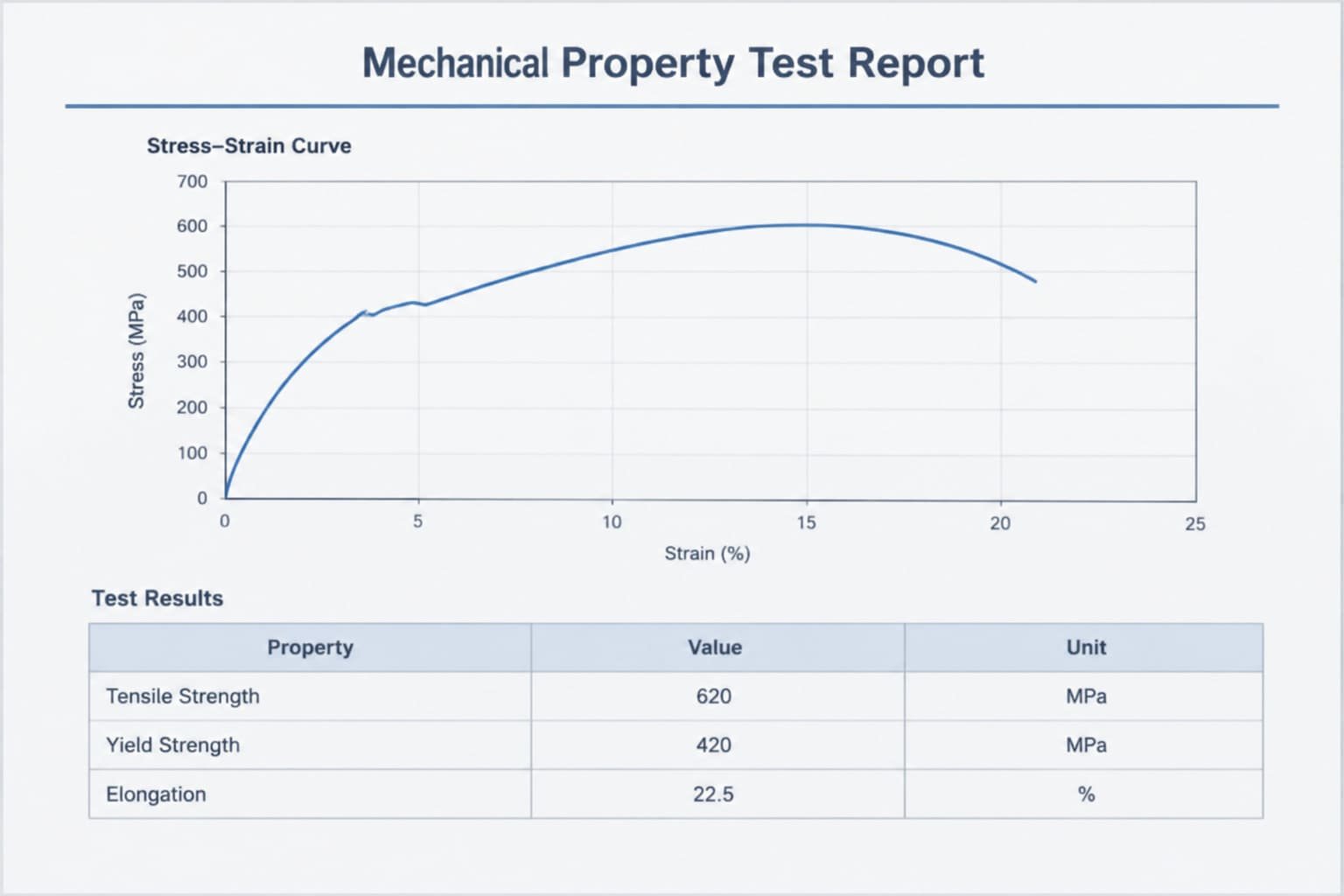
- What mechanical properties to achieve: It will define the minimum required tensile strength, yield strength, and elongation after a specific heat treatment.
- What inspections are mandatory: Some standards require every heat of metal to be tested, while others may have different protocols. For pressure-containing parts, the standard may even mandate specific non-destructive tests.
Without a standard, a supplier is forced to make assumptions. These assumptions introduce risk for you, the buyer.
Chemistry vs. Mechanical Properties
A common mistake is to focus only on the chemical composition. While chemistry is the foundation, the part's actual performance—its ability to withstand force, pressure, and stress—is defined by its mechanical properties. These properties are the result of a well-controlled casting process and, most importantly, the correct heat treatment.
Two castings can have identical chemistry but vastly different performance if one is left "as-cast" while the other is normalized or quenched and tempered.[3] The drawing or specification must state the required final condition.
The Impact of Heat Treatment
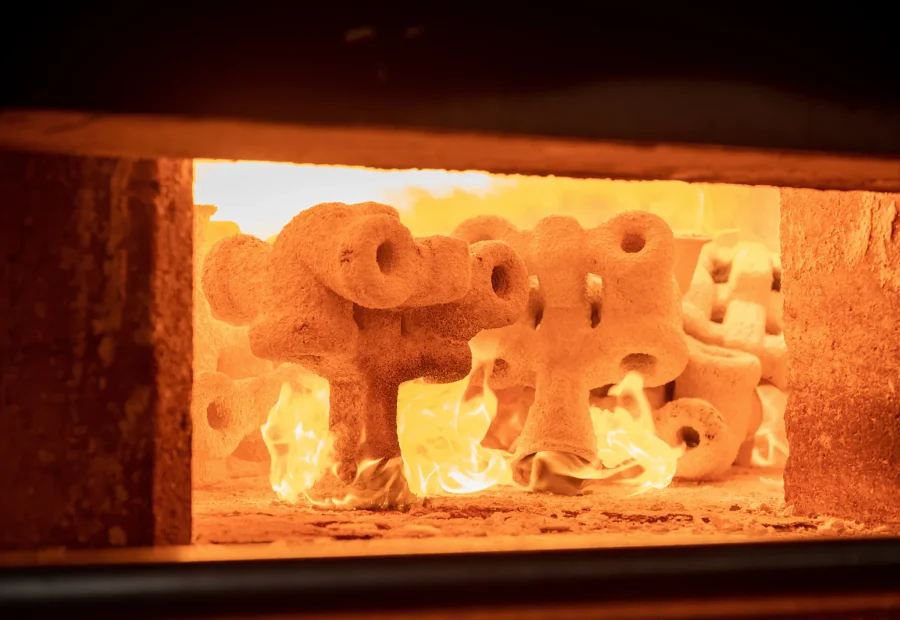
Heat treatment is the process of using controlled heating and cooling cycles to alter the microstructure of the steel, thereby changing its mechanical properties. For carbon steel investment casting, the most common treatments are:
- Annealing: This process softens the steel, making it easier to machine. It involves heating the steel and then cooling it very slowly.
- Normalizing: This refines the grain structure of the casting after it solidifies. It improves toughness and ductility compared to the as-cast condition. The process involves heating the steel and then letting it cool in open air.
- Quenching and Tempering (Q&T): This is a two-step process used to create high strength and hardness. First, the part is heated and then rapidly cooled (quenched) in water, oil, or another medium. This makes the steel very hard but also brittle. The second step, tempering, involves reheating the part to a lower temperature to reduce brittleness and achieve the target balance of hardness and toughness.[4]
The choice of heat treatment is not arbitrary; it is directly tied to the part's function. A simple bracket under low stress may be fine in a normalized condition. A gear or a high-wear component will almost certainly require quenching and tempering to achieve the necessary surface hardness and strength. Your specification must be clear.
Can You Substitute a Similar Carbon Steel for Your Investment Casting Project?
Your supplier reviews the drawing and suggests using a "nearly identical" local GB (Chinese) standard grade instead of the specified ASTM grade to save on costs or lead time. Is this a smart optimization or a hidden risk that could compromise your product?
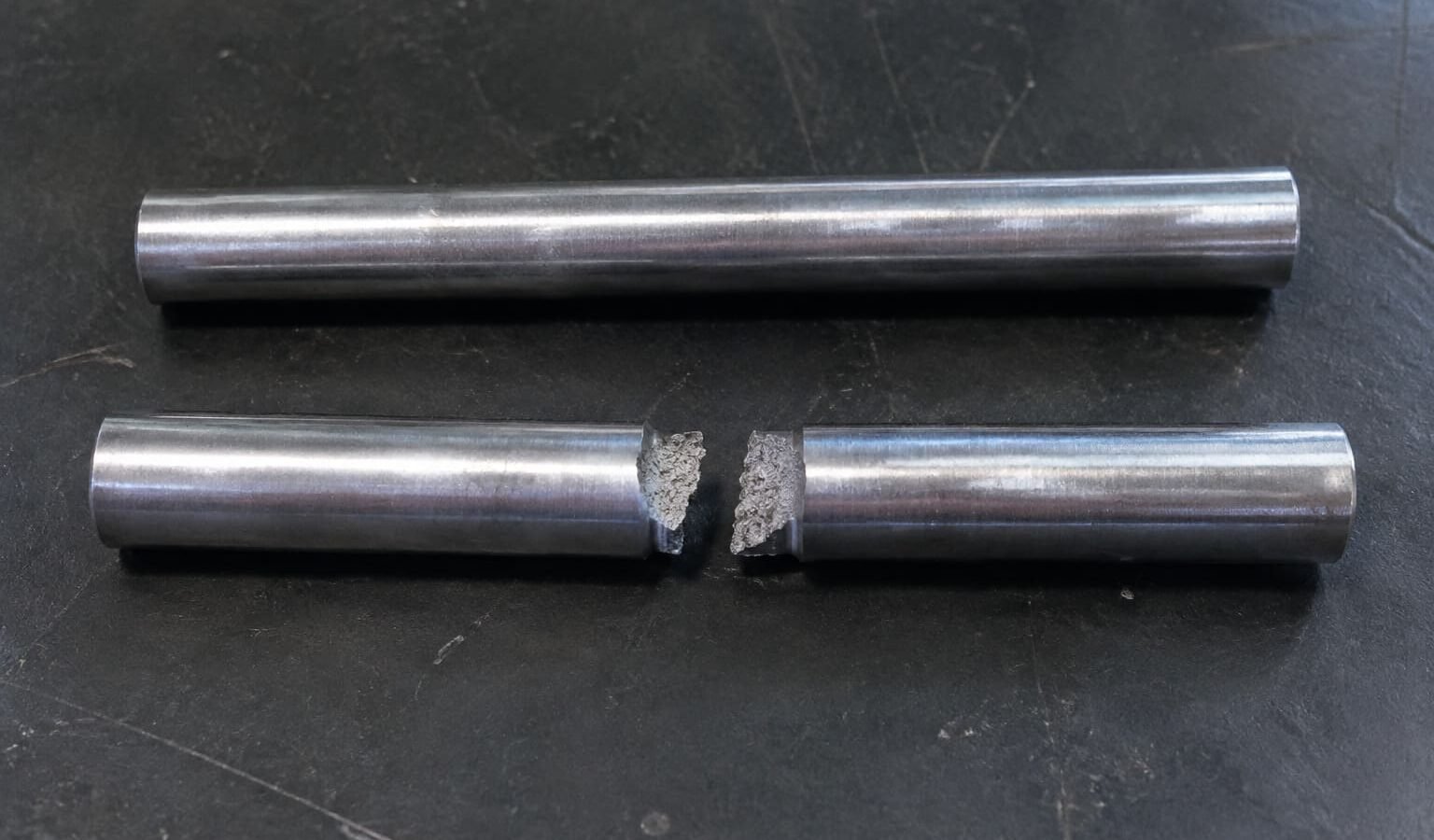
Substituting carbon steel grades is a high-stakes decision and should never be done without a thorough technical evaluation by your engineering team. Seemingly minor differences in chemistry, allowable impurities, heat treatment response, or standard requirements can lead to premature wear or catastrophic part failure.[5]
The "Equivalence" Trap
The biggest danger lies in assuming two grades are interchangeable based on a quick comparison of their main chemical elements (Carbon, Manganese, Silicon). This is a classic trap. True equivalence depends on the entire standard.
I recall a project where a customer specified an ASTM grade for a component used in oilfield equipment. We were asked if we could use a common GB grade that had a very similar C-Mn-Si profile. Upon reviewing the full standards, we found a critical difference: the ASTM standard mandated Charpy V-notch impact testing at -20°C to ensure toughness in cold environments. The proposed GB standard had no such low-temperature toughness requirement. Had we made the substitution, the parts might have performed perfectly at room temperature but could have become brittle and failed in their actual service environment.
The responsibility for approving any material substitution must ultimately lie with the buyer's design authority. As a manufacturer, we can propose alternatives and provide all the supporting data—material certificates for the new grade, test coupons, comparative property charts—but the final "yes" or "no" must come from the team that understands the application's risks and requirements.
How to Properly Vet a Proposed Substitution
If a substitution is on the table, a rigorous verification process is non-negotiable. This isn't just about looking at a data sheet. It involves:
- Comparing Full Standard Documents: You need to get the complete PDF of both the original and proposed standards. Pay close attention to sections on scope, chemical requirements (including trace elements), heat treatment procedures, mechanical property requirements (tensile, yield, elongation, hardness), and any specified testing like impact or non-destructive examination.
- Analyzing Trace Elements: Sometimes the danger is in the small print. A proposed substitute might have a higher allowable limit for phosphorus or sulfur, elements that can significantly reduce toughness and weldability.[6]
- Evaluating Heat Treatment Response: Will the new grade respond to the specified heat treatment in the same way? The alloy content, even minor elements, can affect hardenability and the final microstructure. We might recommend producing test bars from the new material and running them through the heat treat cycle to confirm the resulting properties.
- Risk Assessment: The most important question is: "What happens if this part fails?" For a decorative cover, a substitution might be low-risk. For a pressure-containing valve body, a lifting hook, or a critical suspension component, the consequences of failure are severe, and sticking to the original, proven specification is almost always the correct decision.
How Does Geometry Affect Your Carbon Steel Investment Casting Design?
You've locked down the material standard and heat treatment. But now, after reviewing your 3D model, your supplier is asking for design changes—adding draft angles, increasing fillet radii, or thickening a wall section. Why can't they just cast the part exactly as you designed it?
Investment casting, for all its advantages in creating complex shapes, is still governed by the physics of molten metal flow and solidification. A part's geometry directly impacts mould filling, cooling rates, and the risk of defects like shrinkage, porosity, hot tears, or cracks.[7] A collaborative Design for Manufacturability (DFM) review is essential to bridge the gap between your design intent and a high-quality, repeatable casting.
The Power of a DFM Review
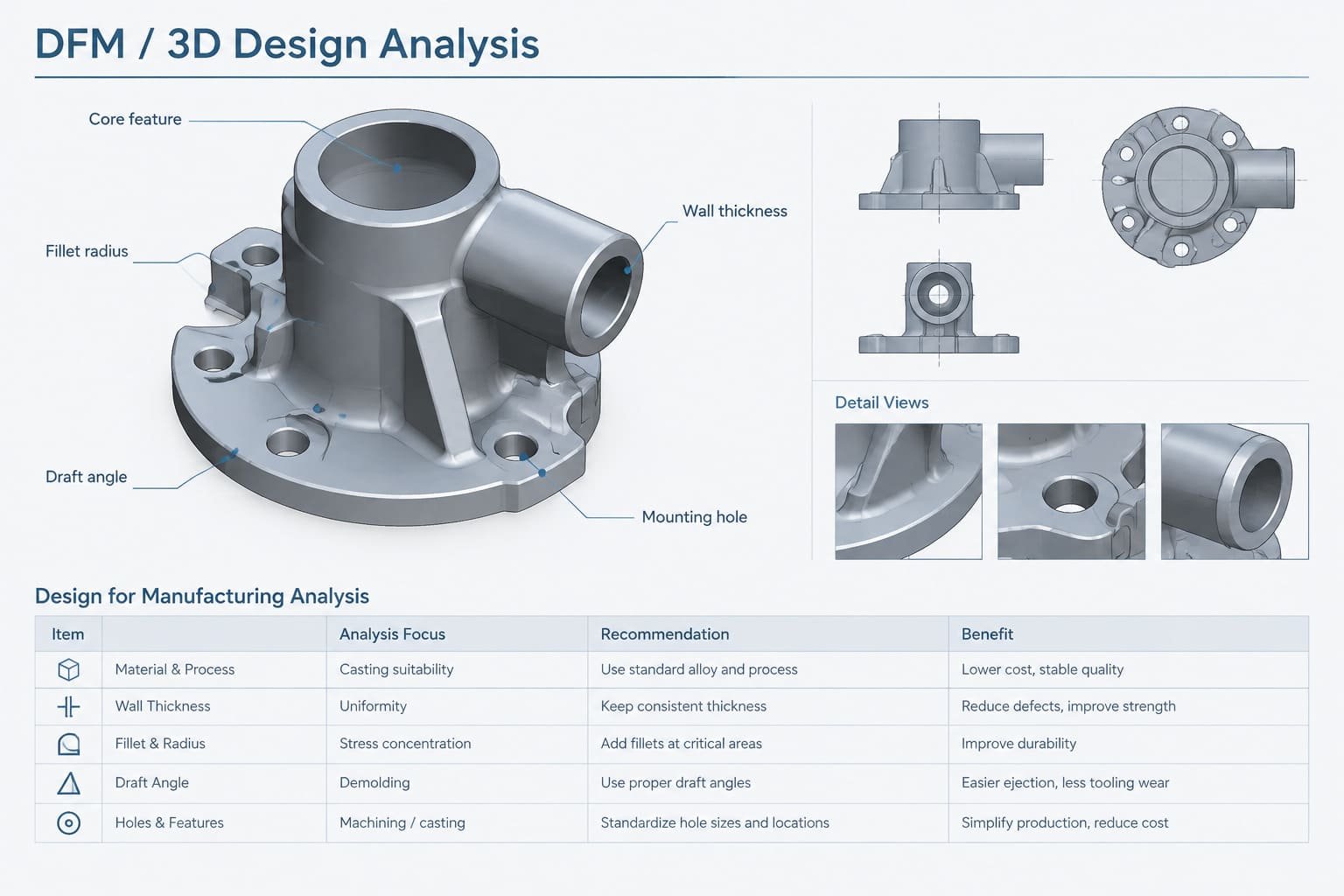
Before we ever generate a quote, our first step is to conduct a DFM review of the customer's drawing and 3D model. This isn't about criticizing the design; it's about identifying potential manufacturing challenges and proposing small modifications that can dramatically improve the quality and consistency of the final carbon steel investment casting.
Recently, we reviewed a design for a mounting bracket that had several sharp, 90-degree internal corners. In steel casting, these sharp corners act as stress concentrators during the rapid cooling phase.[8] This can lead to hot tears (cracks that form while the metal is still hot and weak) or cracks that appear later during heat treatment. Our recommendation was simple: add a small fillet radius (e.g., 3-5mm) to these corners. This change had no impact on the part's function but significantly reduced stress, improved metal flow, and made the part far more robust and manufacturable.
Key Geometric Considerations for Carbon Steel Casting
During a DFM review for carbon steel, we focus on a few key areas:
- Wall Thickness: Carbon steel is not as fluid as some aluminum or zinc alloys. To ensure the mould cavity fills completely before the metal freezes, we look for a minimum wall thickness, typically around 3mm to 5mm, though this depends on the part's overall size and complexity.[9] Abrupt changes from a thick section to a very thin section are problematic, as they can cause flow issues and create "hot spots" that lead to shrinkage porosity. The ideal design has a uniform wall thickness or sections that transition gradually.
- Fillets and Radii: As mentioned, sharp internal corners are a major source of casting defects. Generous fillets and radii are your best friends in casting design. They not only reduce stress but also provide a smoother path for the molten metal to flow, preventing turbulence and trapped air.
- Machining Allowance: Investment casting is often called a "net shape" process, but this can be misleading. While it produces excellent as-cast surfaces, it cannot hold the tight tolerances of CNC machining. If a surface needs to be perfectly flat for a gasket, if a hole needs to have a precise diameter for a bearing press-fit, or if two features need a very accurate positional tolerance, these must be identified on the drawing. We will then add extra material, or "machining stock," to those specific areas so they can be machined to final size after casting. Clear datums on the drawing are critical for ensuring a correct and repeatable machining setup.
| Feature | High-Risk Design | Low-Risk Design | Why it Matters for Carbon Steel Investment Casting |
|---|---|---|---|
| Wall Thickness | Abrupt changes (e.g., 20mm to 3mm) | Uniform or gradually tapering thickness | Prevents shrinkage porosity and ensures complete filling. |
| Internal Corners | Sharp 90-degree angles (R=0) | Rounded with generous fillets (R > 3mm) | Reduces stress concentration and risk of cracking. |
| Holes | As-cast for tight tolerance (< ±0.2mm) | Cast solid and drilled/reamed after | Guarantees precision, position, and surface finish. |
| Mating Surfaces | Specified as-cast for sealing | Clearly marked "machine this surface" | Ensures flatness and proper assembly function. |
Is a Good Sample Enough for a Successful Carbon Steel Investment Casting Project?
The first article samples have arrived, and they look perfect. They fit, the finish is good, and the initial measurements check out. You're thrilled and ready to authorize the full production run. But is your supplier truly ready to deliver that same quality, batch after batch, for hundreds or thousands of parts?
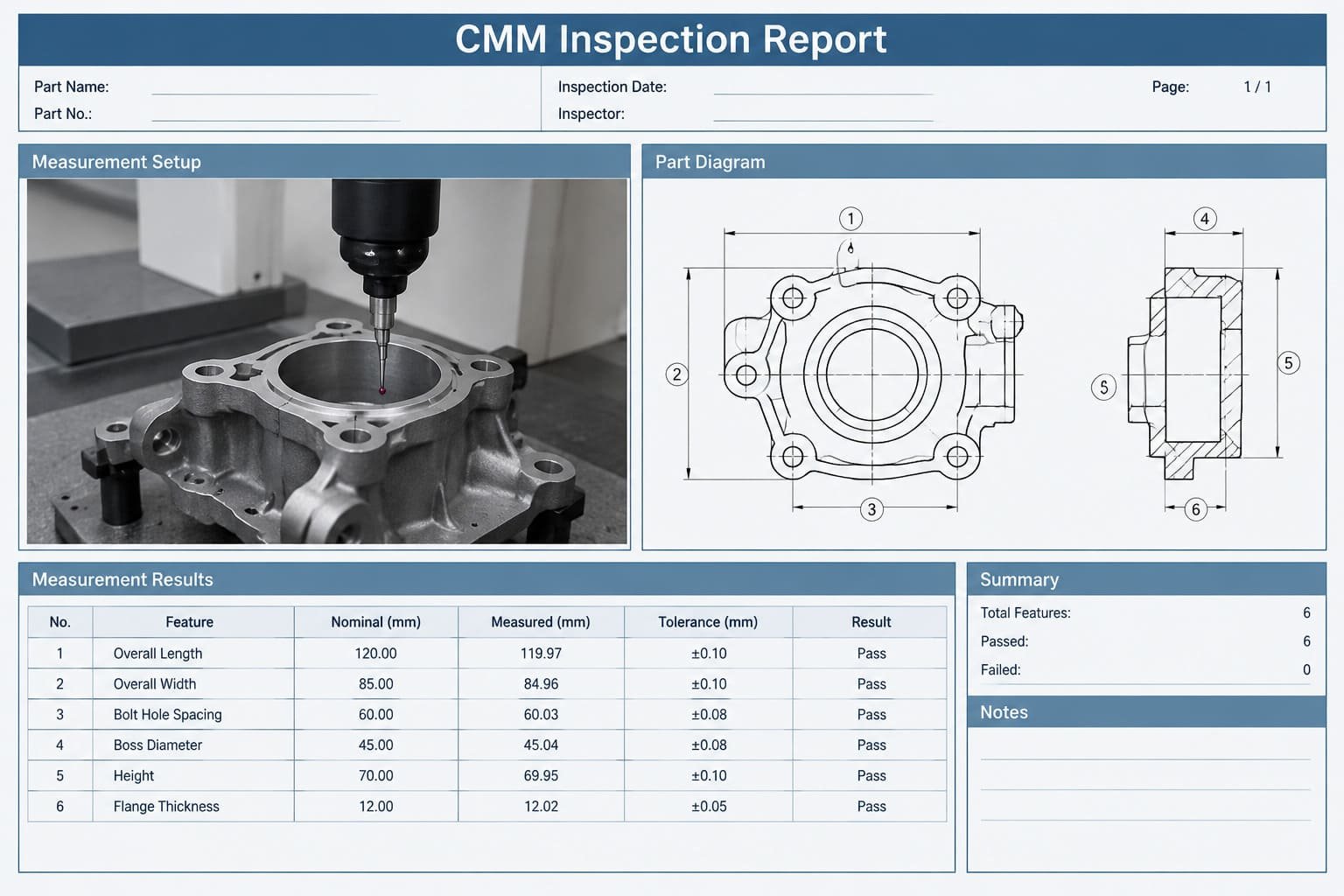
A successful sample only proves the potential for production. It demonstrates that the tooling is correct and a good part can be made. True production readiness, however, requires establishing and validating repeatable, documented processes for every step—casting, heat treatment, machining, and especially, a comprehensive quality control plan.
Moving Beyond the "Golden Sample"
The "golden sample" fallacy is a common trap in sourcing. The first few parts are often produced with extra attention and manual adjustments by the most experienced technicians. The real test of a supplier isn't the first part; it's the 101st and the 1,001st part, produced months later.
When a customer approves a sample, our work isn't done—it's just beginning. We immediately work to document every single parameter used to create that approved part. This becomes our formal Standard Operating Procedure (SOP) for that specific component. We record:
- The specific heat number of the steel used.
- The wax injection parameters and shell-making conditions.
- The furnace preheat and pouring temperatures.
- The full time-temperature chart from the heat treatment furnace.
- The exact CNC program, fixtures, and cutting tools used for machining.
Without this level of documentation, repeatability is just a matter of luck. With it, it becomes a process.
The Elements of a Robust Production Control Plan
When you're evaluating a supplier's readiness for mass production, you need to look past the sample and inquire about their systems. A robust plan for a carbon steel investment casting project should include:
- Material Traceability: How does the foundry track raw materials from receipt through to the final shipped part? Can they provide a material certificate for a specific production batch delivered three months from now? This is crucial for accountability.
- In-Process Controls: Quality can't be "inspected in" at the end. What checks are performed during the process? This includes wax pattern inspection, shell integrity checks, spectrometer analysis of the molten steel before pouring, and monitoring of heat treatment furnace cycles.
- Consistent Inspection and Reporting: You and the supplier must agree on the final inspection plan. What gets checked on 100% of parts? What is checked on a statistical basis (AQL)? The deliverable documentation package is just as important as the part itself. A typical package for a critical part might include a First Article Inspection Report (FAIR), material certificates (EN 10204 3.1), heat treatment reports, and dimensional inspection reports for each shipment.
- Total Cost vs. Piece Price: This is where the true cost of sourcing becomes clear. A supplier with weak process controls may offer a tempting low piece price. But that price doesn't account for your costs associated with inspecting incoming goods, production line stoppages due to a bad batch, freight costs for returning defective parts, or the immense cost of a field failure and recall. A slightly higher piece price from a supplier with proven, robust controls is almost always the lower total cost option.
Frequently Asked Questions
What are the typical tolerances for carbon steel investment casting?
Tolerances vary significantly with part size, geometric complexity, and the process controls of the foundry. As a general guideline, a linear tolerance of +/- 0.5mm might be achievable for a small dimension (e.g., 25mm), but this can grow to +/- 1.5mm or more for larger dimensions (e.g., 200mm). For critical tolerances, the best practice is always to design the part for post-cast machining.
What is the best carbon steel grade for casting?
There is no single "best" grade. The right choice depends entirely on your application's specific requirements for tensile strength, hardness, toughness, weldability, and cost. Common grades like ASTM A216 WCB (for pressure applications), ASTM A27 70-36 (a general-purpose structural steel), and AISI/SAE 1020 or 1040 are good starting points, but the selection must be driven by engineering analysis.
How much does a casting mold (tooling) cost?
Investment casting tooling costs can range from a few thousand U.S. dollars for a simple, small part to tens of thousands of dollars for a large, complex component with multiple slides or cores. The cost is a one-time investment and is influenced by part size, complexity, expected tool life, and the number of cavities. We always provide a separate, transparent price for tooling.
Can you weld carbon steel castings?
Yes, most low and medium carbon steel castings are readily weldable. Low-carbon grades (like 1020) are very easy to weld, while medium-carbon grades (like 1045) may require preheating and post-weld heat treatment (PWHT) to prevent cracking and restore the desired mechanical properties in the heat-affected zone.[10] The specific welding procedure must be compatible with the steel grade and its heat-treated condition.
Conclusion
Successfully sourcing a custom component is about more than finding the lowest price; it's about managing risk and building a reliable supply chain. When it comes to carbon steel investment casting, this begins with providing a complete and unambiguous technical specification. Moving beyond a simple "carbon steel" callout to define the specific standard, grade, and heat treatment is the first step. This is followed by a collaborative DFM review to align the part's geometry with the realities of the casting process. Finally, true success is measured not by a single perfect sample, but by the supplier's ability to demonstrate robust, repeatable processes that deliver consistent quality, batch after batch. A successful project is a partnership built on clear communication and shared technical understanding.
If you are ready to move your project from a drawing to a reliable, production-ready component, our team is here to help. Send us your project details—including 2D/3D files, material standards, annual quantity, and application requirements—for a detailed manufacturing review and an actionable quote.
Sources & references
Reference note
Metallurgical references define carbon steel as a broad family of steels whose carbon content and other compositional limits vary by grade, supporting the need for a more specific material designation. Evidence role: definition; source type: encyclopedia. Supports: A neutral materials reference should define carbon steel as a class of steels spanning multiple compositions and property levels rather than as one production grade..
Reference note
Steel-casting specifications published by recognized standards bodies include requirements for chemical composition, mechanical performance, test procedures, and product acceptance. Evidence role: general_support; source type: institution. Supports: An official standard or standards-body explanation should show that steel specifications establish composition, properties, testing, and acceptance provisions..
Reference note
Experimental studies of cast steels show that normalization and quenching-and-tempering alter microstructure and mechanical properties relative to the as-cast condition, although the magnitude depends on composition, section size, and treatment parameters. Evidence role: mechanism; source type: paper. Supports: Research should demonstrate that thermal history changes cast-steel microstructure and therefore strength, hardness, ductility, or toughness even when nominal composition is unchanged.. Scope note: The extent of the property change is alloy- and process-specific, so the evidence supports the mechanism rather than a universal magnitude.
Reference note
Heat-treatment references explain that quenching commonly forms hard, comparatively brittle martensitic structures, while tempering reduces brittleness and permits adjustment of the strength–toughness balance. Evidence role: mechanism; source type: education. Supports: A technical educational source should describe martensite formation during quenching and the reduction of brittleness during tempering..
Reference note
Materials-engineering literature shows that differences in composition, impurity limits, and hardenability can change a steel's response to heat treatment and its service properties; this establishes substitution risk but does not by itself prove that every non-equivalent substitution will cause failure. Evidence role: general_support; source type: research. Supports: Materials-selection literature should establish that small compositional and specification differences can affect hardenability, toughness, wear, or other service properties.. Scope note: The evidence supports the existence of substitution risk, not the claimed severity of the outcome in every application.
Reference note
Metallurgical studies associate phosphorus segregation and sulfur-bearing inclusions with reduced toughness and, under some welding conditions, increased cracking susceptibility; the effects depend on concentration, inclusion morphology, and steelmaking practice. Evidence role: mechanism; source type: paper. Supports: Research should document how phosphorus segregation and sulfur-bearing inclusions can reduce toughness or contribute to weld-related cracking in steels.. Scope note: The claim is directionally supported, but sulfur and phosphorus do not have identical effects in all steel grades or processing conditions.
Reference note
Casting research identifies section geometry as a major determinant of filling behavior, thermal gradients, solidification sequence, feeding efficiency, and susceptibility to shrinkage porosity and hot tearing. Evidence role: mechanism; source type: paper. Supports: Casting research should explain how section geometry governs fluid flow, thermal gradients, feeding, and restraint during solidification..
Reference note
Casting-design and fracture-mechanics literature treats sharp re-entrant corners as stress raisers, with thermal contraction and restraint during cooling increasing the local risk of crack initiation. Evidence role: mechanism; source type: research. Supports: A technical source should show that abrupt geometric discontinuities increase local stress concentration and can exacerbate thermally induced cracking during casting..
Reference note
Investment-casting design guidance commonly gives steel minimum-section values in the low-millimeter range, but achievable wall thickness depends on flow length, geometry, alloy, shell and pouring temperatures, gating, and foundry process capability. Evidence role: general_support; source type: institution. Supports: Independent investment-casting guidance should provide typical minimum section thicknesses for steel and identify the variables that affect achievable limits.. Scope note: Such ranges are design guidelines rather than universal acceptance limits, so they do not directly validate 3–5 mm for every component.
Reference note
Welding references generally associate increasing carbon content and carbon equivalent with greater heat-affected-zone hardenability and cracking susceptibility, which can make preheat or post-weld thermal treatment appropriate for medium-carbon steels; required procedures depend on thickness, restraint, hydrogen control, and service requirements. Evidence role: expert_consensus; source type: research. Supports: Welding literature should explain the relationship between carbon content, hardenability, heat-affected-zone cracking, and the use of preheat or post-weld treatment.. Scope note: The evidence supports a general weldability trend, not a universal requirement for PWHT whenever 1045 steel is welded.