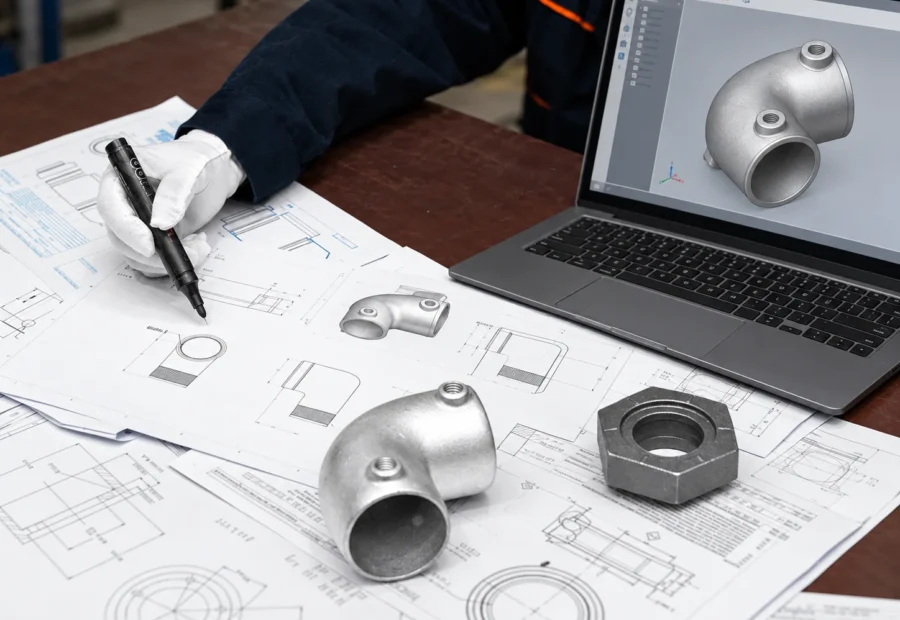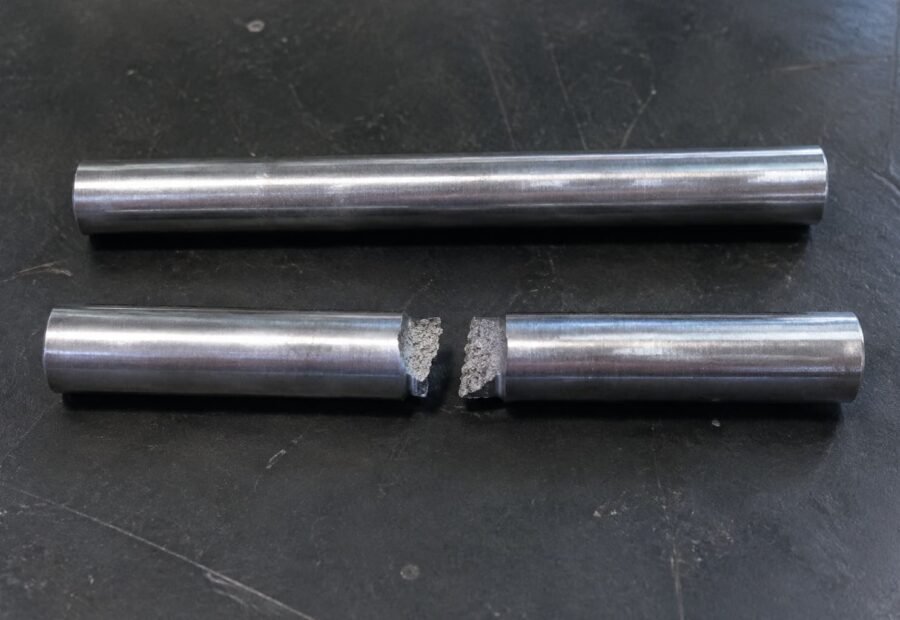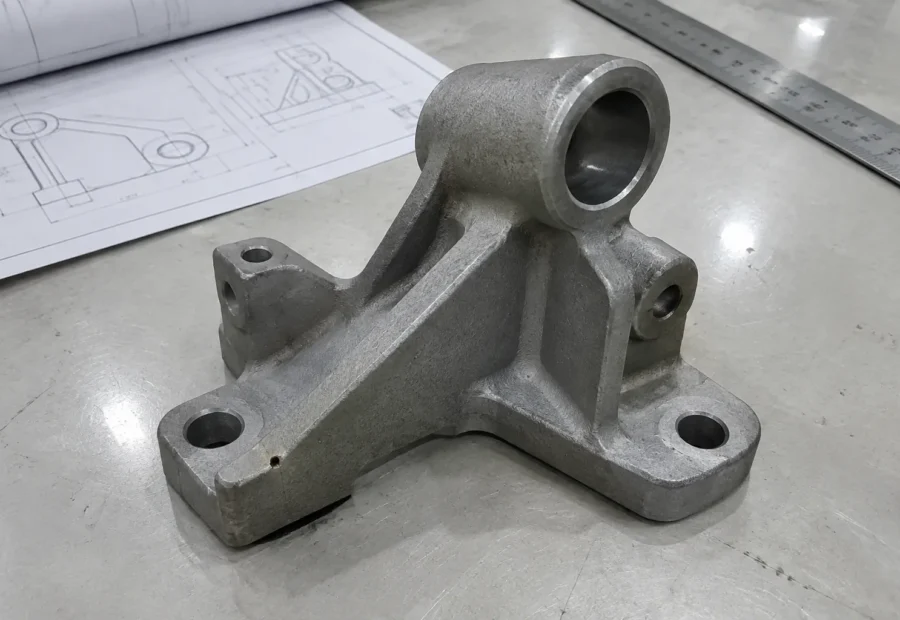
Designing fluid handling systems is stressful when component failure means disastrous leaks or system downtime. Choosing the wrong manufacturing process often leads to costly machining rework, hidden porosity issues, or total part scrap. Evaluating investment casting for pumps and valves early in your project ensures better manufacturability, lower costs, and long-term reliability.
Investment casting for pumps and valves is a precision manufacturing process ideal for complex geometries like impellers, valve bodies, and fluid housings. It offers excellent surface finish and dimensional accuracy for intricate internal channels, but critical sealing faces and threaded interfaces still require dedicated CNC machining for final assembly.
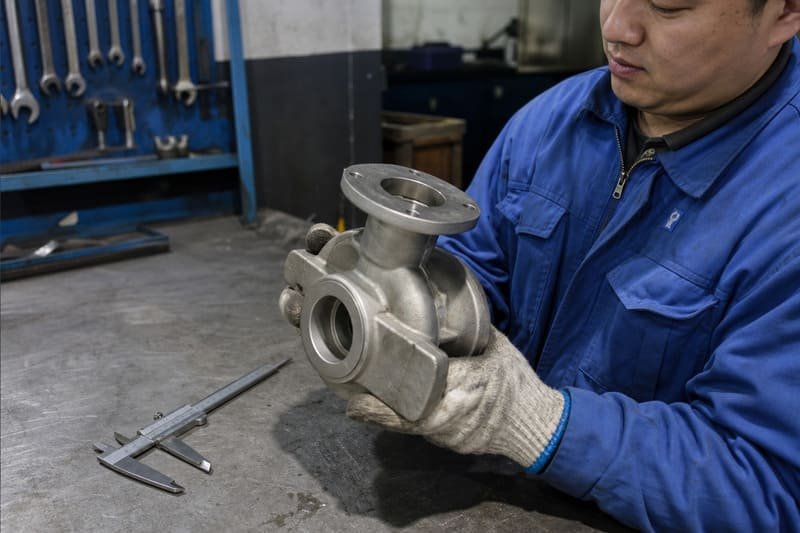
I review technical drawings from OEM engineers and procurement teams every single day. Let us break down exactly how our engineering team evaluates whether this casting process fits your specific component, and where the real manufacturing risks hide.
Why consider investment casting for pumps and valves?
You need complex internal fluid channels, but traditional sand casting leaves surfaces far too rough. This roughness creates fluid friction, which ultimately lowers pump efficiency and wastes energy.[1] Investment casting solves this problem by delivering smooth, accurate internal features directly from the ceramic shell mold.
The primary advantage of investment casting for pumps and valves is its ability to produce complex, near-net-shape geometries with superior surface finishes.[2] This process handles intricate internal cavities, thin walls, and difficult-to-machine alloys much better than forging or sand casting, which reduces overall manufacturing waste.
The Advantage of Geometric Freedom
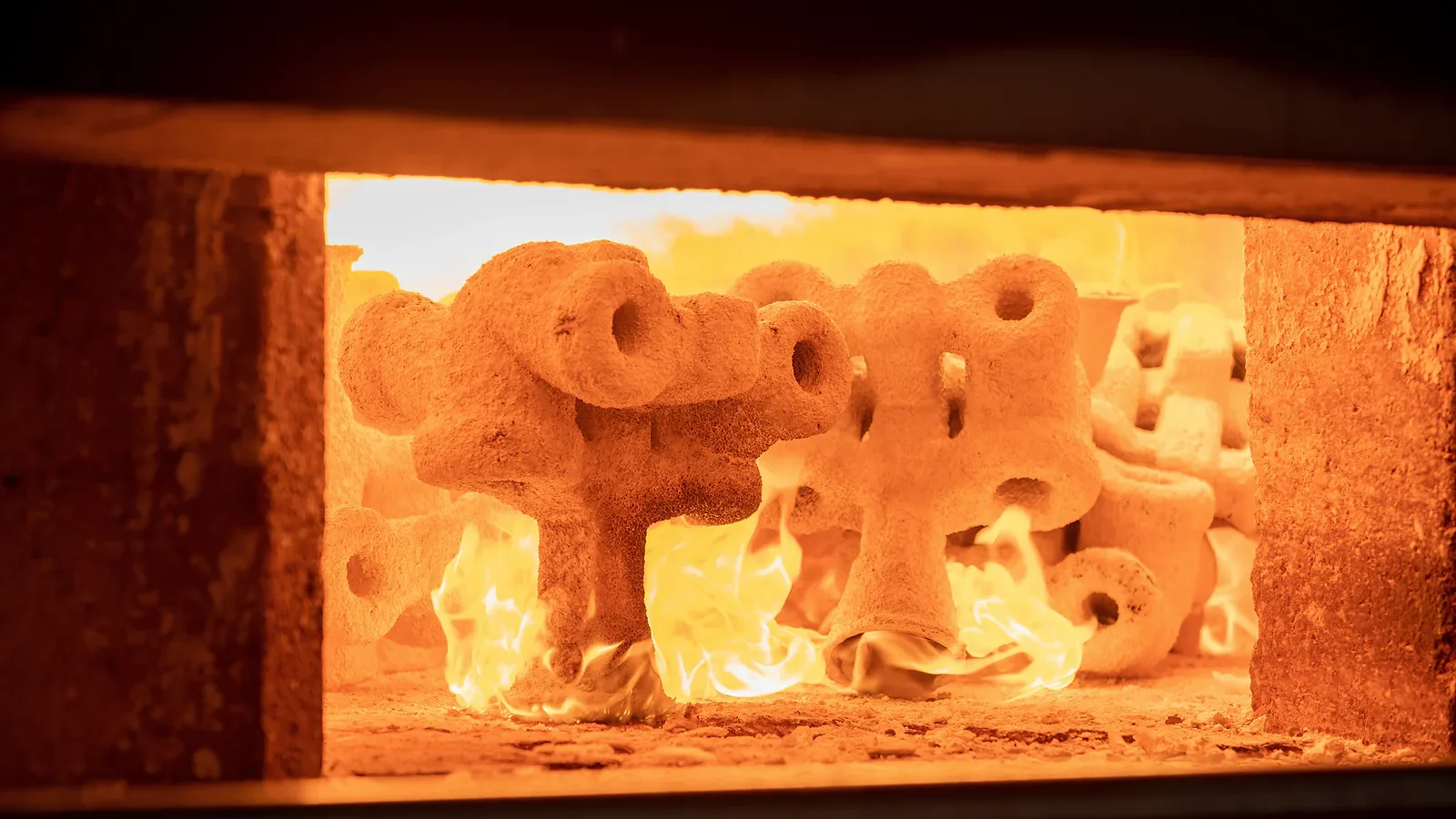
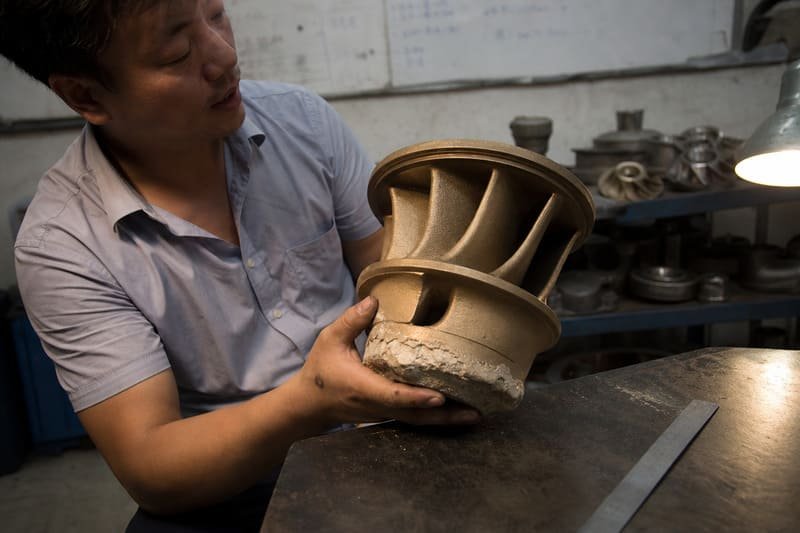
Investment casting starts with a sacrificial wax pattern.[3] Because we melt the wax out of the ceramic mold before pouring the metal, we do not have to worry about traditional mold drafting limitations that plague sand casting or die casting. This freedom is essential for fluid handling parts.
I remember looking at a 3D model for a closed-vane pump impeller last year. The sourcing engineer originally wanted to machine it from a solid block of stainless steel. I had to point out that standard CNC tooling access for those internal, curving fluid channels was physically impossible. Investment casting was the only viable way to form the internal geometry while keeping the outer profile perfectly balanced.
Surface Finish and Fluid Dynamics
For pump and valve components, surface finish directly impacts flow efficiency. Sand casting typically yields a rough surface (Ra 12.5 to 25 micrometers). Investment casting consistently achieves a much smoother finish (Ra 3.2 to 6.3 micrometers).[4] Smoother walls mean less turbulence and higher pump efficiency.
Process Comparison Table
Procurement managers should weigh these standard factors when evaluating processes:
| Feature | Investment Casting | Sand Casting | CNC Machining from Solid |
|---|---|---|---|
| Internal Channels | Highly complex, smooth | Moderate, rough surface | Limited by tool access |
| Tooling Cost | Moderate (Wax injection mold) | Low to Moderate | None (but high part cost) |
| Surface Finish | Excellent (Ra 3.2 - 6.3) | Poor (Ra 12.5 - 25) | Superior (Ra 0.8 - 1.6) |
| Material Waste | Very low | Moderate | Very high |
Does as-cast accuracy eliminate the need for machining?
Many buyers assume a precision casting process means they receive parts with zero need for machining. Then, the parts arrive, they assemble them, and the valves leak under pressure. The reality is that "near-net shape" does not mean "ready to assemble" for high-pressure fluid equipment.
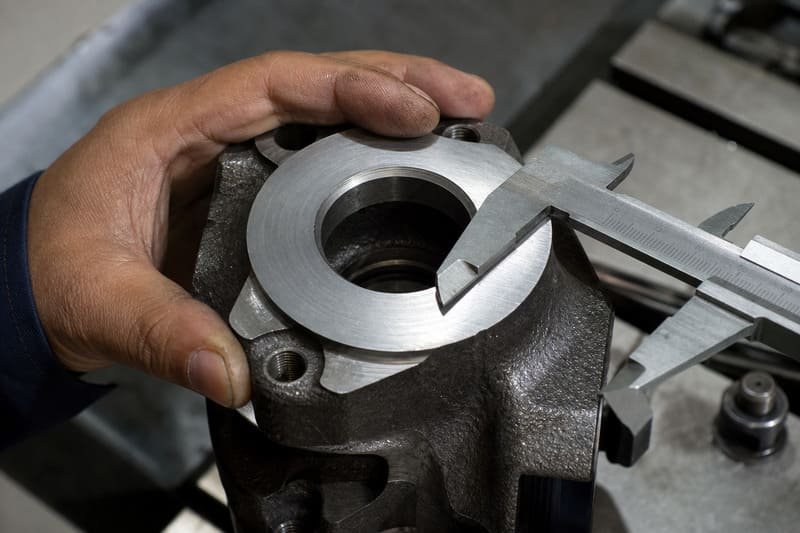
No, investment casting does not eliminate all machining. While the process provides excellent general tolerances, critical functional areas like sealing faces, mating surfaces, bearing bores, and tapped threads require secondary CNC machining[5] to achieve the strict dimensional and geometric requirements necessary for fluid handling.
Separating Cast Features from Machined Features
When I review a customer's drawing, I immediately separate the part into two categories: what we will cast, and what we will machine. Investment casting is fantastic for the external housing, structural ribs, and internal fluid paths. However, it will never be accurate enough for a high-pressure O-ring groove.
Buyers should expect to machine the following features:
- Flange faces: These must be perfectly flat to seal against gaskets.
- Bearing bores: Shafts require extremely tight tolerances to prevent vibration.
- Threaded connections: Internal and external threads must be cut or tapped after casting.
- Valve seats: These surfaces require precision grinding or turning to prevent fluid bypass.
Planning the Machining Allowance
During our Design for Manufacturability (DFM) analysis, we add a "machining allowance" to the CAD model. Usually, we add 1.5mm to 2.5mm of extra metal to the critical sealing faces on the casting mold.[6] This extra material ensures that when our CNC machine cuts the surface, the cutting tool has enough metal to bite into, leaving a perfectly clean, flat finish without any raw cast surface remaining.
OEM engineers must clearly mark their datum structures and critical tolerances on the 2D drawing. We need to know exactly how the part fits into your final assembly so we can design the proper CNC holding fixtures.
How do materials impact investment casting for pumps and valves?
Selecting a material grade from a dropdown menu is easy, but verifying its performance in the field is difficult. If the chosen alloy cannot handle the corrosive media or system pressure, the entire piping system will fail, regardless of how well the part was manufactured.
Material selection heavily impacts investment casting for pumps and valves by dictating the alloy's flowability during pouring and its ultimate resistance to corrosion, pressure, and temperature. Material grade is just a starting input; actual suitability depends on the buyer verifying operating media, service conditions, and specific industry standards.
Matching the Alloy to the Environment
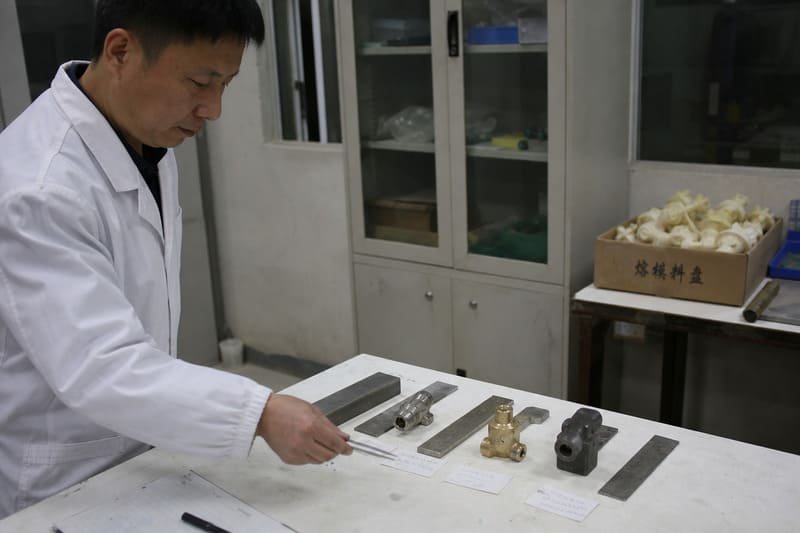
Often, a procurement manager will send me an RFQ asking for "stainless steel valve bodies." My first question is always: What is the fluid, and what is the maximum operating pressure?
We are a manufacturing partner, not a pump system designer. We can control the chemistry of the metal melt, but the customer must verify that the material suits their application. For example, standard 304 stainless steel handles fresh water beautifully, but it will pit and corrode quickly in a high-chloride seawater environment.[7]
Common Investment Casting Alloys
Buyers frequently evaluate these materials for fluid handling projects:
| Material Type | Common Grades | Typical Applications |
|---|---|---|
| Austenitic Stainless | 304 (CF8), 316 (CF8M) | Water pumps, food-grade valves, chemical lines |
| Martensitic Stainless | 410 (CA15), 420 | High-wear impellers, high-pressure pump casings |
| Carbon Steel | WCB, WCC | Oil and gas pipelines, low-corrosion environments |
| Duplex Stainless | 2205 (CD3MN) | Offshore platforms, highly corrosive media, desalination |
Quality Control and Certification
Treat material grade as a specification that requires proof. We use a spectrometer to analyze the chemical composition of every batch of liquid metal before we pour it into the molds. Buyers should always ask for material test reports (MTRs) to verify the chemical composition and mechanical properties.[8] Furthermore, buyers must ensure the selected material standard (like ASTM A351) complies with their regional pressure equipment directives.
When should you avoid investment casting for pumps and valves?
It is tempting for engineers to use one manufacturing process for every metal component. But forcing a massive, heavy industrial gate valve into an investment casting facility will result in huge tooling costs, warped wax patterns, and technical failures.
You should avoid investment casting for pumps and valves when the component is excessively large or heavy, when production volumes are extremely low, or when the geometry is simple enough for standard CNC machining. In these cases, sand casting or direct machining offers much lower manufacturing risks and better cost efficiency.
Size and Weight Limitations
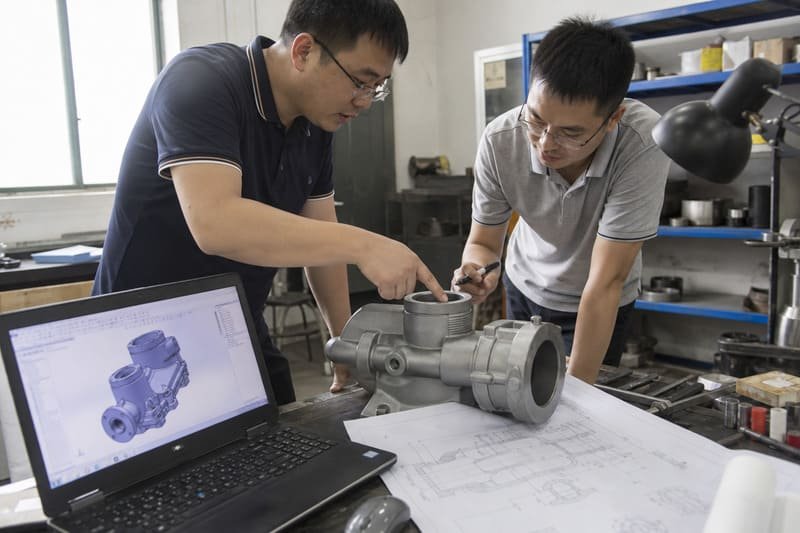
Investment casting is not magic; it has physical limits. The process relies on wax patterns. If a pump casing is too large or heavy, the wax pattern will sag and warp under its own weight before it even reaches the ceramic shelling room. Generally, we recommend investment casting for parts weighing between 0.1 kg and 30 kg.[9] For parts weighing hundreds of kilograms, resin sand casting is the structurally and economically superior choice.
Production Volume Constraints
Tooling amortization is a major factor for sourcing engineers. We have to machine an aluminum mold to inject the wax patterns. I always tell clients: if you only need five pieces a year, and the design is a relatively simple block with some cross-drilled holes, you should not pay for a custom wax injection mold. You should machine those five parts directly from billet. Investment casting makes financial sense when volumes reach hundreds or thousands of pieces per year[10], where the savings in raw material and machining time offset the initial tooling cost.
Geometry Simplicity
If a valve component is purely rotational—like a simple cylindrical stem or a standard threaded plug—do not cast it. Lathes produce rotational parts much faster, cheaper, and with tighter tolerances than any casting process. We reserve casting for parts that have organic curves, internal cavities, and complex intersecting volumes.
Frequently Asked Questions
What tolerances can be achieved with investment casting?
General linear tolerances for investment casting usually follow the ISO 8062 DCTG 4 to 6 standards. For a 50mm dimension, you can expect an accuracy of about ±0.4mm.[11] However, tight tolerances for bearing housings or seals always require secondary CNC machining.
Can you cast internal threads in valve bodies?
While very coarse threads can technically be cast, we strongly advise against it for fluid handling equipment. Internal threads should always be drilled and tapped using CNC machines after casting to ensure precision and leak-free sealing.
How do you verify the quality of pressure-bearing castings?
We use visual inspection, dimensional checks, and material chemical analysis as our standard procedures. For critical high-pressure applications, we highly recommend adding Non-Destructive Testing (NDT), such as X-ray or liquid penetrant inspection, to check for hidden internal porosity.[12]
What is the typical lead time for a new pump casting?
New projects usually require 4 to 6 weeks for tooling design, mold manufacturing, and initial sample production. Once the customer approves the samples, standard batch production typically takes another 4 to 6 weeks, depending on order volume and machining complexity.
Conclusion
Choosing investment casting for pumps and valves requires a careful balance between component geometry, material specifications, and necessary downstream processing. While the process excels at creating complex internal fluid channels and reducing material waste, buyers must remember that critical sealing faces and precise mating surfaces will always require dedicated CNC machining. Furthermore, procurement teams must ensure that their chosen material grade matches the specific media and pressure requirements of the end application.
If you are evaluating a new pump impeller or valve housing project, our engineering team can help. Send us your 3D models and 2D drawings, and we will provide a comprehensive DFM analysis to determine if investment casting is the right manufacturing method for your components.
Sources & references
Reference note
Hydraulic-flow research shows that wall roughness can increase frictional head loss and pumping-energy demand, particularly in turbulent flow; the magnitude of the effect also depends on Reynolds number, relative roughness, and passage geometry. Evidence role: mechanism; source type: paper. Supports: Wall roughness can increase frictional losses in internal flows and thereby increase the energy required to move a fluid.. Scope note: This mechanism supports the direction of the claim but does not establish a universal efficiency penalty for every pump or valve casting.
Reference note
Technical manufacturing references characterize investment casting as a near-net-shape process suited to intricate geometries and comparatively fine surface finishes, although achievable results depend on alloy, part size, tooling, and process control. Evidence role: general_support; source type: education. Supports: Investment casting uses expendable patterns and ceramic molds to manufacture intricate, near-net-shape components with relatively fine as-cast surfaces.. Scope note: The source can support the general process capability, not the suitability of investment casting for every pump or valve design.
Reference note
Investment casting is defined as an expendable-pattern process in which a refractory mold is formed around a wax or similar pattern and the pattern is removed before molten metal is introduced. Evidence role: definition; source type: encyclopedia. Supports: Investment casting conventionally forms a refractory mold around a disposable pattern, commonly wax, which is removed before casting..
Reference note
Manufacturing-process data generally place investment-cast surfaces in a finer roughness range than conventional sand-cast surfaces, with values near those stated here appearing in some design tables; these are typical ranges rather than guaranteed acceptance limits. Evidence role: statistic; source type: research. Supports: Published process-comparison data report lower typical surface-roughness ranges for investment casting than for conventional sand casting.. Scope note: Surface roughness varies with mold materials, alloy, feature accessibility, measurement method, and foundry control, so the exact ranges are not universal.
Reference note
Manufacturing references note that near-net-shape castings are commonly finish-machined at sealing faces, precision bores, mating interfaces, and threads when their functional requirements exceed normal as-cast tolerances. Evidence role: general_support; source type: education. Supports: Near-net-shape castings commonly receive secondary machining where functional surfaces require tighter dimensional tolerances, flatness, finish, or thread accuracy.. Scope note: Machining is common rather than logically mandatory in every design; whether it is required depends on the specified tolerance, finish, sealing method, and casting capability.
Reference note
Casting design guidance confirms that finish-machined surfaces require added stock, with allowances commonly measured in millimeters; however, the appropriate value depends on casting dimensions, alloy, anticipated distortion, datum control, and foundry capability. Evidence role: general_support; source type: research. Supports: Casting designs include additional stock on surfaces that will be finish-machined, and the allowance is selected according to process and part variables.. Scope note: External guidance may contextualize the stated 1.5–2.5 mm range but cannot validate it as a universal allowance.
Reference note
Corrosion studies identify Type 304 stainless steel as susceptible to chloride-induced pitting and crevice corrosion, making untreated seawater substantially more aggressive than typical fresh-water service. Evidence role: mechanism; source type: paper. Supports: Chloride ions can destabilize the passive film on Type 304 stainless steel and initiate pitting or crevice corrosion.. Scope note: Corrosion rate and time to failure depend on chloride concentration, temperature, oxygen, flow, deposits, crevices, and maintenance, so rapid corrosion is not inevitable under every seawater condition.
Reference note
Public material-control specifications describe test reports as records of heat-specific chemical composition and applicable mechanical properties used to document conformity with the cited material standard. Evidence role: definition; source type: government. Supports: Material test reports or certificates record heat-specific chemical analyses and applicable mechanical-test results used to demonstrate conformity with a material specification.. Scope note: An MTR documents reported test results but does not by itself establish suitability for a particular fluid, pressure, temperature, or regulatory application.
Reference note
Process references describe investment casting as most common for small-to-medium components but also document much larger castings in specialized facilities, indicating that weight ranges are capability guidelines rather than fixed process limits. Evidence role: general_support; source type: research. Supports: Investment casting is most commonly used for small and medium-sized parts, while practical maximum weights vary considerably among foundries and shell systems.. Scope note: Independent sources are unlikely to establish 0.1–30 kg as a universal recommended range because capacity depends on pattern handling, shell strength, alloy, equipment, and supplier experience.
Reference note
Manufacturing cost models show that increasing production quantity reduces the per-part burden of fixed tooling and can make near-net-shape casting more competitive with machining from billet; they do not establish a universal break-even point of hundreds or thousands of units. Evidence role: mechanism; source type: paper. Supports: Production quantity affects unit cost because fixed pattern-tooling expenditures are amortized over the number of castings produced.. Scope note: The stated volume threshold requires project-specific costing and cannot be generalized across component geometries, alloys, tooling strategies, or labor markets.
Reference note
ISO 8062-3 defines dimensional casting tolerance grades and assigns tolerances by nominal dimension, but the table value is ordinarily expressed as a total tolerance width and must be interpreted correctly before it is written as a bilateral ± value. Evidence role: definition; source type: institution. Supports: ISO 8062-3 defines dimensional casting tolerance grades and tabulated tolerance values based on nominal dimensions.. Scope note: The standard defines grades rather than guaranteeing that all investment castings meet DCTG 4–6, and the stated ±0.4 mm figure may require revision depending on grade, standard edition, and tolerance allocation.
Reference note
Nondestructive-testing guidance distinguishes radiography, which can reveal internal volumetric discontinuities such as casting porosity, from liquid penetrant inspection, which detects only discontinuities open to the surface. Evidence role: mechanism; source type: institution. Supports: Radiographic testing is used to detect internal volumetric discontinuities such as porosity, whereas liquid penetrant testing reveals defects that are open to the inspected surface.. Scope note: Liquid penetrant inspection does not independently detect fully enclosed internal porosity, and inspection method and acceptance criteria must be selected for the relevant defect type and governing code.