What Is Investment Casting? Process, Materials, Benefits, and Applications
Struggling to figure out the best way to manufacture a complex metal part? Choosing the wrong process can lead to blown budgets, wasted time on unusable prototypes, and a final product that fails in the field. Understanding what investment casting is—and when it’s the right choice—is the first step to de-risking your manufacturing project and getting quality parts delivered on time.
Investment casting, also known as lost-wax casting, is a manufacturing process that uses a wax pattern surrounded by a ceramic shell to create intricate, near-net-shape metal parts.[1] After the wax is melted out, molten metal is poured into the empty cavity, resulting in a precise replica of the original wax pattern.
Now you know the basic definition, but the real value is in the details. The step-by-step process itself reveals the practical strengths and limitations of this method. Let's dig deeper to see how it works and whether it’s the right fit for your specific component.
How Does the Investment Casting Process Actually Work?
The term "lost wax casting" can sound more like an ancient art than a modern industrial process. It's hard to trust a manufacturing method you can't visualize, making it difficult to spot the critical quality control points. So, let’s walk through the modern investment casting process, from a 3D digital file to a finished metal component.
The process involves creating a wax replica of your part, building a ceramic shell around it, melting the wax away, and pouring molten metal into the resulting cavity. The shell is then broken off to reveal the final metal part, which then goes through finishing and inspection.
Dive Deeper: From CAD File to Finished Part
Each stage of the investment casting process directly impacts the quality, cost, and lead time of your final part. As a manufacturer, we see every day how small decisions at each step can make or break a project. Here’s a breakdown of what actually happens.
H3: Step 1: Tooling and Wax Pattern Injection
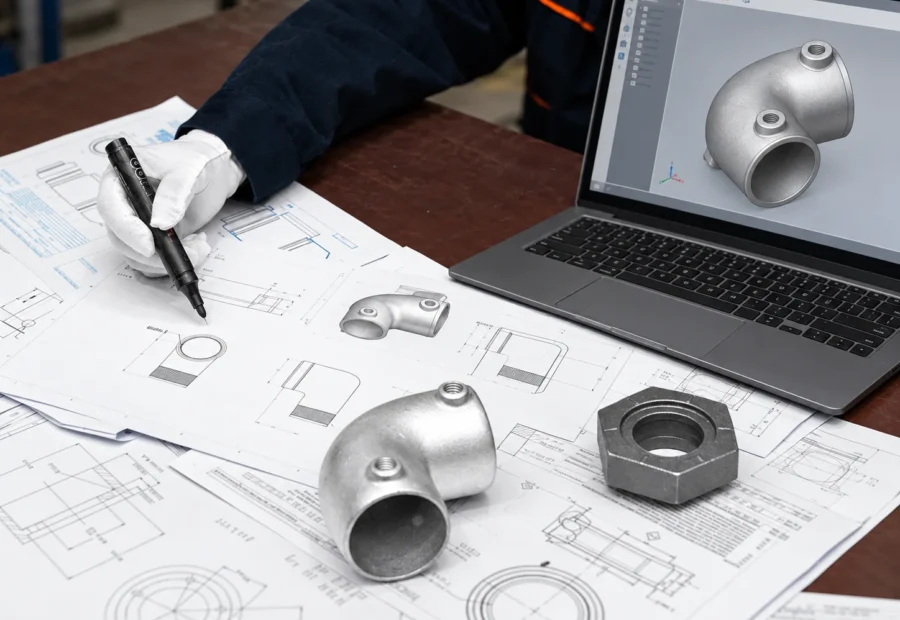
Everything starts with your 3D CAD model. From that model, we machine a high-precision aluminum mold, also called a tool or die. This mold is the negative of your final part. Hot, liquid wax is then injected under pressure into the mold cavity. Once the wax cools and solidifies, we have a dimensionally accurate wax pattern that is an exact replica of the part you need.
- Practical Insight: The quality of this initial mold is non-negotiable. Any imperfection in the mold will be transferred to every single wax pattern, and subsequently, to every metal part. The tooling is a significant one-time investment, so getting it right from the start is critical.
H3: Step 2: Wax Assembly (The "Tree")
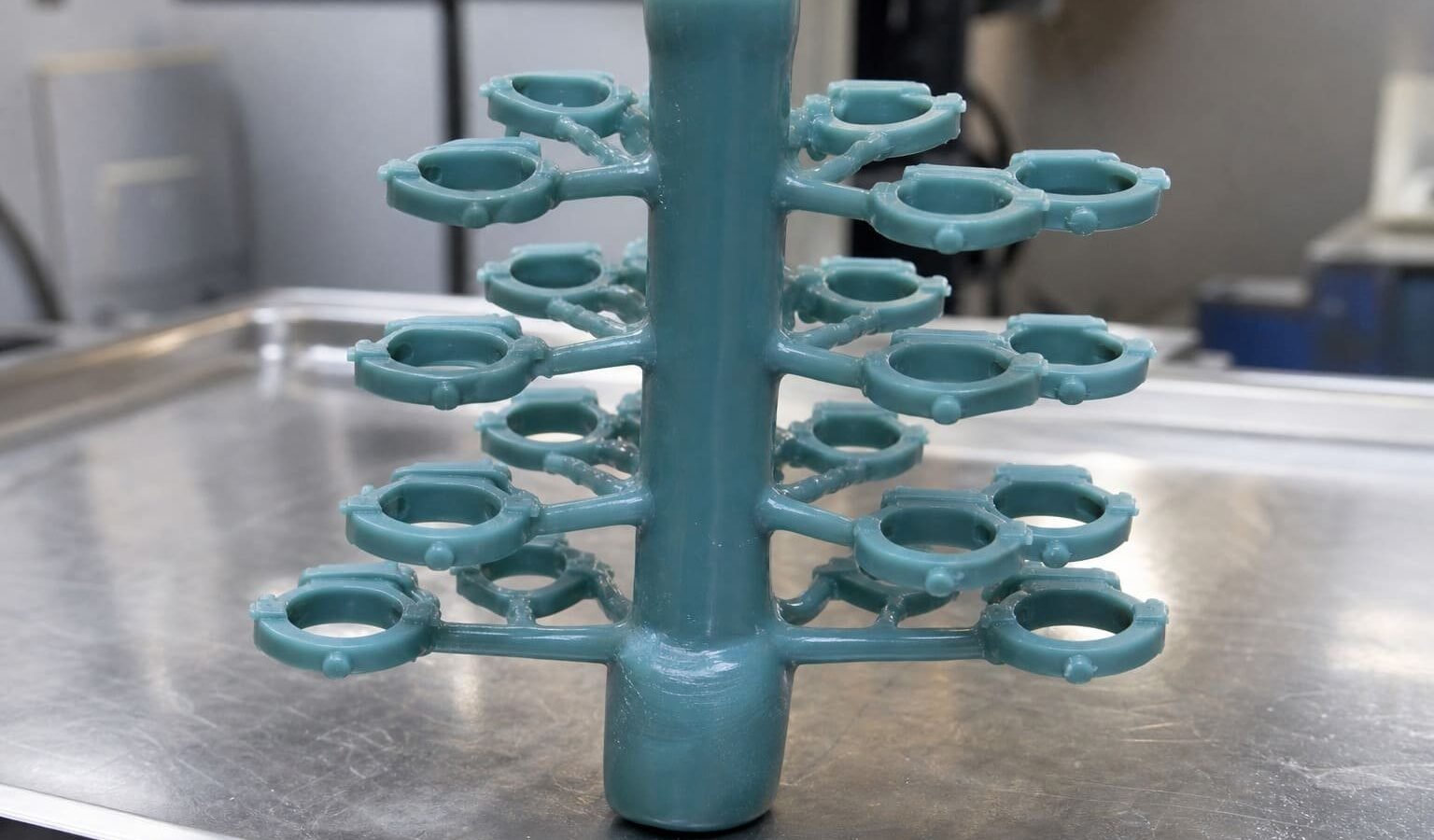
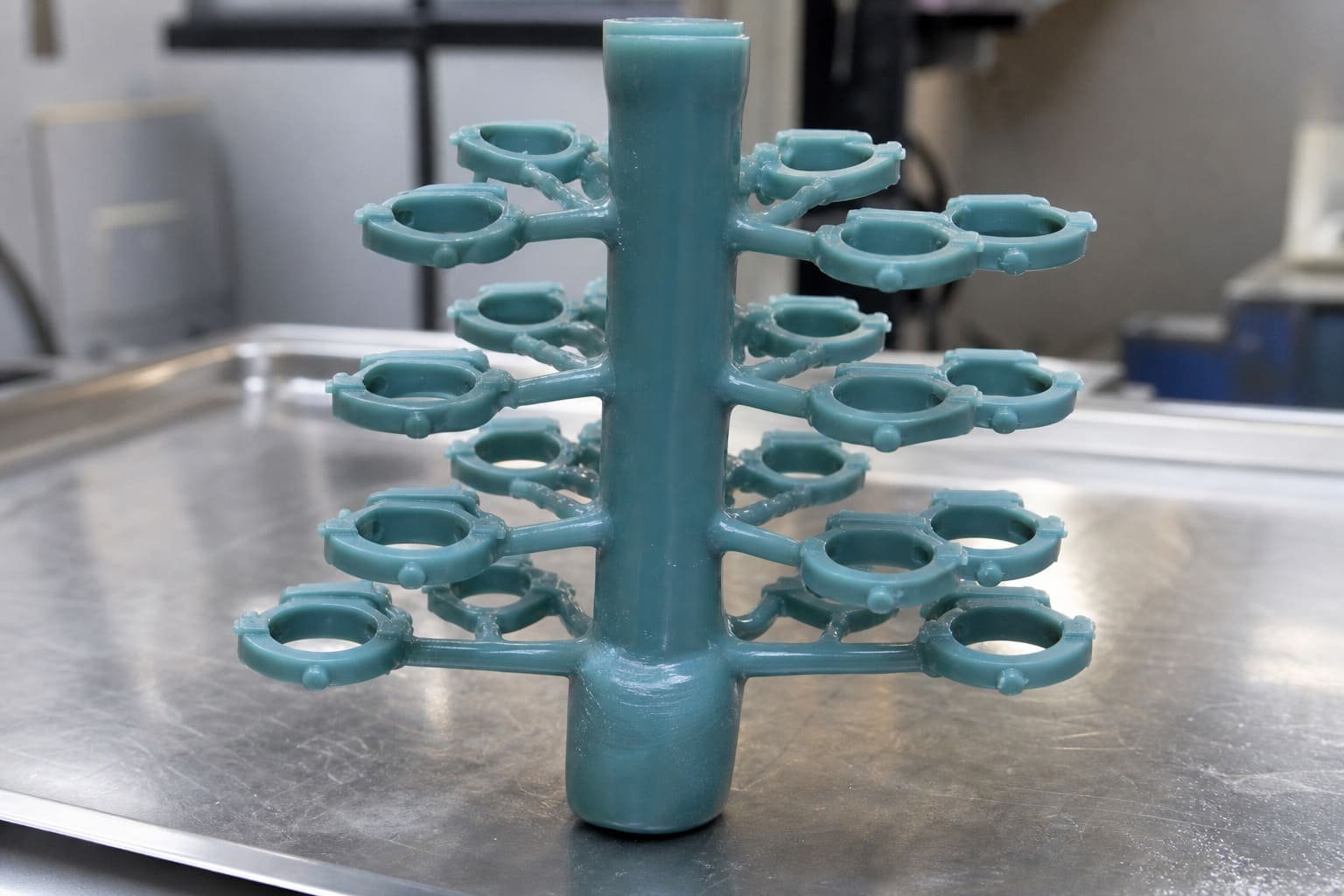
We don't cast parts one by one. Instead, we take multiple wax patterns and attach them, using heated tools, to a central wax rod called a sprue. The final assembly often looks like a tree, with the central sprue as the trunk and the patterns as branches. This "tree" also includes wax runners and gates, which are designed to channel the molten metal to the parts.
- Practical Insight: The design of this tree is a form of engineering in itself. The placement and orientation of each pattern affect how metal flows and cools.[2] A poorly designed tree can cause defects like shrinkage or porosity, so we plan the layout carefully to ensure every part fills completely and solidifies correctly.
H3: Step 3: Shell Building
The entire wax tree is then dipped into a ceramic slurry—a mixture of fine refractory materials and a liquid binder. After dipping, it's coated with a fine sand-like stucco. This process is repeated several times, with drying time between each layer, to build a strong, multi-layered ceramic shell around the wax assembly.[3]
- Practical Insight: Patience is key here. The number of layers and the drying time are critical for the shell's strength and the final part's surface finish. Rushing this stage can lead to shell cracks or a rough surface. The first few layers use finer materials to capture the precise details of the part.
H3: Step 4: Dewaxing and Firing (The "Lost Wax" Step)
The ceramic-coated tree is placed in a steam autoclave or furnace. The heat melts the wax, which flows out through the bottom of the tree, leaving a hollow ceramic shell. This is where the name "lost wax" comes from. The now-empty shell is fired at a high temperature (over 1000°C or 1800°F) to burn off any remaining wax residue and cure the ceramic[4], making it strong enough to withstand the molten metal.
- Practical Insight: Proper dewaxing is essential. Any wax left behind can turn into gas when the molten metal is poured, causing gas porosity defects in the casting. Firing the shell also preheats it, which reduces the thermal shock during pouring and helps the metal flow into thin sections.
H3: Step 5: Pouring Molten Metal
While the shell is still hot, it's placed in a sandpit for support, and molten metal is poured into the hollow cavity through the main sprue. The metal can be poured using gravity, but vacuum-assist or pressure can also be used to ensure intricate details are filled completely.
- Practical Insight: We control the metal's chemical composition and pouring temperature with extreme precision. The wrong temperature can lead to misruns (the mold not filling completely) or a poor grain structure in the final part.
H3: Step 6: Knockout, Cutoff, and Finishing
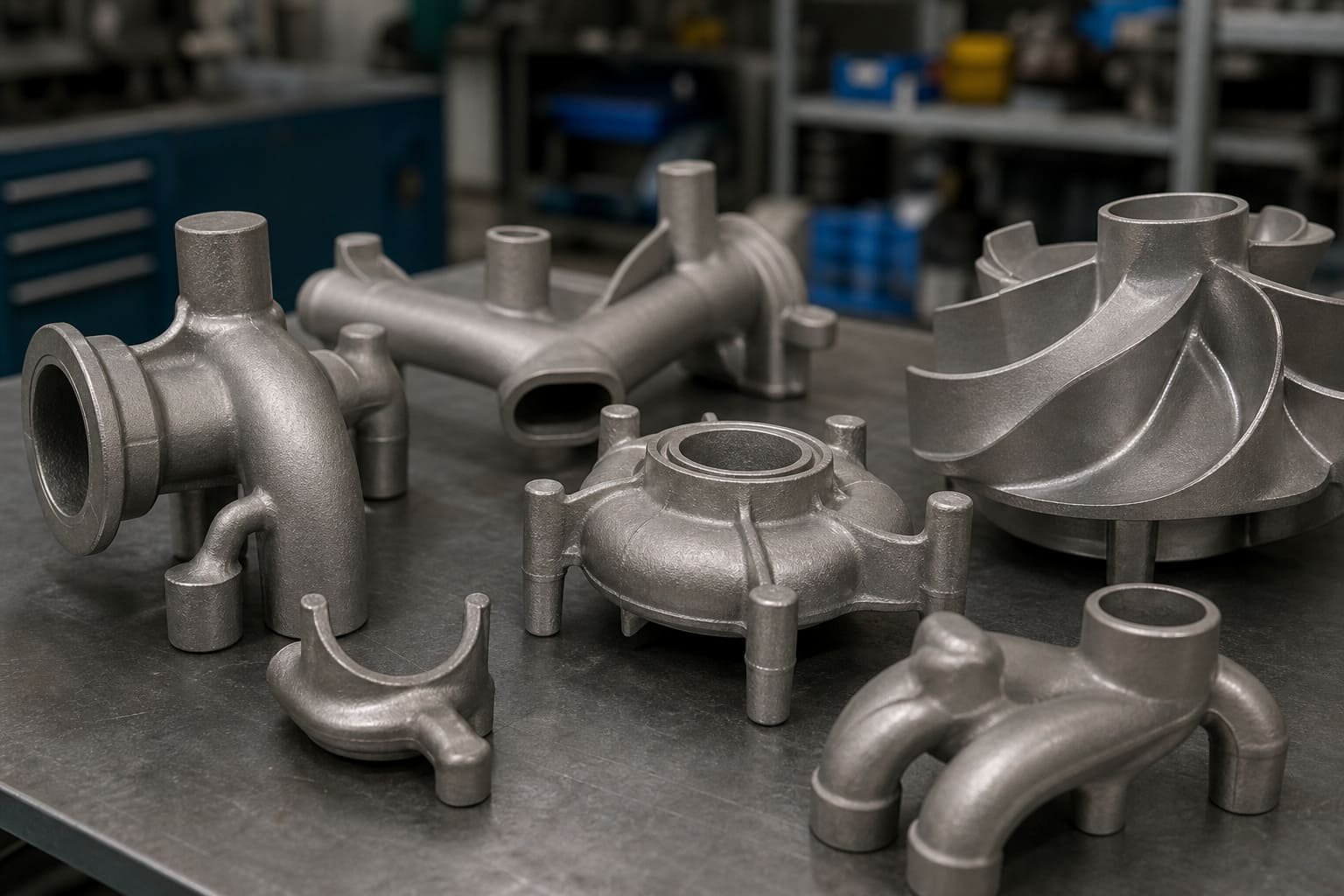
After the metal solidifies, the ceramic shell is broken away using methods like vibration hammers or high-pressure water blasting. The individual metal parts are then cut off from the central tree. The remaining stubs from the gates are ground down flush with the part's surface.
- Practical Insight: This is where you first see the "near-net-shape" benefit. However, the part is still not finished. It's in a raw, as-cast state and will have a stub where the gate was attached that needs to be removed.
H3: Step 7: Secondary Operations and Inspection
Finally, the raw castings move on to any required secondary operations. This can include:
- Heat Treatment: To improve mechanical properties like hardness and strength.
- CNC Machining: To create features with very tight tolerances, like threads or flat sealing surfaces.
- Surface Finishing: Such as sandblasting, polishing, or plating.
- Inspection: Every part is checked. We use calipers, gauges, and Coordinate Measuring Machines (CMM) to verify that all dimensions meet the specifications on your drawing.
What Materials Are Suitable for Investment Casting?
You know your part needs to be strong and resist corrosion, but you're not sure which alloy is both suitable and castable. Specifying a material that isn't compatible with the investment casting process can stop a project before it even starts. Let's review the common metals we work with and how to make the right choice.
A wide range of both ferrous (iron-based) and non-ferrous metals can be investment cast.[5] The best choice depends on your application's requirements for strength, corrosion resistance, operating temperature, and overall cost.
Dive Deeper: Choosing the Right Alloy for Your Application
Selecting a material is more than just picking a name from a list. When a customer sends us a drawing, we're not just looking at the part's shape; we're thinking about its entire life cycle. The operating environment, mechanical stresses, and finishing requirements all influence the final material recommendation.
H3: Ferrous Metals (Steels)
This is the heart of our investment casting work. Steels offer a fantastic range of properties at a reasonable cost.
- Stainless Steels (e.g., 304, 316, 17-4 PH): These are our most requested materials. Their excellent corrosion resistance makes them perfect for parts exposed to moisture or chemicals.[6]
- Real-World Example: We produce a 304 stainless steel exhaust manifold for a turbine. The investment casting process allows us to create the complex internal passages needed for gas flow, and the 304 material provides the necessary heat and corrosion resistance.
- Carbon Steels (e.g., 1020, 1045): These are the workhorses of the industrial world. They are cost-effective, strong, and machine well. They are ideal for general machinery components like brackets, levers, and housings that will be painted or coated for corrosion protection.
- Alloy Steels (e.g., 4140, 8620): When you need superior strength, hardness, and wear resistance, alloy steels are the answer. These materials can be heat-treated after casting to achieve very specific mechanical properties. We often use them for high-stress components in automotive or agricultural machinery.
H3: Non-Ferrous Metals and When to Consider Alternatives
While investment casting is famous for steel parts, it can also be used for non-ferrous alloys.
- Aluminum Alloys (e.g., A356): Aluminum is lightweight and has good corrosion resistance. We can and do investment cast aluminum, particularly for parts with very complex internal features that would be impossible to die cast.
- Real-World Example: We produced an A356 aluminum housing for a piece of electronic equipment. The design had intricate internal walls to separate components. The low production volume and high complexity made investment casting a better financial and technical choice than die casting for this specific project.
- Brass and Bronze: These copper-based alloys are excellent for marine applications and plumbing fittings due to their superb corrosion resistance and natural lubricity.
However, for many aluminum parts, especially at higher volumes, die casting is often a more cost-effective process.[7] The right choice always comes down to a discussion about complexity, quantity, and budget.
What Are the Real Benefits of Investment Casting?
You've probably heard that investment casting is great for "complex parts" and gives you a "great surface finish." But these buzzwords don't help you decide if it’s financially viable or technically necessary for your project. Let’s cut through the jargon and talk about the practical benefits and, just as importantly, their trade-offs.
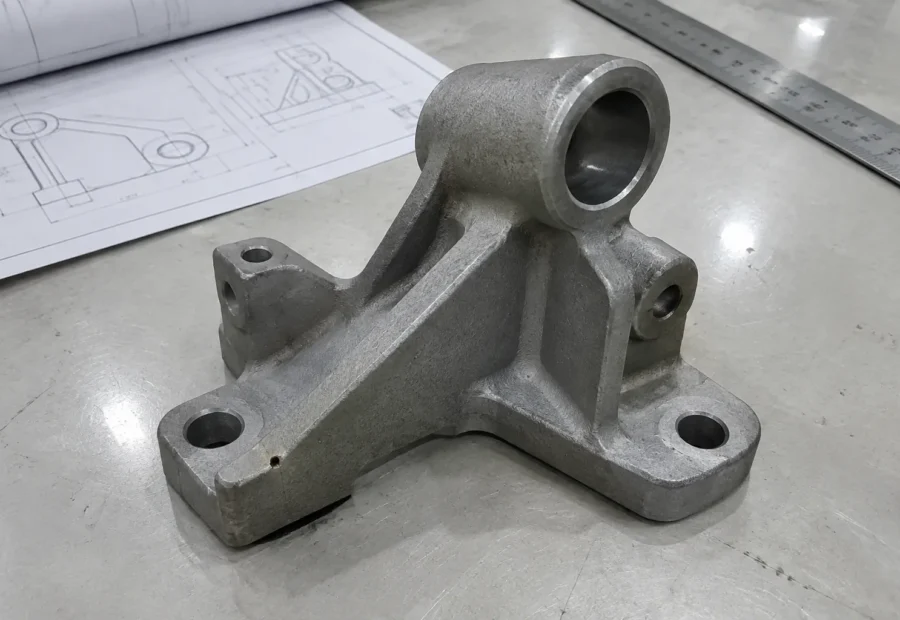
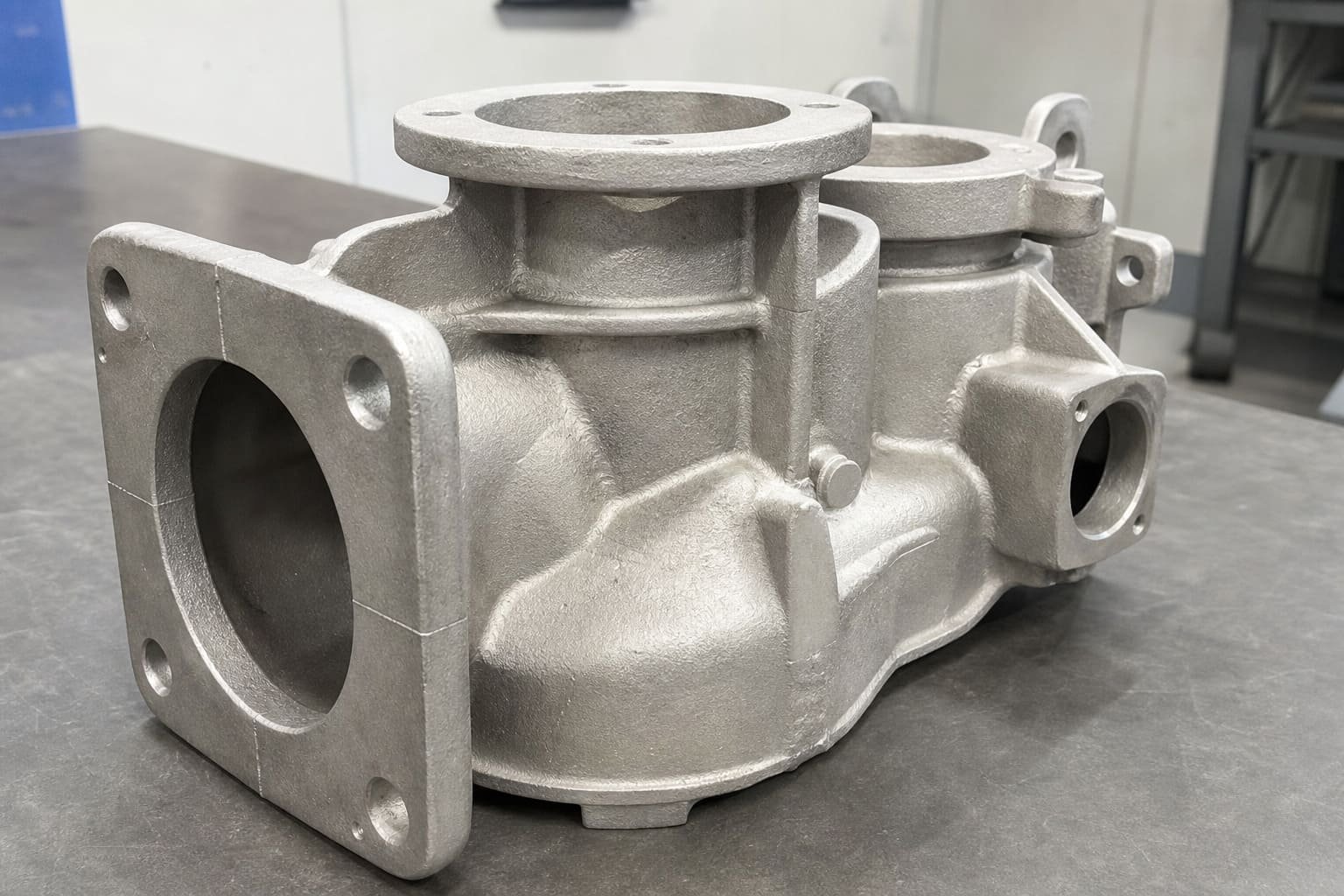
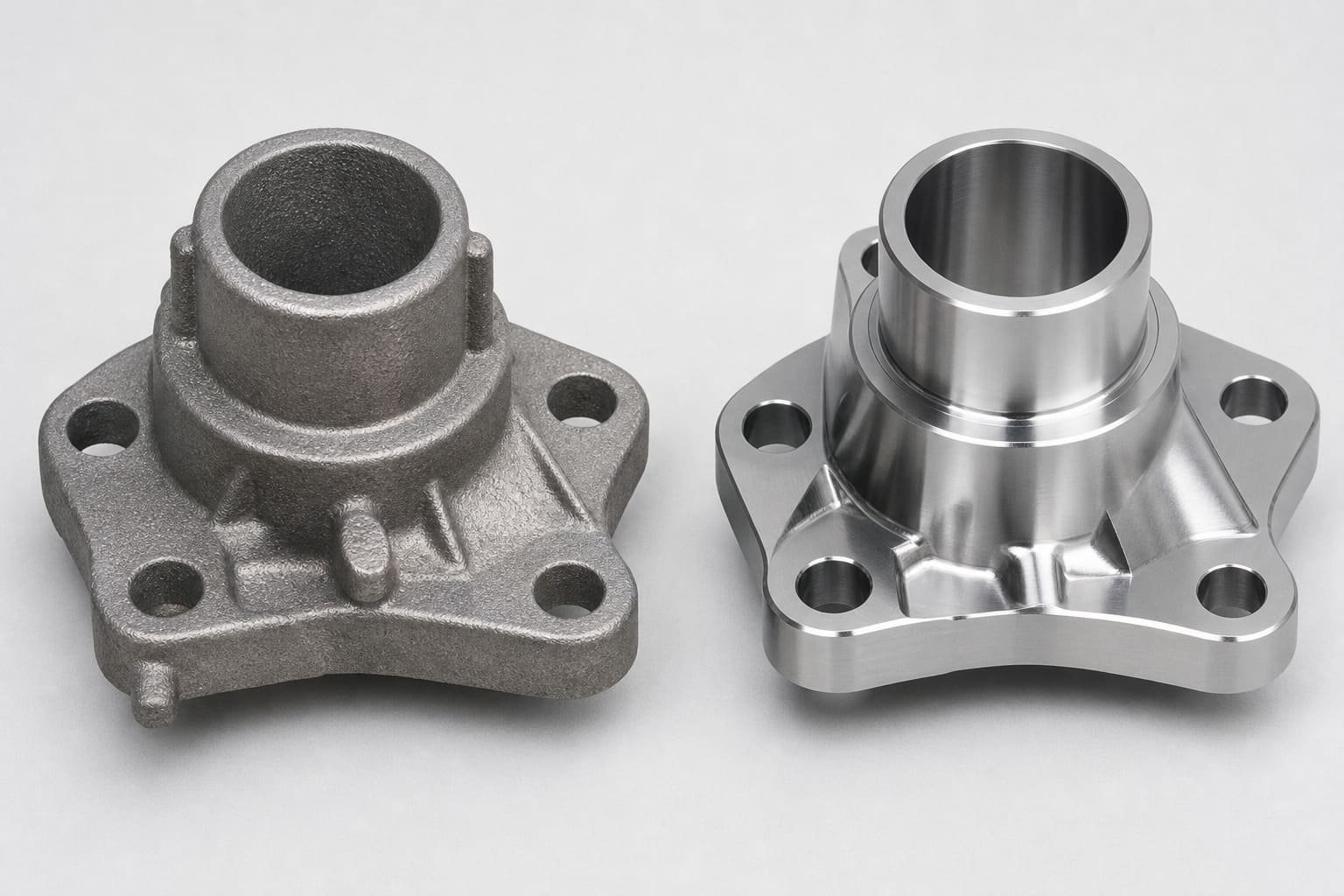
The core benefit of investment casting is its ability to produce parts with complex geometries and a fine surface finish, getting them closer to their final shape (near-net-shape) than many other casting methods. This can significantly reduce the need for secondary machining.
Dive Deeper: The "Yes, But..." of Investment Casting Benefits
Every manufacturing process has trade-offs. Here’s a more realistic look at the advertised benefits of investment casting.
| Benefit Claim | The Reality & The "Yes, But..." |
|---|---|
| Complex Geometries | Yes, but... this is the number one reason to choose the process. We can create internal passages, thin walls, undercuts, and logos directly in the casting. The trade-off: Increasing complexity makes the tooling more expensive and can introduce casting risks that require careful process control. A good Design for Manufacturability (DFM) review is essential. |
| Excellent Surface Finish | Yes, but... the typical surface finish is around 125 Ra (3.2 µm), which is significantly smoother than sand casting.[8] The trade-off: It is not a polished or machined finish. If your part has a critical sealing surface or a bearing bore, it will almost certainly require post-machining to achieve the required smoothness and tolerance. |
| Near-Net Shape | Yes, but... this means the part comes out of the mold very close to its final dimensions, which drastically reduces material waste and subsequent machining time compared to starting from a solid block of metal. The trade-off: "Near" is not "net." You must plan and budget for some level of finish machining, especially for features with tight tolerances, threaded holes, or perfectly flat mating surfaces. |
| Wide Material Choice | Yes, but... you can cast almost any common industrial alloy, from stainless steel to nickel and cobalt-based superalloys.[9] The trade-off: The tooling is designed for the specific shrinkage rate of one alloy. If you decide to change materials later in the project (e.g., from 304 to 316 stainless steel), it might be fine, but a drastic change (e.g., from steel to aluminum) would require a completely new mold. |
| Tight Tolerances | Yes, but... we can hold general casting tolerances quite well. A common industry guideline is around +/- 0.005 inches per inch[10], but this must be verified for your specific geometry and alloy. The trade-off: Trying to hold ultra-tight tolerances across an entire part with casting alone is unreliable and not cost-effective. The smart approach is to cast the general shape and then machine only the critical features. |
When Should You Choose Investment Casting Over Other Processes?
You have a drawing for a metal component. Should it be investment cast, die cast, or machined from a solid block? Making the wrong call means you could be paying too much per part, sacrificing critical features, or facing unexpected delays. Let’s compare investment casting with its main alternatives to help you make an informed decision.
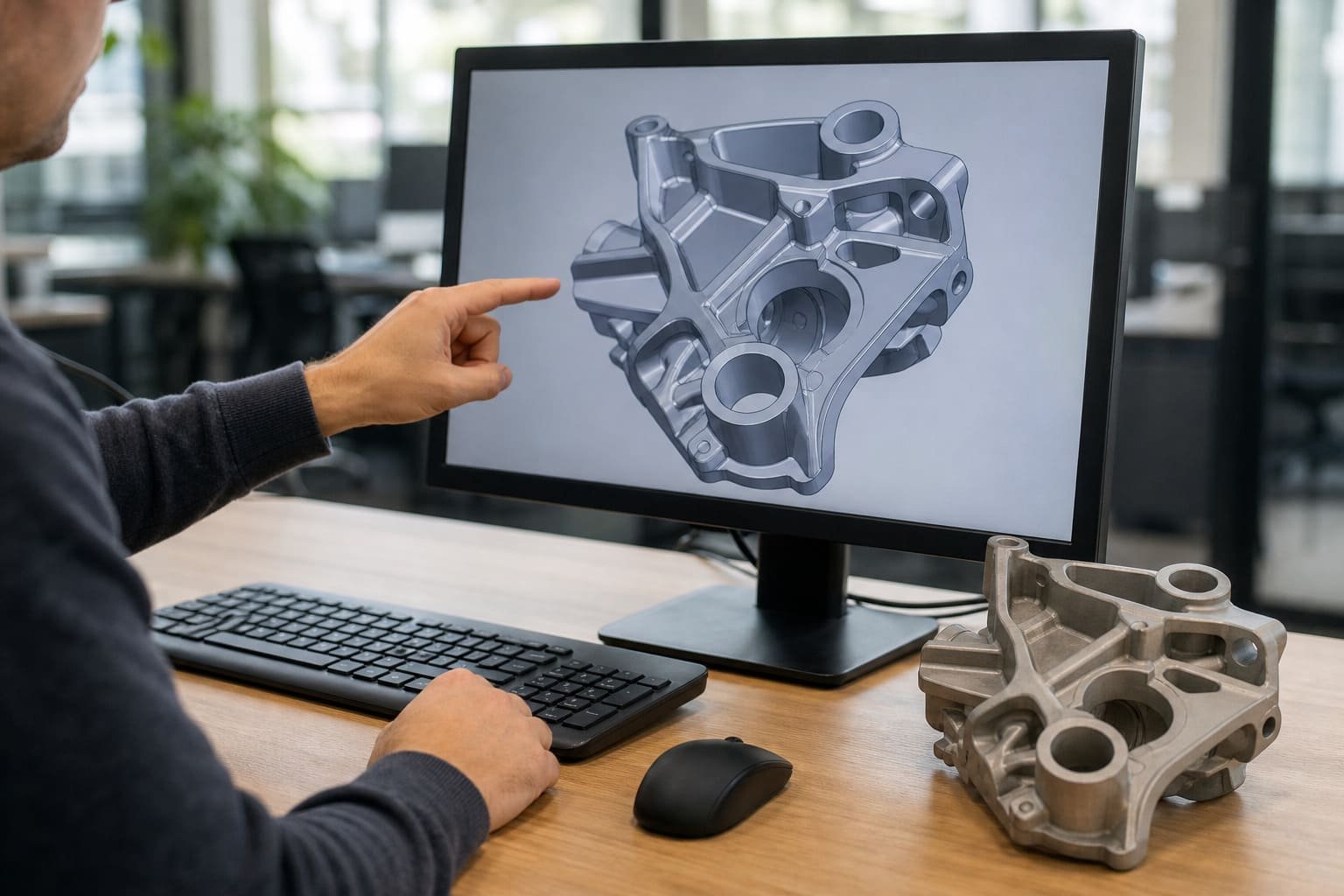
Choose investment casting for complex steel, stainless steel, or other high-melting-point alloy parts at low-to-medium volumes. For high-volume aluminum or zinc parts, die casting is often better.[11] For one-off prototypes or parts needing extreme precision across all surfaces, CNC machining is the way to go.
Dive Deeper: A Practical Comparison for Sourcing
The goal is not to declare one process superior to another; the goal is to choose the process that carries the lowest risk and lowest total cost for your specific part.
H3: Investment Casting vs. Die Casting
This is a common point of confusion. The choice primarily comes down to material and volume.
- Investment Casting:
- Best for: Ferrous metals (all types of steel) and other high-melting-point alloys.
- Complexity: Excellent for highly complex shapes, including internal undercuts.
- Tooling Cost: Lower. Molds are simpler and don't need to withstand as much pressure, making it economical for volumes from hundreds to tens of thousands of parts.
- Die Casting:
- Best for: Non-ferrous metals with lower melting points, primarily aluminum and zinc.
- Complexity: Good for external detail but limited for complex internal features or undercuts.
- Tooling Cost: Higher. The hardened steel dies are expensive but are built to last for hundreds of thousands of cycles.[12] This makes it ideal for very high volumes.
My Experience: A customer came to us with a design for an aluminum mounting component for an Australian solar project. Their estimated annual volume was over 50,000 pieces. Although the part had some complexity, the high volume made die casting the clear winner for the lowest per-piece price. We guided them to that process. Conversely, another client needed just 500 complex valve brackets per year. The high tooling cost of die casting was prohibitive, so we recommended investment casting, which met their technical needs with a much lower upfront investment.
H3: Investment Casting vs. CNC Machining
This comparison is about manufacturing efficiency.
- Investment Casting:
- Process: Creates a near-net shape first, then machines only where needed.
- Waste: Very little material waste.
- Cost: More economical for medium-to-high volumes because the tooling cost is spread across many parts, and each part requires less machine time.
- CNC Machining:
- Process: Starts with a solid block or bar of metal and cuts everything away.
- Waste: Can be very high, especially for complex shapes.
- Cost: No tooling cost, so it's perfect for prototypes and very low volumes. The cost per piece remains high as volume increases due to long cycle times and material waste.
My Experience: The best solution is often a hybrid approach. For many of our projects, we use investment casting to create the complex overall geometry of a part, like an intricate housing. Then, we use our CNC machines to finish the critical features—drilling and tapping holes, milling mating surfaces flat, and boring bearing seats to a precise diameter. This hybrid strategy delivers the geometric freedom of casting and the precision of machining, all in one efficient workflow.
Frequently Asked Questions
How much does investment casting cost?
The cost has two main parts: a one-time tooling cost for the mold and a per-piece price. The piece price is driven by the part's weight, the material used, its complexity, and any required finishing or machining. It's impossible to provide an accurate price without a drawing and order quantity.
What is the typical lead time for investment casting?
For a new project, expect the tooling and first article samples to take around 4 to 6 weeks. After the samples are approved by you, batch production typically takes another 4 to 5 weeks. These are estimates and can change based on part complexity and current factory workload.
What's the difference between investment casting and lost wax casting?
They are two names for the same process. "Lost wax casting" is the traditional, descriptive term that focuses on the step where the wax pattern is melted out. "Investment casting" is the modern industrial term, referring to the ceramic material that is "invested" or coated around the pattern.
What information do I need to get a quote?
To get the most accurate quote, please provide as much information as possible. Ideally, this includes a 2D drawing (PDF) and a 3D model (STP/IGS), the material grade, the order quantity or estimated annual usage, and any notes on critical dimensions or surface requirements. Even a photo and basic dimensions can be enough to start the conversation.
Conclusion
In summary, investment casting is a highly capable manufacturing process for producing metal parts with a level of complexity and detail that other methods struggle to match. It is especially well-suited for steel and stainless steel components. However, it is not a one-size-fits-all solution. A successful project depends on carefully matching your part's specific requirements—its geometry, material, production volume, and critical tolerances—with the unique strengths and trade-offs of the process. A clear understanding of how investment casting works will help you make a more informed sourcing decision, saving you time, money, and headaches down the road.
If you have a complex metal part and are exploring your manufacturing options, we can provide a practical assessment. Send your drawing or project details through our inquiry form or contact us directly on WhatsApp at +86 1555 4416 61. Our team will review your design and help you determine if investment casting is the right path for your project.
Sources & references
Reference note
Investment casting, or lost-wax casting, employs a disposable wax pattern enclosed in a refractory mold or shell; removal of the wax leaves the cavity into which molten metal is cast. Evidence role: definition; source type: encyclopedia. Supports: The source should define investment casting as a lost-wax process in which a refractory mold or shell is formed around a wax pattern before metal is poured..
Reference note
Studies of casting filling and solidification show that gating and pattern layout influence melt flow, thermal gradients, feeding, and susceptibility to defects such as shrinkage porosity. Evidence role: mechanism; source type: paper. Supports: The source should document how gating-system and pattern-layout design affect filling, feeding, temperature gradients, and solidification defects in castings..
Reference note
Ceramic shells for investment casting are commonly constructed by repeated slurry coatings and refractory-stucco applications, with controlled drying between layers to develop shell thickness and strength. Evidence role: mechanism; source type: research. Supports: The source should describe multilayer ceramic-shell construction by successive slurry coating, refractory stuccoing, and drying operations..
Reference note
Post-dewax firing is used to remove residual organic material and develop the strength of investment-casting ceramic shells; firing schedules and temperatures depend on the refractory system and casting alloy. Evidence role: mechanism; source type: paper. Supports: The source should explain that post-dewax firing removes residual wax or binder and develops ceramic-shell strength, while reporting relevant firing-temperature ranges.. Scope note: A source may support the function of firing without establishing that more than 1000°C is required for every shell formulation or production process.
Reference note
Investment casting is used with numerous ferrous and non-ferrous alloys, including steels, stainless steels, aluminum alloys, copper alloys, and selected high-temperature alloys. Evidence role: general_support; source type: education. Supports: The source should identify ferrous and non-ferrous alloy families commonly processed by investment casting..
Reference note
Chromium-containing stainless steels derive corrosion resistance from a passive surface film, but the relative performance of grades such as 304, 316, and 17-4 PH depends on the specific chemical environment, temperature, and fabrication condition. Evidence role: general_support; source type: government. Supports: The source should document the corrosion-resistance properties of 304, 316, and precipitation-hardening stainless steels and their dependence on the exposure environment.. Scope note: General corrosion resistance does not establish suitability for every chemical, chloride concentration, temperature, or crevice condition.
Reference note
Die casting commonly entails higher initial tooling expenditure but can achieve low unit costs in high-volume production of suitable non-ferrous components, whereas investment casting may be favored when geometry, alloy, or lower volume changes the cost balance. Evidence role: general_support; source type: research. Supports: The source should explain why die casting's high initial die cost can be amortized over large production runs and why it is commonly used for high-volume non-ferrous parts.. Scope note: Cost-effectiveness is contextual and cannot be inferred from volume or alloy alone without part-specific tooling, yield, finishing, and quality requirements.
Reference note
Published process comparisons generally report finer as-cast surface finishes for investment casting than for sand casting, although reported roughness values vary with shell composition, alloy, casting geometry, and post-casting treatment. Evidence role: statistic; source type: paper. Supports: The source should report typical as-cast surface-roughness ranges for investment casting and compare them with sand-casting surfaces.. Scope note: A typical value near 3.2 µm Ra is a process benchmark rather than a guaranteed finish for every investment casting.
Reference note
Investment casting is widely used for complex components made from stainless steels and nickel- or cobalt-based superalloys, including applications requiring high-temperature performance. Evidence role: general_support; source type: research. Supports: The source should document investment casting of stainless steels and nickel- and cobalt-based superalloys, particularly for complex high-temperature components.. Scope note: Evidence for these alloy families does not prove compatibility with every industrial alloy, because castability depends on alloy behavior, mold system, section thickness, and process controls.
Reference note
General investment-casting tolerance guidance is often expressed as a length-dependent allowance, but attainable tolerance depends on alloy shrinkage, geometry, wax tooling, shell process, and inspection requirements. Evidence role: statistic; source type: institution. Supports: The source should provide general dimensional-tolerance guidance for investment castings and explain the factors that affect achievable tolerance.. Scope note: The ±0.005 inch-per-inch figure should be treated as a preliminary guideline, not a contractual tolerance or a substitute for part-specific capability validation.
Reference note
Die casting is a pressure-casting process commonly used for non-ferrous alloys, notably aluminum and zinc, where durable dies can support repeated production runs. Evidence role: general_support; source type: encyclopedia. Supports: The source should describe die casting as a pressure casting process commonly applied to non-ferrous alloys such as aluminum and zinc in volume production.. Scope note: Whether die casting is the better choice for a particular part also depends on geometry, alloy specification, porosity limits, tooling budget, and annual demand.
Reference note
Die-casting dies are typically manufactured from heat-resistant tool steels, and their service life is governed by thermal fatigue, erosion, soldering, alloy, operating conditions, and maintenance; long production runs can extend to hundreds of thousands of shots in suitable conditions. Evidence role: general_support; source type: paper. Supports: The source should discuss hardened die materials, the major failure mechanisms affecting die life, and representative service-life ranges in die casting.. Scope note: Cycle life is not fixed: the cited range may not apply to every alloy, die design, casting temperature, or maintenance regime.