What Makes Investment Casting Components for Energy Equipment Successful?
Choosing the right manufacturing process for critical parts in the energy sector can feel like a high-stakes decision. Make the wrong choice, and you could be facing unexpected costs, premature field failures, and a supply chain full of headaches. A thoughtful approach to selecting investment casting components for energy equipment, however, ensures your parts are reliable, cost-effective, and built to last.
Successful investment casting components for energy equipment depend on a holistic evaluation of the part's service conditions, material properties, geometric complexity, and required downstream operations. It's not just about the casting itself, but about ensuring the final, finished component meets all functional and reliability requirements.
While that provides a direct answer, the real value comes from understanding how to balance these factors in your own projects. The key is knowing which questions to ask before you commit to a process and a supplier. Let's break down the critical thinking that turns a drawing into a successful, field-ready component.
How Do Service Conditions Dictate the Manufacturing Process?
You have a drawing for a complex part, and investment casting seems like the obvious choice. But choosing a process based on geometry alone can lead to parts that fail under real-world pressure, temperature, or corrosive attack. The most important step is to look beyond the drawing and define the component's job.
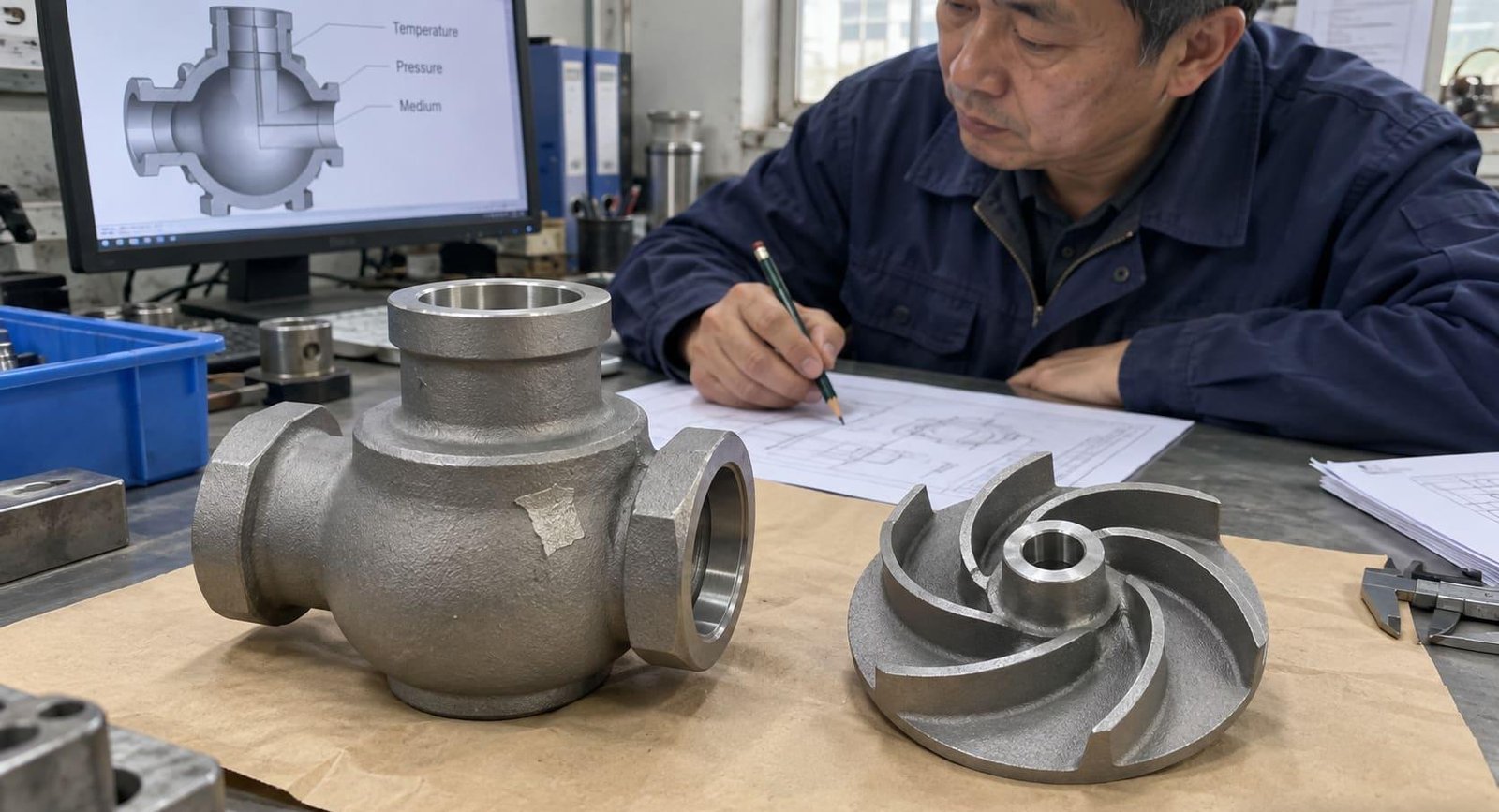
Service conditions—like operating temperature, pressure, and exposure to corrosive media—are the most critical factors.[1] These conditions determine the required material grade and integrity level, which in turn guides whether investment casting is suitable or if another process is a better fit for the application.
Dive Deeper
When we receive an RFQ for a part, the first questions we ask are about its environment. A simple note on a drawing like "Material: SS316" is a starting point, not a complete specification. To us, it triggers a necessary conversation.
H3: Going Beyond the Material Grade
That "SS316" component could be a simple bracket, a high-pressure valve body, or a part exposed to corrosive chemicals. Each application has vastly different performance demands.
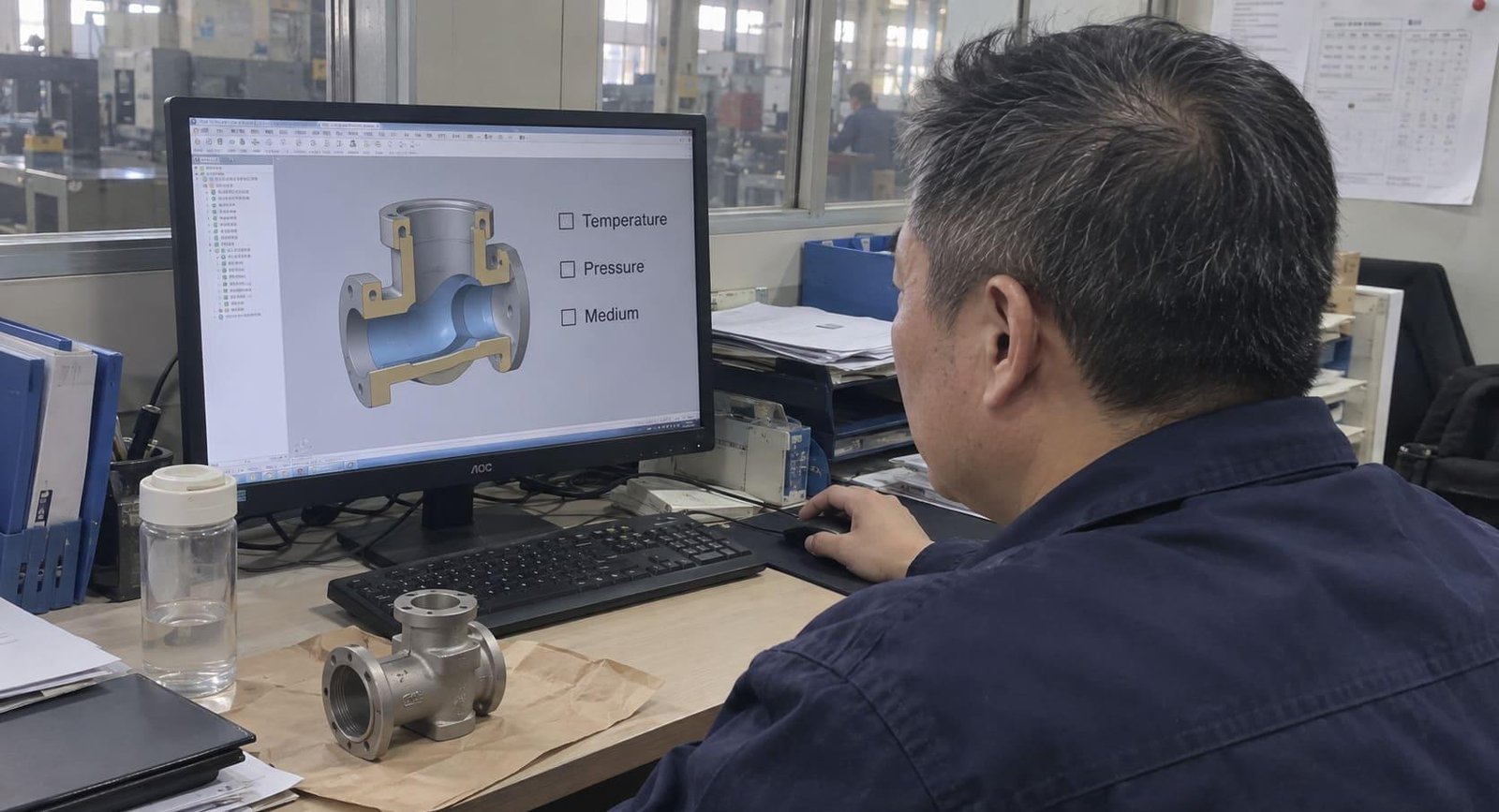
- Temperature: Will the part operate at ambient temperature, or will it see extreme heat like in an exhaust system or cryogenic cold in LNG applications? Material strength and structure can change dramatically with temperature.[2]
- Pressure: Is this a simple cover, or is it a pressure-containing component like a pump housing or valve body? Pressure-retaining parts require a higher level of material integrity and are often subject to specific inspection standards to ensure there are no leak paths.[3]
- Medium: What will the part be in contact with? Potable water, seawater, sour gas, hydraulic fluid, or abrasive slurries all attack metals differently.[4] The choice between 304, 316, or more exotic alloys like Duplex or Inconel depends entirely on this.
For example, we frequently produce investment castings for valve and pump manufacturers. For them, a flawless internal surface and guaranteed pressure integrity are non-negotiable. The cost of a single leak in the field far outweighs any savings from cutting corners on material selection or quality control.
H3: The Importance of Integrity for Pressure-Containing Parts
When a component's failure could lead to a leak, it falls into a special category. The primary concern is no longer just shape and strength, but internal soundness. Investment casting is excellent for creating the complex internal passages of valve bodies and pump impellers[5], but the process must be tightly controlled to prevent defects.
We must consider potential issues like:
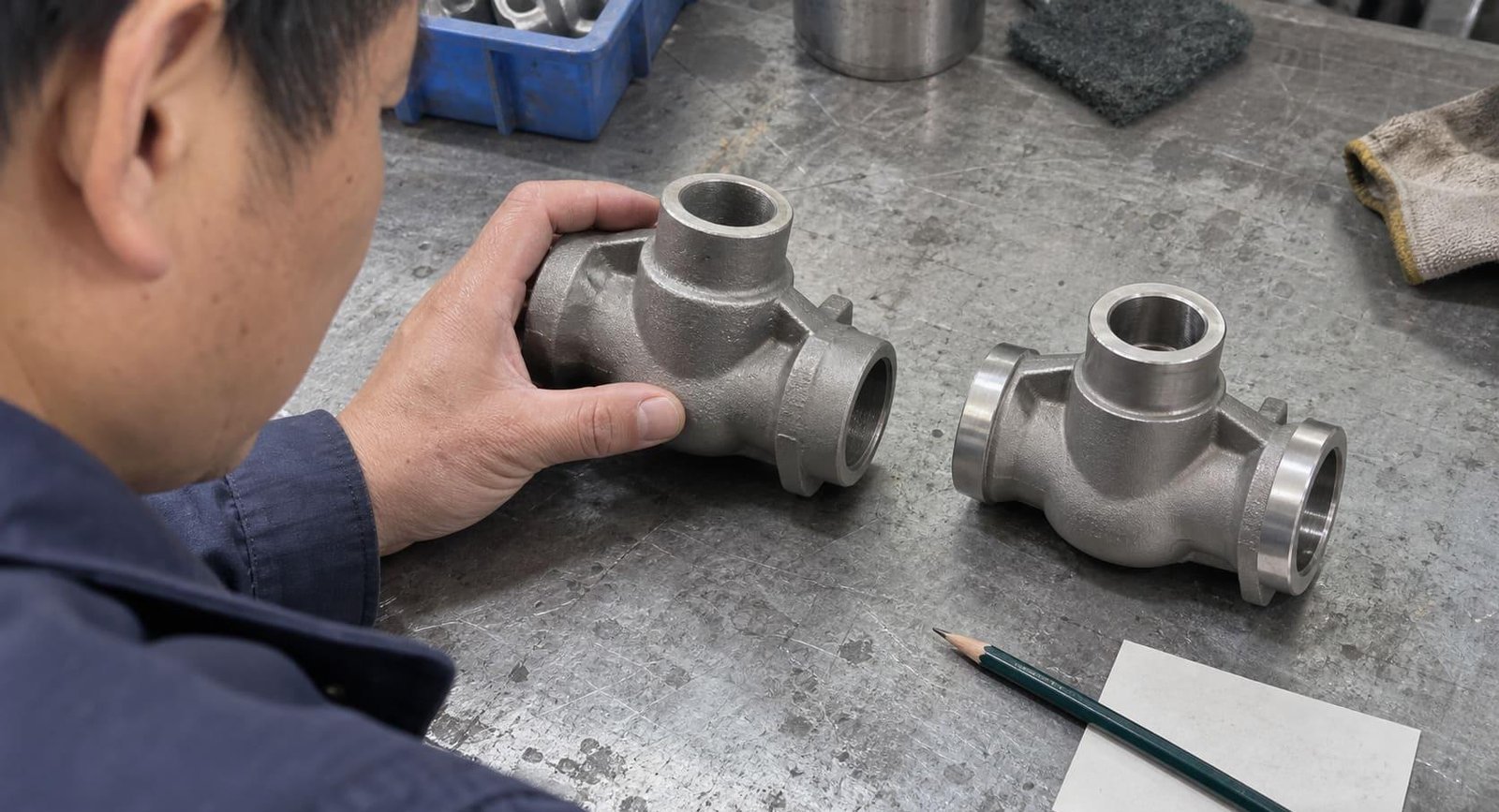
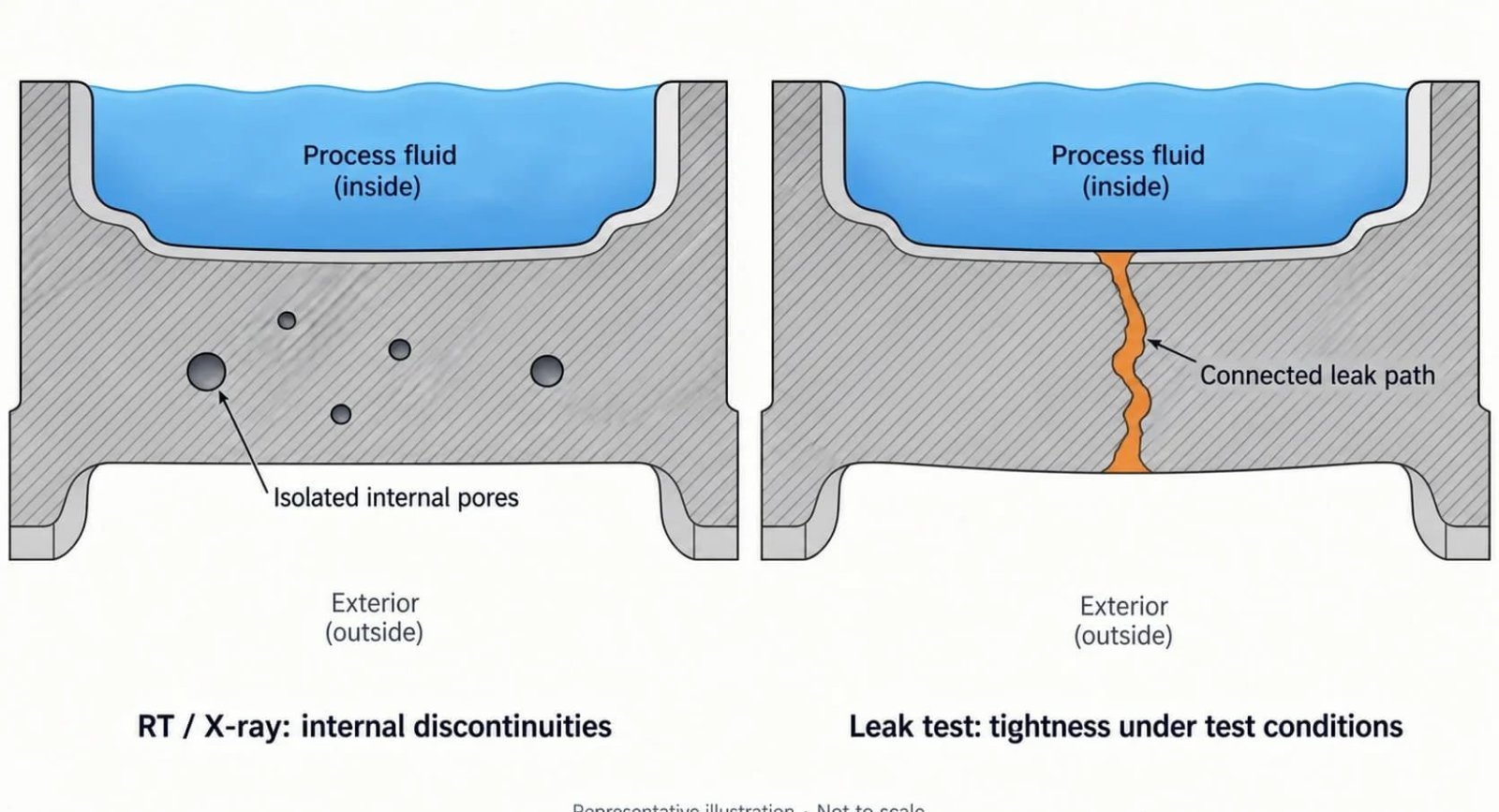
- Porosity: Tiny internal voids in the metal. While a small amount might be acceptable in a decorative part, a connected network of pores can create a leak path right through a valve wall[6].
- Shrinkage: As the molten metal cools and solidifies, it shrinks. If not managed with proper gating and riser design, this can create voids or weak spots.[7]
For these critical investment casting components for energy equipment, we work with the customer to define the inspection requirements. This might include X-ray (Radiographic Testing) to see inside the casting or pressure testing the finished parts to verify they don't leak. This all starts with one simple question: "What does this part do?"
Is a Good Casting Always a Good Finished Part?
You've just received a shipment of beautiful raw castings. They look exactly like the 3D model. But when they arrive at your machine shop, they won't fit in the fixtures. The assembly line reports that installation is difficult and slow. This frustrating scenario happens when a supplier focuses only on producing a raw casting, not on delivering a functional finished part.
A good casting is only the starting point. The success of investment casting components for energy equipment is measured by the performance of the final, assembled part. Critical details like machining datums, surface finish requirements, and heat treatment protocols must be planned from the very beginning, right at the quoting stage.
Dive Deeper
In our experience, the most successful projects are those where we discuss the entire manufacturing sequence, not just the casting. A component is a system of features, and each step of its production affects the next.
H3: Planning for Machining from Day One
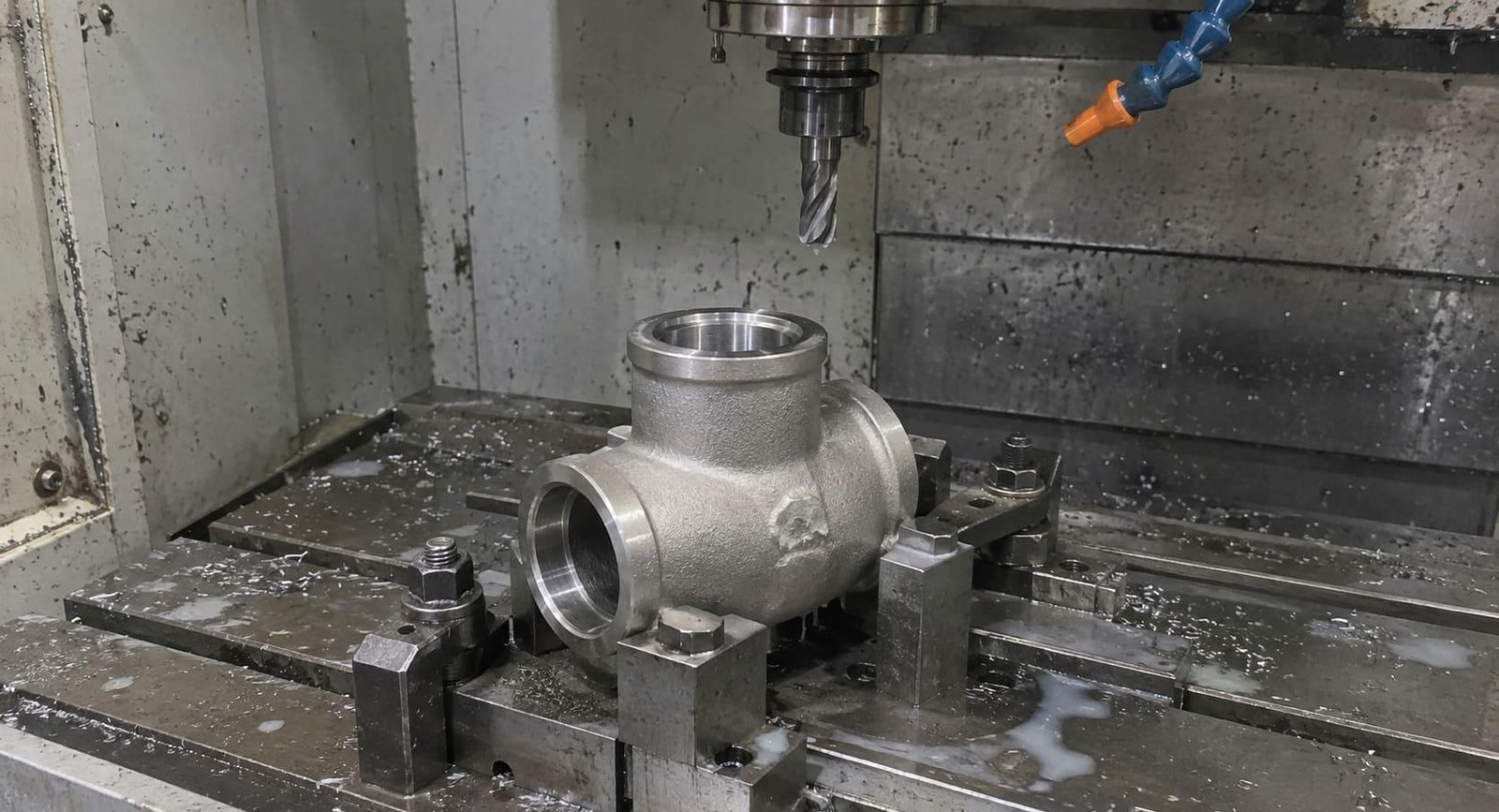
Investment casting is a "near-net shape" process[8], which means it produces a part that is very close to its final dimensions. This is a huge advantage as it minimizes expensive machining. However, "near" is the key word. Critical features like threaded holes, flat sealing surfaces, and precision bearing bores will almost always require final machining.[9]
For this to go smoothly, we need to plan for it in the casting design:
- Machining Allowance: We add a small amount of extra material (e.g., 1-2 mm) to the surfaces that will be machined. This ensures the cutting tool cleans up the entire surface, removing the slightly rougher cast skin and any minor surface imperfections.
- Datum Points: We work with the client to define clear, stable datum points on the part. These are the reference surfaces used to locate the part in the CNC machine fixture. The casting tooling is designed to produce these datums consistently, ensuring every part is machined the same way. A slightly warped or inconsistent casting can be impossible to fixture, leading to high scrap rates and production delays.
H3: A Cross-Process Example: Why Dimensional Control is Everything
To illustrate this point, let me share a story from a project that, while it involved aluminum die casting, carries a lesson that is universal for any high-volume production.
We were working on a project for an Australian client in the solar energy sector. The component was an aluminum mounting bracket for photovoltaic panels. Their new, highly automated assembly line used robots to pick up these brackets and place them. The problem was that the robots were frequently jamming.
After some investigation, we found the issue wasn't a failure to hold a tight tolerance. Instead, it was small inconsistencies from part to part—a tiny bit of flashing on an edge here, a slight deviation in flatness there—that were confusing the robot's grippers.
The solution wasn't to make the casting "better" in a general sense, but to make it more consistent. We adjusted our process controls and added a secondary deburring and inspection step specifically focused on the features that interacted with the robot. The result was a smooth, uninterrupted assembly process for our client.
The lesson is clear: for any automated or high-volume process, whether it involves investment casting components for energy equipment or other parts, batch-to-batch consistency is often more valuable than the tightest possible tolerance on a drawing. You have to understand how the part will be used and handled downstream.
How Do You Avoid Hidden Defects in Investment Casting Components for Energy Equipment?
Your prototypes look perfect. They pass all the visual and dimensional checks. But then, after installation, they begin to fail unexpectedly during field testing or in service. Now you're scrambling to find the root cause, facing the possibility of costly recalls and redesigns. The culprit is often a hidden, internal defect that a simple visual check could never find.
Avoiding hidden defects requires more than just looking at the part. A robust quality plan, including material certification, strict process controls, and the right non-destructive testing (NDT), is absolutely essential for critical investment casting components for energy equipment.
Dive Deeper
Our job as a manufacturer isn't just to make parts; it's to ensure the parts we ship are free from defects that could compromise their function. This means building quality into the process, not just trying to inspect it in at the end.
H3: The Role of Non-Destructive Testing (NDT)
NDT is a set of techniques used to evaluate the properties of a material or component without causing damage.[10] For investment castings, especially in the energy sector, NDT is our eyes to see the unseen.
Common methods we coordinate include:
- Visual Testing (VT): The first line of defense, checking for obvious surface issues.
- Dye Penetrant Inspection (DPI): A liquid dye is applied to the surface to reveal tiny, surface-breaking cracks that are invisible to the naked eye.
- Magnetic Particle Inspection (MPI): Used for ferromagnetic materials (like carbon and alloy steels) to find surface and near-surface defects.
- Radiographic Testing (RT / X-ray): An X-ray is passed through the casting to create an image on film or a digital sensor, revealing internal defects like porosity, shrinkage, and inclusions.[11]
- Ultrasonic Testing (UT): High-frequency sound waves are sent into the material, and their reflections can indicate internal flaws.
The key is to select the right NDT method for the potential defects and the criticality of the part, as specified on the drawing or agreed upon with the customer.
H3: Learning from a Die Casting Problem: The Importance of Service Testing
Here again, a story about an aluminum die casting project taught us a valuable lesson that applies directly to investment casting.
We were producing an A356 aluminum housing for a Japanese machinery manufacturer. The initial samples we sent looked perfect. They were dimensionally correct, the finish was good, and they passed our internal visual checks. However, our customer reported back that a certain percentage of the housings were failing a pressure test during their final assembly.
This was a classic hidden defect problem. We immediately worked with the customer to understand the failure. It turned out there was micro-porosity within a specific wall section of the housing—too small to see, but enough to create a leak path under pressure.
Our engineering team analyzed the casting process. We adjusted the mold design and injection parameters to improve the flow of molten metal and reduce the chance of trapped gas in that critical area. The next batch of parts was produced with these new controls, and they passed the customer's pressure test with flying colors.
The takeaway is twofold. First, your supplier must be a partner who can help you diagnose and solve problems, not just ship parts. Second, the ultimate test of a component is its performance in its real-world application. This is why it's so important for customers to share their testing requirements and performance criteria with us upfront. That knowledge allows us to build the right quality plan from the very beginning.
Frequently Asked Questions
What materials are common for investment casting in the energy sector?
We most commonly work with stainless steels like 304 and 316 for corrosion resistance, carbon steels for general structural applications, and occasionally higher-grade alloys like Duplex steels or nickel-based alloys when extreme corrosion or high temperatures are a factor. The choice always depends on the specific service environment.
What is the typical weight range for your investment casting parts?
Our process is best suited for parts ranging from approximately 50 grams (about 2 ounces) up to 70 kilograms (about 150 pounds). However, the ideal size and weight for a component depend heavily on its geometry, wall thickness, and the specific alloy being used.
How does investment casting compare to sand casting for energy components?
Investment casting provides a much better surface finish and tighter dimensional tolerances than sand casting.[12] This means you can design more complex parts and often reduce or eliminate secondary machining operations. Sand casting is generally more economical for very large, simple-shaped parts where surface finish isn't a primary concern.
What information do I need to provide for an RFQ?
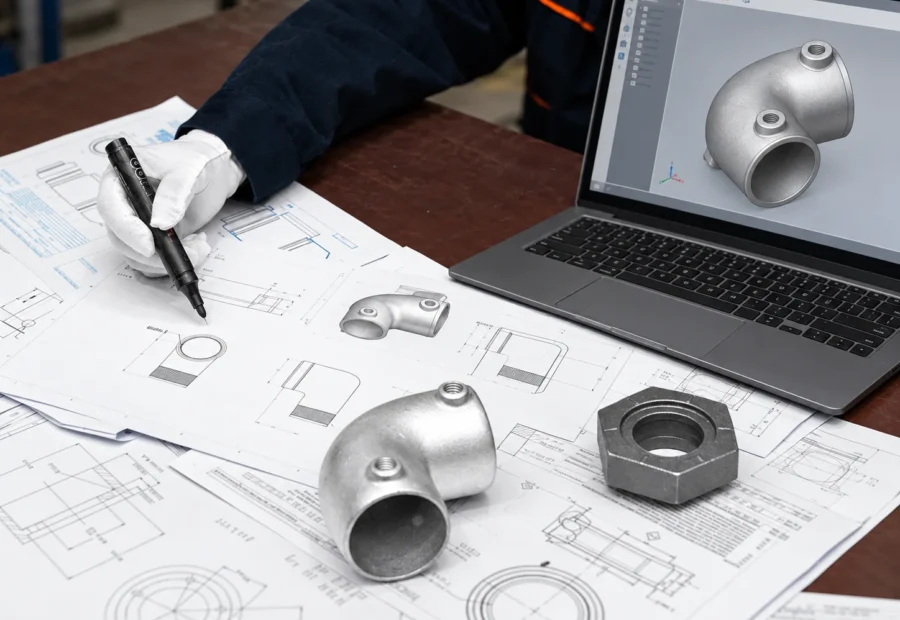
The more information, the better! A 2D drawing and a 3D model are the best start. Please also include the material specification, the estimated annual quantity, and any critical information about the part's function—especially if it's a pressure-containing part or has critical surfaces that need machining.
Can you handle the machining and finishing too?
Yes. We believe the best approach is to manage the entire process, from the initial casting to the final machined and inspected component. This ensures that all steps are planned and coordinated, which is the most reliable way to achieve a successful outcome and reduce your overall project risk.
Conclusion
Ultimately, choosing the right manufacturing partner for investment casting components for energy equipment goes far beyond finding the lowest price for a raw casting. It's about finding a partner who understands the complete lifecycle of the component—from initial material selection and process simulation to final machining, inspection, and testing. A successful project hinges on clear communication about the part's service conditions, a holistic plan that considers the finished product from day one, and a robust quality system designed to prevent hidden defects. This collaborative approach is the surest path to managing total cost, ensuring long-term reliability, and building a resilient supply chain for your critical energy applications.
If you are developing a component for the energy sector and need a manufacturing partner who asks the right questions before promising answers, we're here to help. Send us your drawing, 3D model, or project requirements, and let's start the conversation.
Sources & references
Reference note
A materials-engineering reference supports that component materials are commonly selected by matching mechanical, thermal, pressure, and corrosion requirements to the intended service environment. Evidence role: general_support; source type: education. Supports: Service temperature, pressure/loading, and environmental corrosion are standard inputs in engineering materials selection.. Scope note: This would support the general selection principle rather than prove that these factors are always the most critical in every energy-sector application.
Reference note
Metallurgical literature documents that temperature can alter metal microstructure and mechanical properties, including strength, ductility, creep behavior, and fracture resistance. Evidence role: mechanism; source type: paper. Supports: Temperature affects metallic microstructure and mechanical properties such as yield strength, ductility, creep resistance, or toughness.. Scope note: The source should be used as contextual support because the specific changes depend on alloy composition, heat treatment, and exposure time.
Reference note
Pressure-equipment regulations and codes require controls such as material verification, inspection, and testing for pressure-retaining parts because leakage or rupture can create safety hazards. Evidence role: expert_consensus; source type: government. Supports: Pressure-containing equipment is typically governed by codes or regulations requiring material control, inspection, and testing to reduce leakage or failure risk.. Scope note: The applicable inspection requirements depend on jurisdiction, pressure class, service fluid, and the governing design code.
Reference note
Corrosion-engineering references describe that metallic components experience different degradation mechanisms depending on the contacting medium, including chloride corrosion in seawater and sulfide-related attack in sour environments. Evidence role: mechanism; source type: institution. Supports: Different media, including seawater and sour gas, can produce different corrosion or degradation modes in metals.. Scope note: This supports the general mechanism; it does not determine the correct alloy for a specific component without detailed chemistry, temperature, pressure, and stress data.
Reference note
Manufacturing-process references characterize investment casting as a near-net-shape process capable of producing intricate metal geometries, including features that would be difficult or costly to machine from solid stock. Evidence role: general_support; source type: education. Supports: Investment casting can produce complex near-net-shape metal components with intricate features.. Scope note: This supports the general process capability; feasibility for a specific valve body or impeller depends on alloy, section thickness, gating design, and inspection requirements.
Reference note
Casting-defect studies report that porosity can reduce pressure tightness when voids are interconnected or located across a pressure boundary. Evidence role: mechanism; source type: paper. Supports: Connected porosity in castings can compromise pressure tightness by forming leakage paths.. Scope note: The source would support the mechanism generally; actual leak risk depends on pore size, connectivity, wall thickness, pressure, and post-casting processing.
Reference note
Foundry-engineering references explain that gating and riser design control metal flow and feeding during solidification, and inadequate feeding can result in shrinkage cavities or localized weakness. Evidence role: mechanism; source type: education. Supports: Gating and risering influence feeding during solidification and can reduce or cause shrinkage defects.. Scope note: This is contextual support; defect formation also depends on alloy solidification range, mold temperature, geometry, and process controls.
Reference note
Manufacturing references define investment casting as a near-net-shape casting process in which wax or similar patterns are used to produce detailed metal parts close to final form. Evidence role: definition; source type: encyclopedia. Supports: Investment casting is recognized as a near-net-shape process..
Reference note
Manufacturing references note that investment casting can reduce machining but that precision surfaces, holes, threads, and close-tolerance features commonly require secondary machining. Evidence role: general_support; source type: education. Supports: Investment castings often need secondary machining for tight-tolerance or high-surface-finish features.. Scope note: This supports typical practice; some features may be cast to final condition when tolerances and functional requirements permit.
Reference note
Authoritative NDT references define nondestructive testing as inspection or evaluation of materials and components without destroying them or impairing their intended service use. Evidence role: definition; source type: institution. Supports: Nondestructive testing is defined as evaluating materials or components without impairing their serviceability..
Reference note
Nondestructive-testing references explain that radiographic testing uses penetrating radiation recorded on film or digital detectors to reveal internal volumetric discontinuities such as porosity, shrinkage cavities, and inclusions. Evidence role: mechanism; source type: institution. Supports: Radiographic testing uses penetrating radiation to image internal discontinuities in castings, including porosity, shrinkage, and inclusions.. Scope note: Detection sensitivity depends on component thickness, material density, defect orientation, radiographic technique, and acceptance criteria.
Reference note
Manufacturing-process references commonly compare investment casting with sand casting and report that investment casting generally provides superior surface finish and closer dimensional tolerances. Evidence role: general_support; source type: education. Supports: Investment casting typically offers finer surface finish and closer dimensional tolerances than sand casting.. Scope note: This is a general comparison; actual results depend on alloy, foundry practice, part geometry, size, and specified quality level.