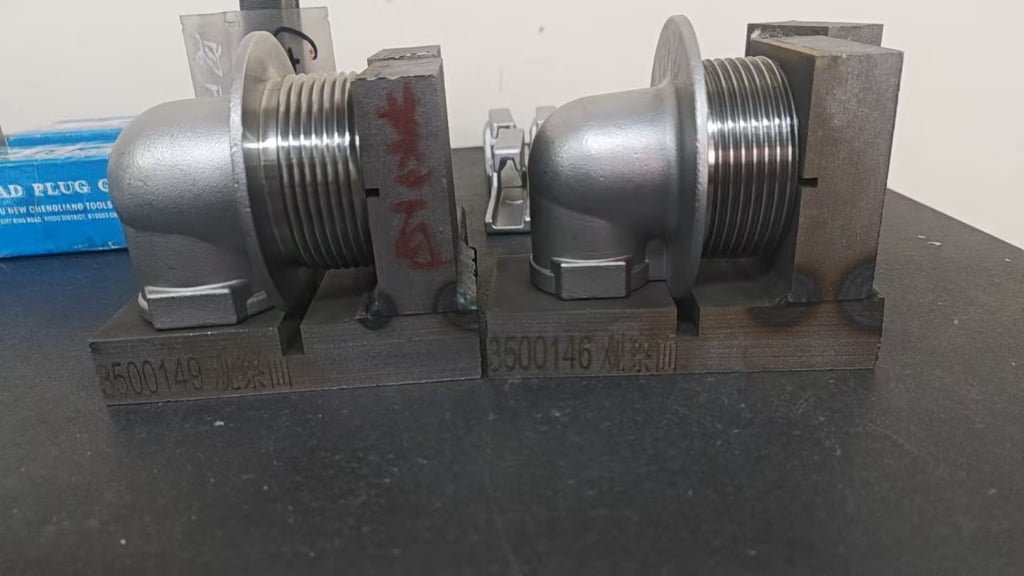
A356 / AlSi7Mg
Common casting family for housings and structural shapes; properties depend strongly on casting quality and heat-treatment condition.
MATERIAL GUIDANCE
Aluminum alloys combine low density with useful strength, corrosion resistance and machinability. The correct grade depends on whether the part is cast, die cast, forged or machined from wrought stock, as well as its load, temperature, appearance and finishing requirements.
GRADES & SELECTION FACTORS
Grade names and standard systems must be checked against the drawing, application and requested documentation.
Common casting family for housings and structural shapes; properties depend strongly on casting quality and heat-treatment condition.
Widely used high-pressure die-casting alloys for complex, repeat-volume parts; exact chemistry and naming system must be specified.
Commonly machined or forged rather than die cast; temper such as T6 is part of the material requirement.
Supports weight reduction, but stiffness and section design still require engineering review.
Naturally forms an oxide layer; service environment and galvanic contact can still require protection.
Silicon-bearing casting alloys can fill complex shapes; wall thickness and porosity risk depend on process and geometry.
Often machines efficiently, although alloy, temper, casting skin and internal porosity affect results.
ENGINEERING NOTES
Use these points to confirm the material specification, manufacturing route and finishing scope before quotation.
A wrought designation should not be substituted automatically for a casting alloy. Confirm the required production route, alloy designation and temper on the drawing or RFQ.
Identify pressure containment, sealing faces, fatigue loads, thermal exposure, cosmetic surfaces and any leak-testing requirement before process selection.
Provide datums, machining allowances, threaded features and mating-part information so casting and machining controls can be planned together.
Heat-treatment condition can materially change strength and dimensional stability. Specify the required temper and whether properties apply to test coupons or the finished part.
Anodizing, conversion coating, painting, powder coating and plating require alloy- and surface-specific preparation. Cosmetic class, masking areas, color and corrosion-test requirements should be stated.
Agree whether chemistry, mechanical properties, porosity evaluation, pressure testing, coating thickness or other records are required.
SUITABLE MANUFACTURING ROUTES
These links provide a starting point. Final process selection depends on geometry, grade, quantity, tolerances, tooling and quality requirements.
High-pressure die casting for repeat-volume aluminum and zinc components requiring integrated features, consistent geometry and coordinated machining and finishing.
Review processDrawing-based CNC turning and milling for prototypes, production components and critical features on castings and forgings, with controlled inspection and finishing.
Review processRELATED CASE STUDIES
Cases should show verified requirements, engineering decisions, inspection scope and outcomes without exposing confidential customer information.
FAQ
Final answers depend on the drawing, material specification, quantity, application and required documentation.
6061 is primarily a wrought alloy. A die-casting alloy with suitable performance should be selected through drawing and application review.
There is no universal choice. Geometry, casting route, pressure, leak rate, heat treatment and machining all influence the selection.
No. Finishing may make porosity, flow marks or surface variation more visible, so the cosmetic requirement must be agreed before production.
Provide alloy and temper, drawing revision, process or product form, quantity, critical tolerances, finish, inspection and service conditions.
DRAWING REVIEW & QUOTATION
Submit the drawing, material or functional requirements, quantity and application. The engineering team can review the suitable route and open questions before quotation.